On a slippery surface, both teams quickly found their feet and it developed into a game marked by aggression and power. But referee Malka from Herten was a no-nonsense match official and he understood how to throttle any breaches of the rules of the game with his unmistakable warnings.
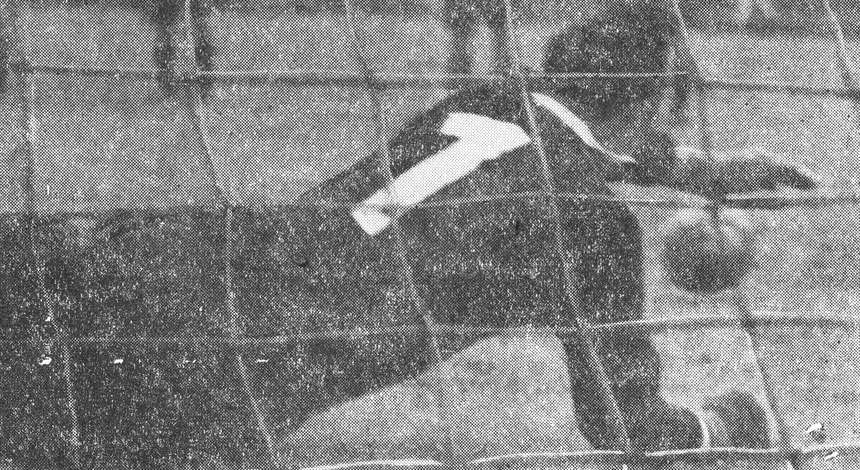
On 18 minutes, Karl Habets can only stop Essen’s Franz Islacker breaking through on goal with a professional foul, which back then did not lead to a red card. The resulting penalty was hit wide of the target by the Essen striker August Gottschalk. Both sides had one or two chances before half-time but they went in to the beak with the score at 0-0. After the restart, Essen were on the front foot and they forced Bayer 04 keeper Fredy Mutz to make several good saves. The Werkself, with the fans behind them, broke free of the Essen stranglehold with courageous counter-attacks. One of these attacks led to the opening goal on 69 minutes: New signing Leo Bering is put through in the box by Horst Schultz and he slots the ball home from 14 metres out to make it 1-0. Until just before the end, all the chances for the Red and Whites were denied by the defence around Peter Röger. But then the Essen player Islacker heads home a cross from his fellow striker Berni Termath and the game ends all square at 1-1.
Ten months later, Rot-Weiss Essen become champions of Germany after a 4-3 victory over FC Kaiserslautern. Franz Islacker, despite only being able to limp across the pitch from the 70th minute due to a knee injury, scored the winner at 4-3 on 85 minutes.
The Werkself had their best season to date in the Oberliga West ending up third and just missing out on the qualifiers for the German Championship matches.
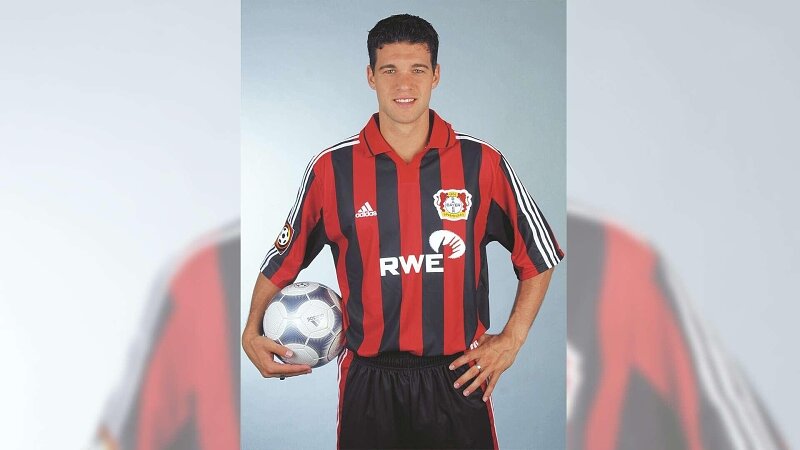
Hans Sarpei was born on 28 June 1976 in Tema, Ghana, and came to Germany with his parents at the age of three, where he grew up in Cologne. Even before he was born, his mother and father worked in Hamburg in the import-export sector. There they met an older man who introduced them to German culture and supported them. Out of gratitude, Hans was later given his first name, although this man died before he was born. Hans comes from a sporting family; his older brother Edward and his nephews Hans Nunoo Sarpei and Kingsley Sarpei were or are also professional footballers.
Show more
On 3 June 1953, Hans-Josef (‘Sepp’) Kretschmann became the fifth coach in the history of Bayer 04 Leverkusen. Born in Allenstein, East Prussia, on 21 March 1902, the football coach first studied to become a teacher before later switching to football. He took over the Werkself from Franz Strehle, under whom the team twice managed to stay in the 1st Oberliga West. However, Strehle did not extend his contract in Leverkusen after these two very successful years.
Show more
After promotion to Bundesliga North 2 in the summer of 1975, Bayer 04 are fighting relegation just eight months later. The club expects full commitment from everyone in this precarious situation. Promotion coach Manfred Rummel is to give up his main job as a teacher at the Mülheim special school and become a full-time coach at Bayer 04. The coach, who is very popular with the team, does not see himself in a position to fulfil the club's request. Despite a 2-0 home win against SpVgg Erkenschwick, Manfred Rummel is put on gardening leave by "mutual agreement".
Show more
Bayer 04, already been promoted to the 1st Oberliga West, played friendly after friendly in the second half of May 1951. And that continued throughout the following month.
Show more
Jacek Krzynowek was born on 15 May 1976 in Kamiensk, Poland, and grew up as a typical country boy. He spent his childhood less in structured training sessions and more on simple pitches, where he spent hours playing football with older boys. He realised early on that he had exceptional shooting power and enormous stamina. But for a long time, he didn't appreciate just how much talent he had. While others dream of a great career, professional football initially seems like a distant world to him that he only knows from television.
Show more