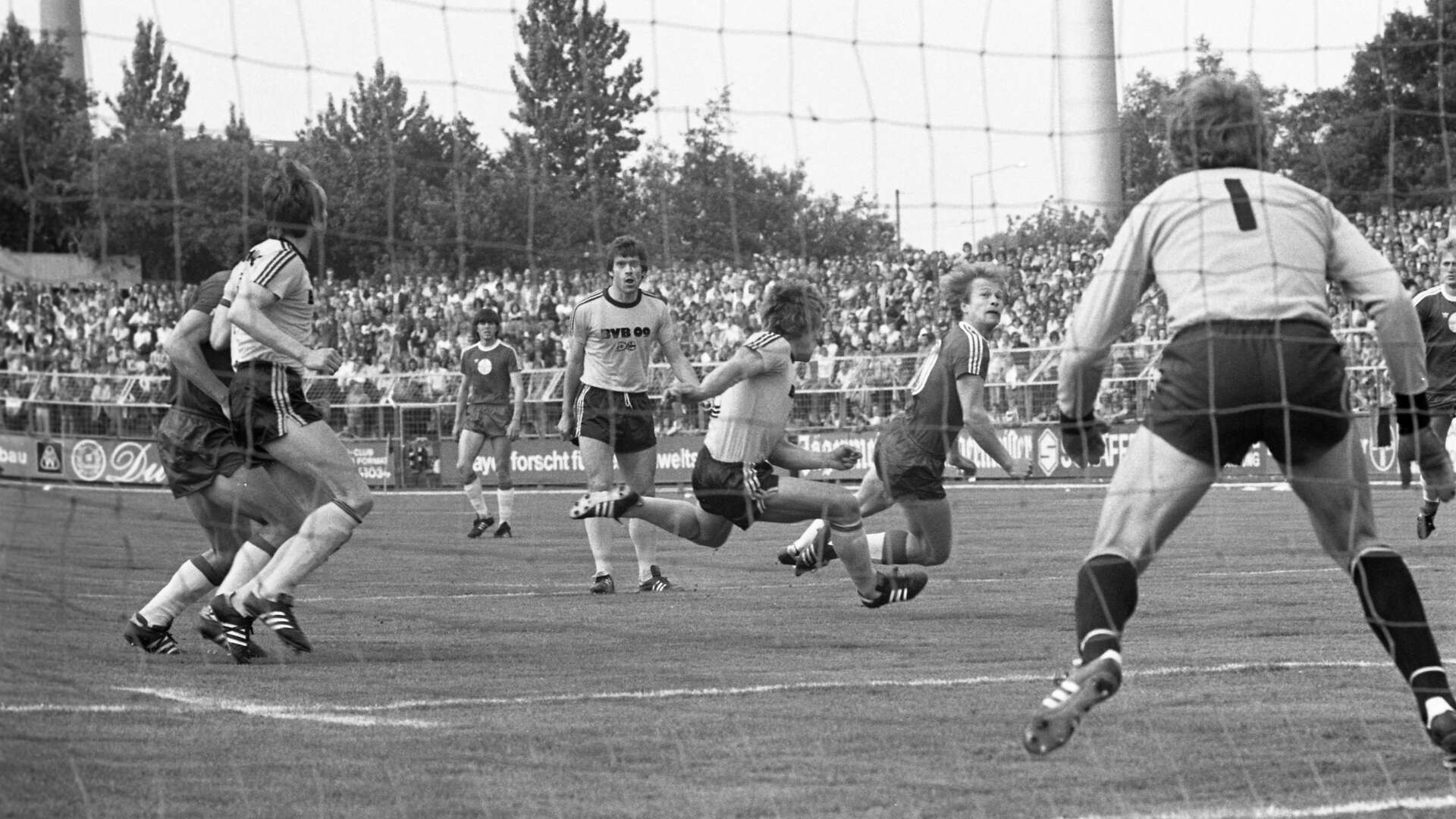
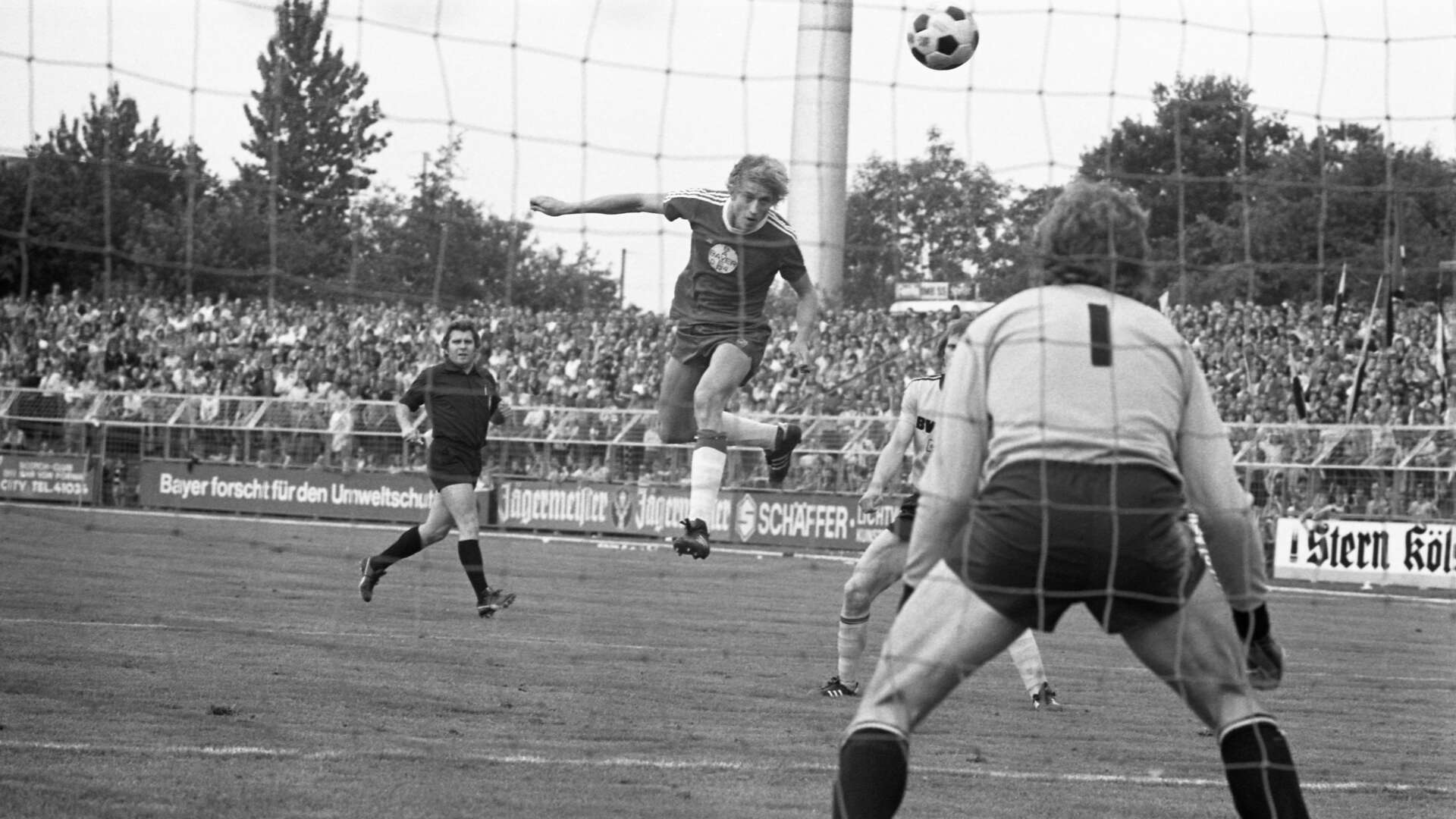
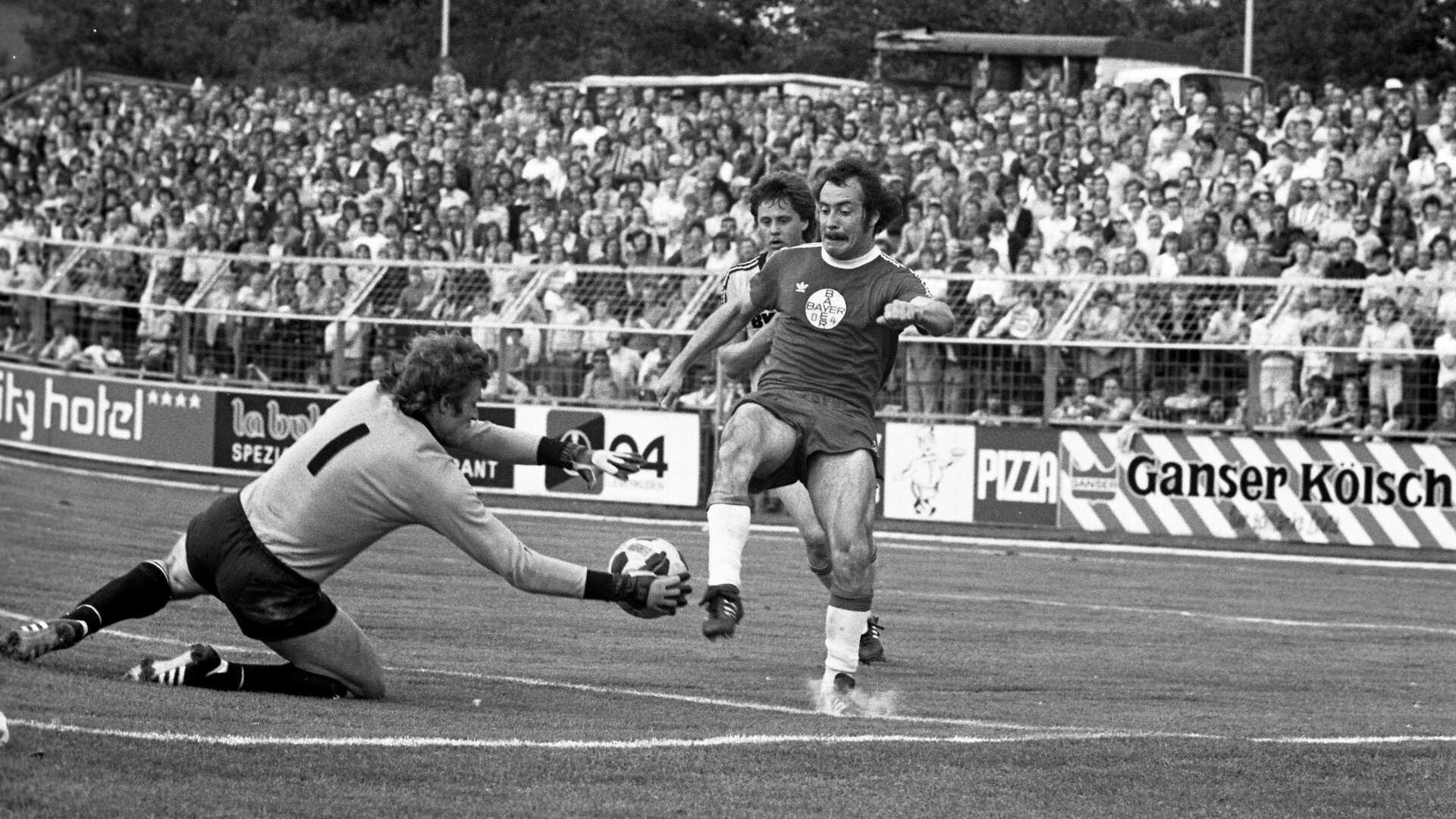
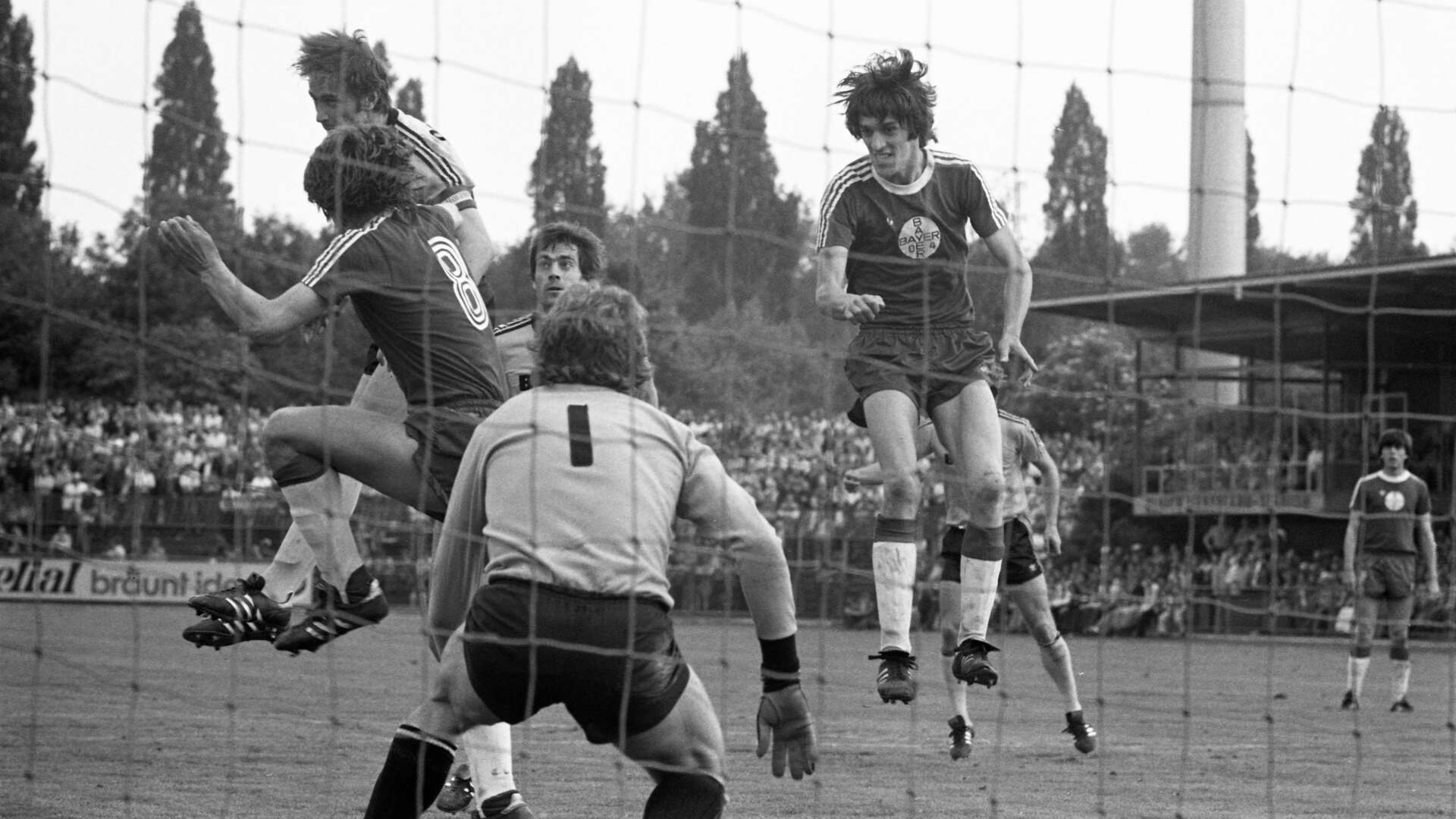
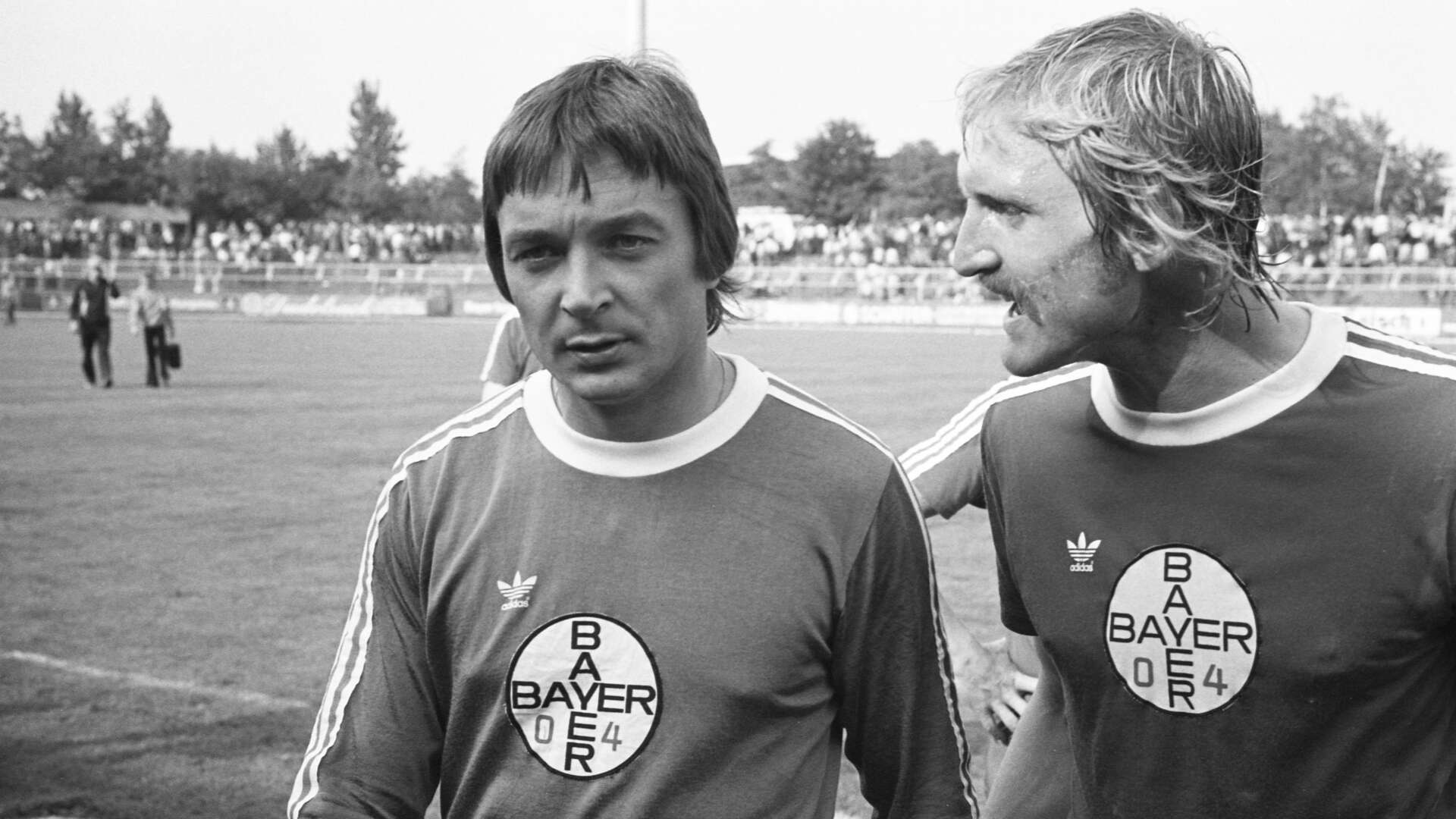
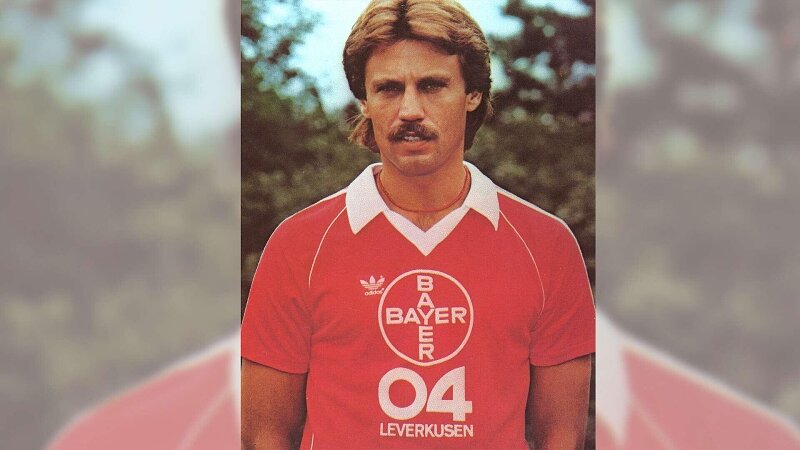
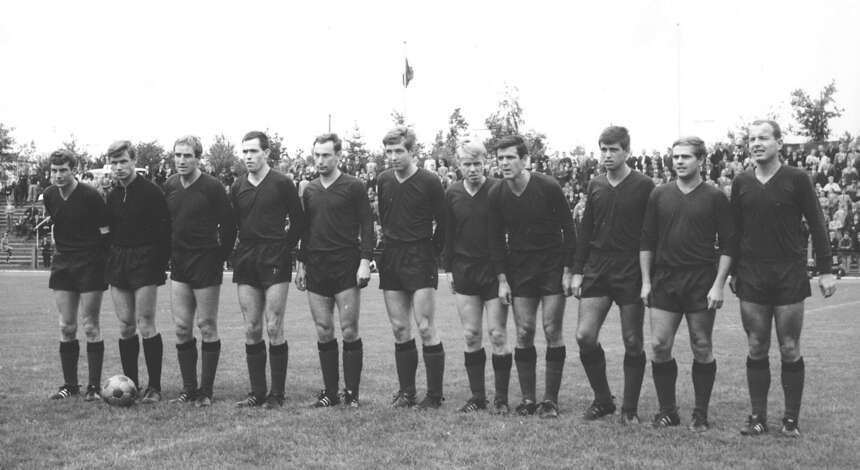
The Yugoslavian Radoslav Momirski is given a contract until the end of the season as his successor. He starts in Berlin with a 1-0 defeat against Spandauer SV, who are bottom of the table. At the end of March, the situation for Bayer 04 has not improved - Momirski is sacked after three consecutive defeats. On 5 April 1976, a new man takes over the helm at Bayer: Willibert Kremer. He has a successful debut with a 2-1 home win against Westfalia Herne.
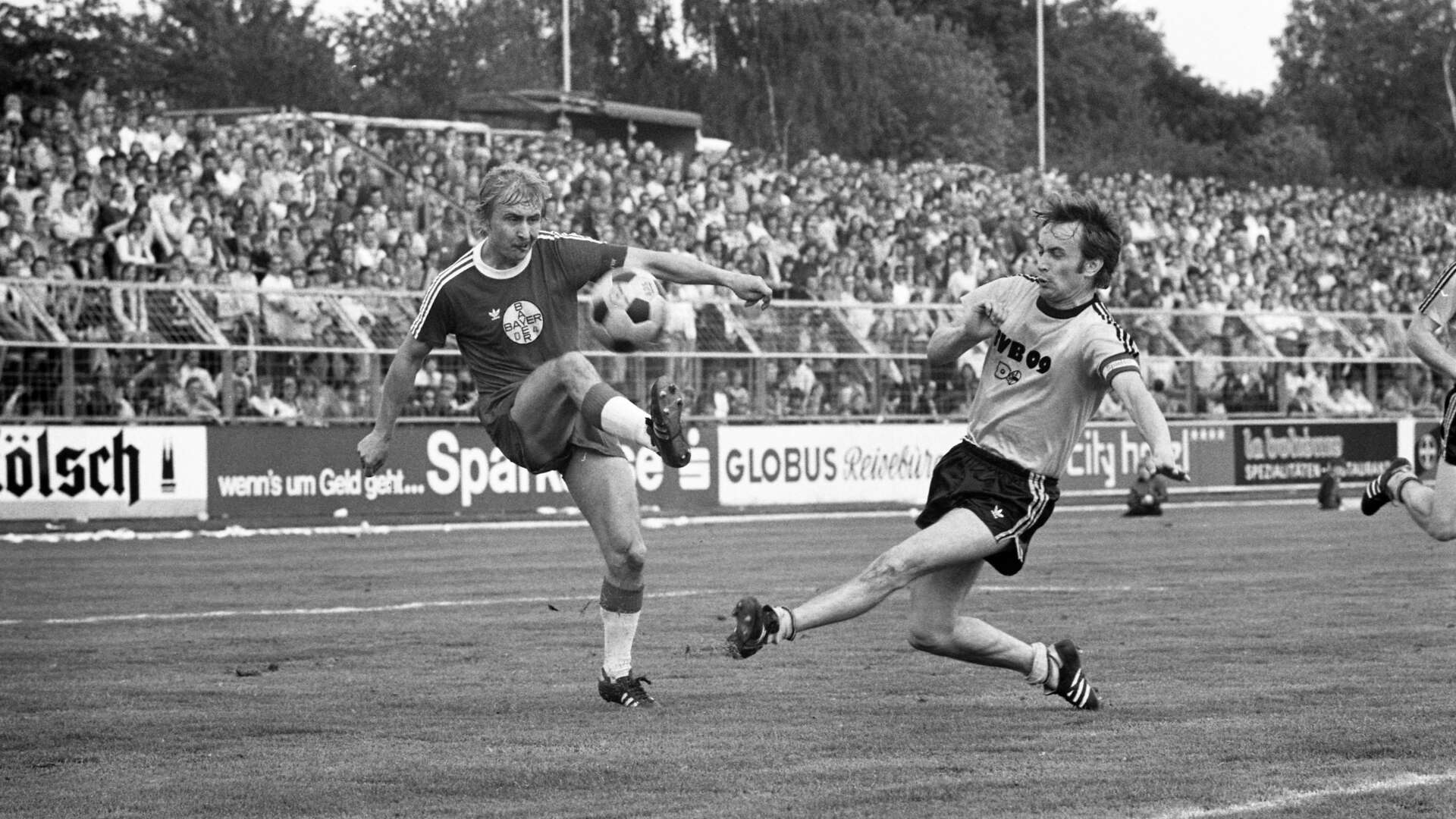
Bayer 04 appear to be moving into calmer waters under the new coach. The Werkself are scoring regularly in their first games under the new management, but their opponents from the drop zone are doing the same. After three defeats in a row, Bayer 04 are just two points above the relegation spots on the penultimate matchday as they face promotion candidates Borussia Dortmund at the Ulrich Haberland Stadium. The Stadionkurier, Bayer 04's stadium newspaper at the time, ran the headline: "It's all or nothing against Borussia Dortmund."
The text reads: "But it is precisely in this difficult situation that we need the backing of our supporters. Nobody can be indifferent about Bayer 04 playing in Bundesliga 2 in the 1976/77 season or not. Please help, because the enthusiasm of your own supporters can motivate a team even more. And one more thing: Borussia Dortmund supporters know the value of such support. They will come in their thousands - even to Leverkusen. So this match must not become a home game for Borussia."


The Werkself's direct challengers are FC Mülheim. Although Bayer 04 have a slightly better goal difference, Mülheim face two opponents from mid-table in Westfalia Herne and Arminia Bielefeld, who have nothing to play for. Four points from the last two games are therefore a distinct possibility for Mülheim.
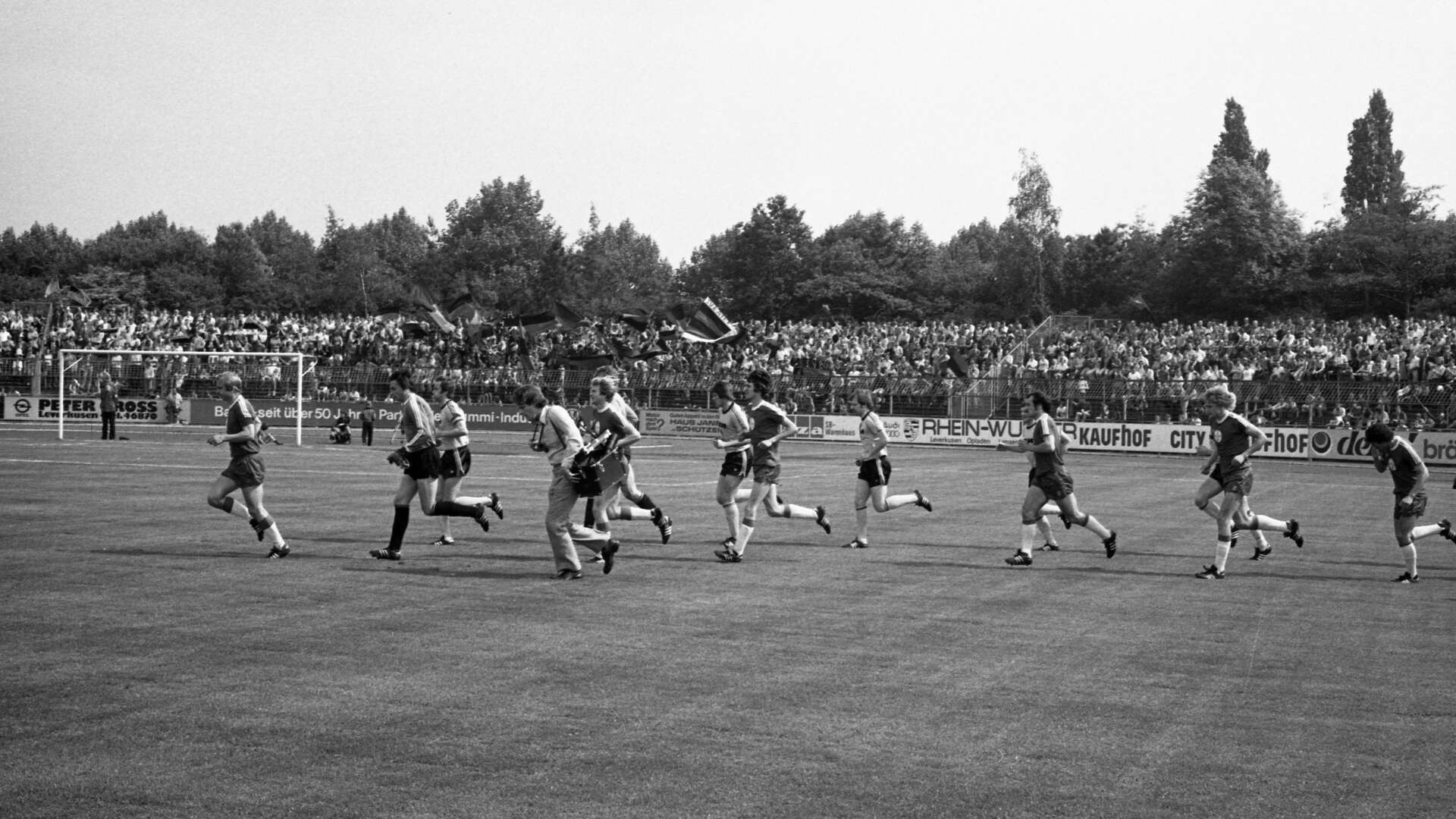
On Saturday, 5 June 1976, it became clear that the appeal in the stadium courier had unfortunately not had the desired effect. The stadium is in Black and Yellow hands and the Bayer 04 fans have little chance of asserting themselves vocally.
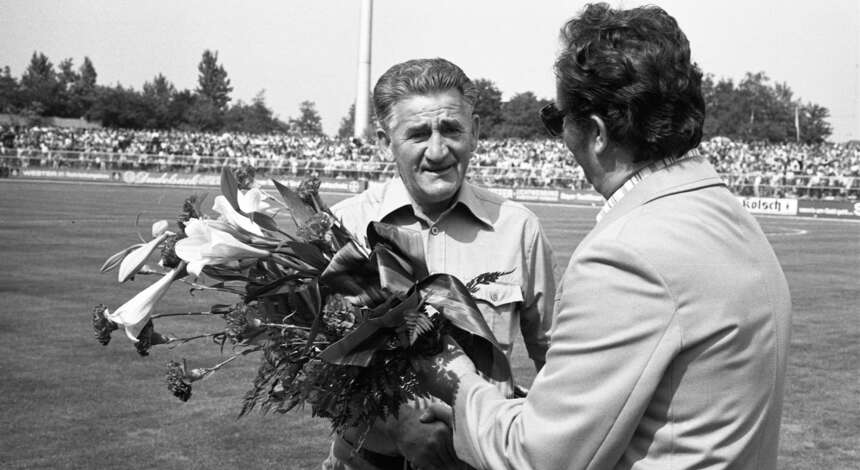
There is another honour before the game. The long-serving groundsman Gustav Schmitz is leaving. He takes his retirement leave at the end of June and then goes into well-earned retirement on 1 January 1977. Schmitz started working for Bayer AG in September 1957. He was initially responsible for the pitch at the Alter Stadtpark and then took over responsibility for the Ulrich Haberland Stadium as stadium manager in 1958. After 18 years, during which the event to mark Bayer AG's centenary in 1963 was a highlight for him, a piece of Bayer 04 history has now passed. But Gustav Schmitz is passing on his passion to his son and grandson, both of whom were and still are responsible for the pitches on Bismarckstrasse. Gustav Schmitz's grandson Georg is now the Bayer 04 head groundsman.
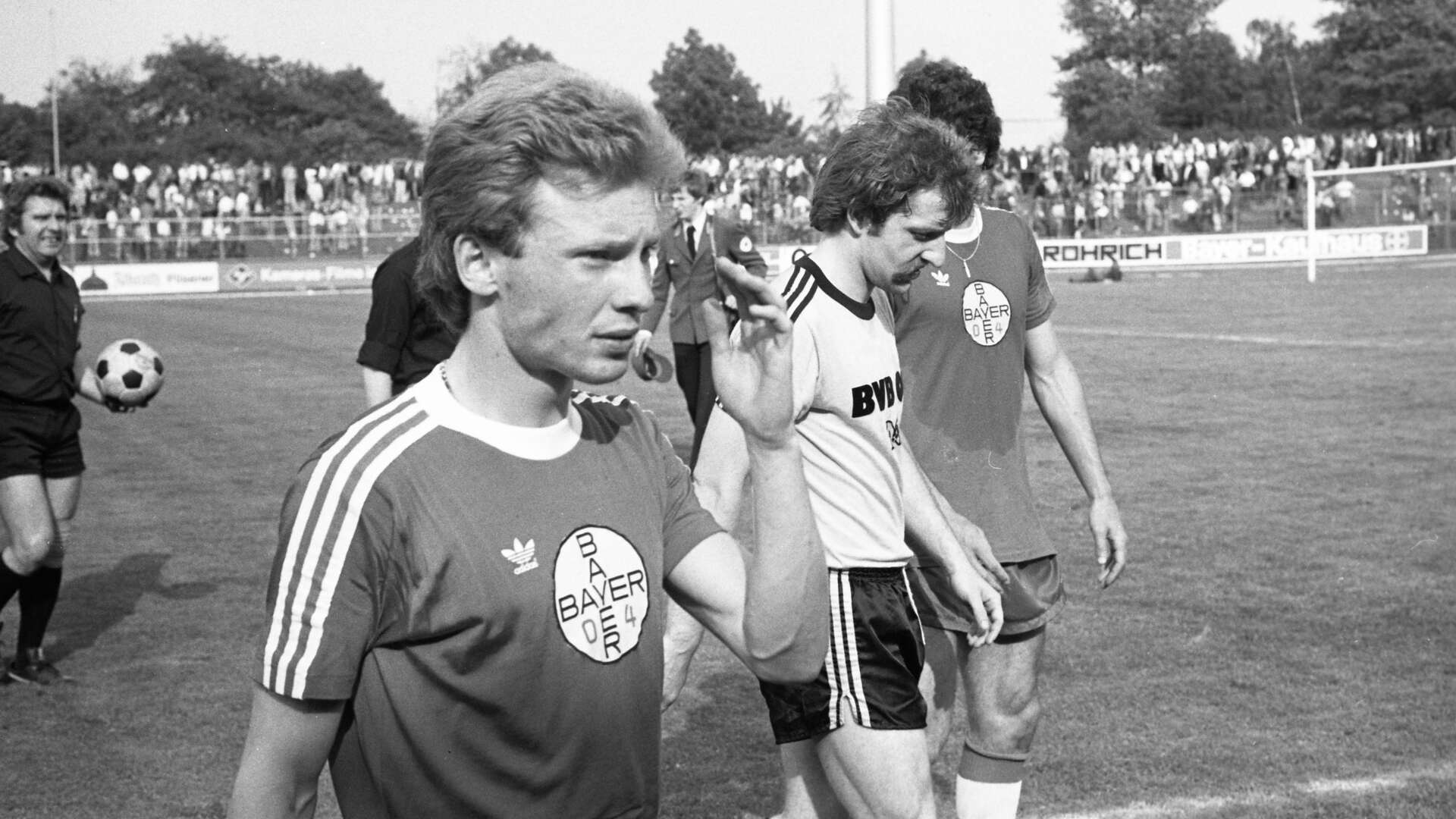
But back to the game against Dortmund, which is quickly told. Borussia took the lead on nine minutes. The telephone line from managing director and stadium announcer Dieter Czysz to the game between Mülheim and Herne is at least as important as the game on the pitch at the Ulrich Haberland Stadium. Coach Willibert Kremer and manager Hermann Büchel are always informed about the score as quickly as possible. Despite their team trailing 1-0 at the break, they go into the dressing room satisfied, as Westfalia Herne are leading 2-0. When Herne's third goal is scored shortly after the restart, the relief on the bench is palpable.
Dortmund score their second goal in Leverkusen. Bayer 04 try to pull a goal back, but BVB win the game 2-0. Nevertheless, the Werkself fans remain in the stadium as they wait for the result from Herne. There, in the 90th minute, the score was 6-1 and the Black and Red supporters were jubilant, as the Werkself not only had a two-point lead going into the final matchday, but also a ten-goal better goal difference. And none of those responsible at Bayer 04 believe that lead could still be squandered.
And that's what happened on the final matchday. The team from Mülheim beat Arminia Bielefeld 5-1, but Bayer 04 also finally won again. Opponents Wattenscheid 09 took the lead with a penalty, but their defender Klee then scores an own goal. After the break, Bayer 04 midfielder Peter Surbach gives the Werkself the lead, which Gerd Kentschke extends with a converted penalty. A late goal conceded, again from a penalty, did nothing to prevent Bayer 04's victory and final salvation. Bayer 04 Leverkusen will play in Bundesliga North 2 in the 1976/77 season.
Hans Sarpei was born on 28 June 1976 in Tema, Ghana, and came to Germany with his parents at the age of three, where he grew up in Cologne. Even before he was born, his mother and father worked in Hamburg in the import-export sector. There they met an older man who introduced them to German culture and supported them. Out of gratitude, Hans was later given his first name, although this man died before he was born. Hans comes from a sporting family; his older brother Edward and his nephews Hans Nunoo Sarpei and Kingsley Sarpei were or are also professional footballers.
Show more
On 3 June 1953, Hans-Josef (‘Sepp’) Kretschmann became the fifth coach in the history of Bayer 04 Leverkusen. Born in Allenstein, East Prussia, on 21 March 1902, the football coach first studied to become a teacher before later switching to football. He took over the Werkself from Franz Strehle, under whom the team twice managed to stay in the 1st Oberliga West. However, Strehle did not extend his contract in Leverkusen after these two very successful years.
Show more
After promotion to Bundesliga North 2 in the summer of 1975, Bayer 04 are fighting relegation just eight months later. The club expects full commitment from everyone in this precarious situation. Promotion coach Manfred Rummel is to give up his main job as a teacher at the Mülheim special school and become a full-time coach at Bayer 04. The coach, who is very popular with the team, does not see himself in a position to fulfil the club's request. Despite a 2-0 home win against SpVgg Erkenschwick, Manfred Rummel is put on gardening leave by "mutual agreement".
Show more
Bayer 04, already been promoted to the 1st Oberliga West, played friendly after friendly in the second half of May 1951. And that continued throughout the following month.
Show more
Jacek Krzynowek was born on 15 May 1976 in Kamiensk, Poland, and grew up as a typical country boy. He spent his childhood less in structured training sessions and more on simple pitches, where he spent hours playing football with older boys. He realised early on that he had exceptional shooting power and enormous stamina. But for a long time, he didn't appreciate just how much talent he had. While others dream of a great career, professional football initially seems like a distant world to him that he only knows from television.
Show more