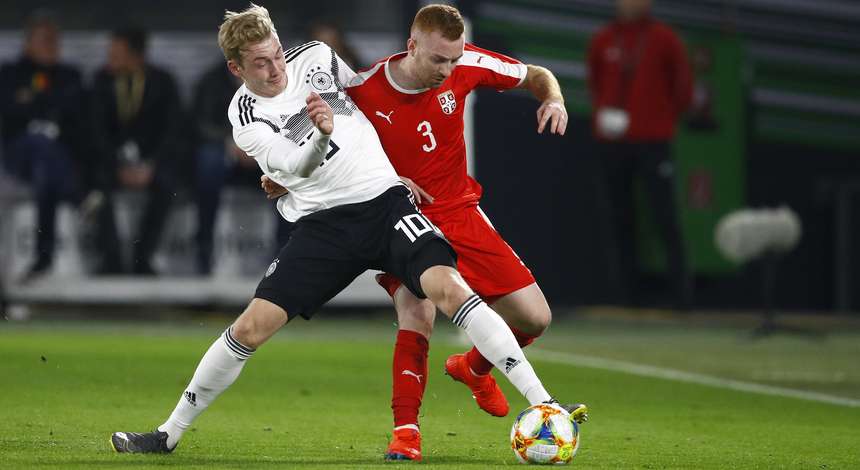
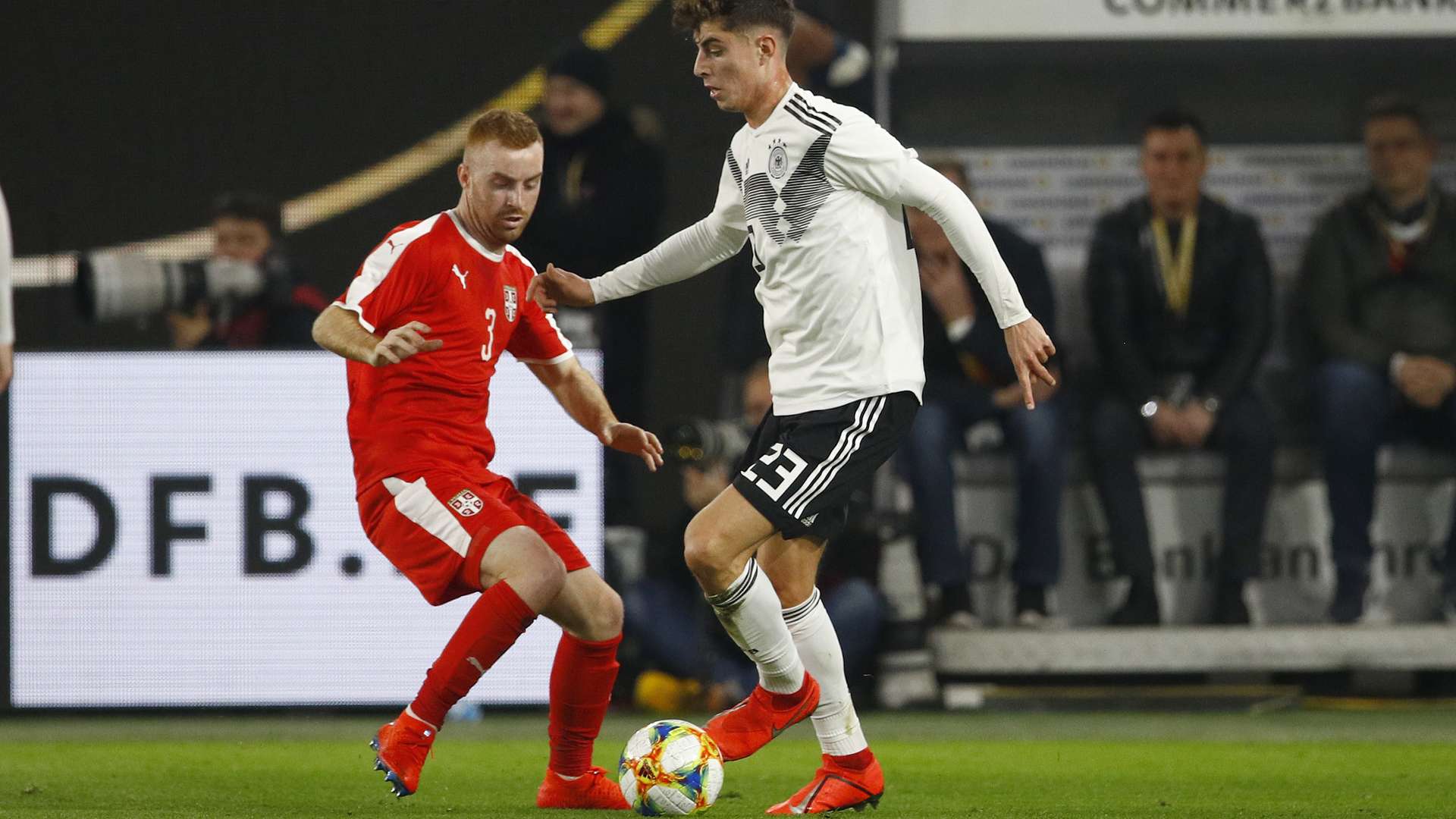
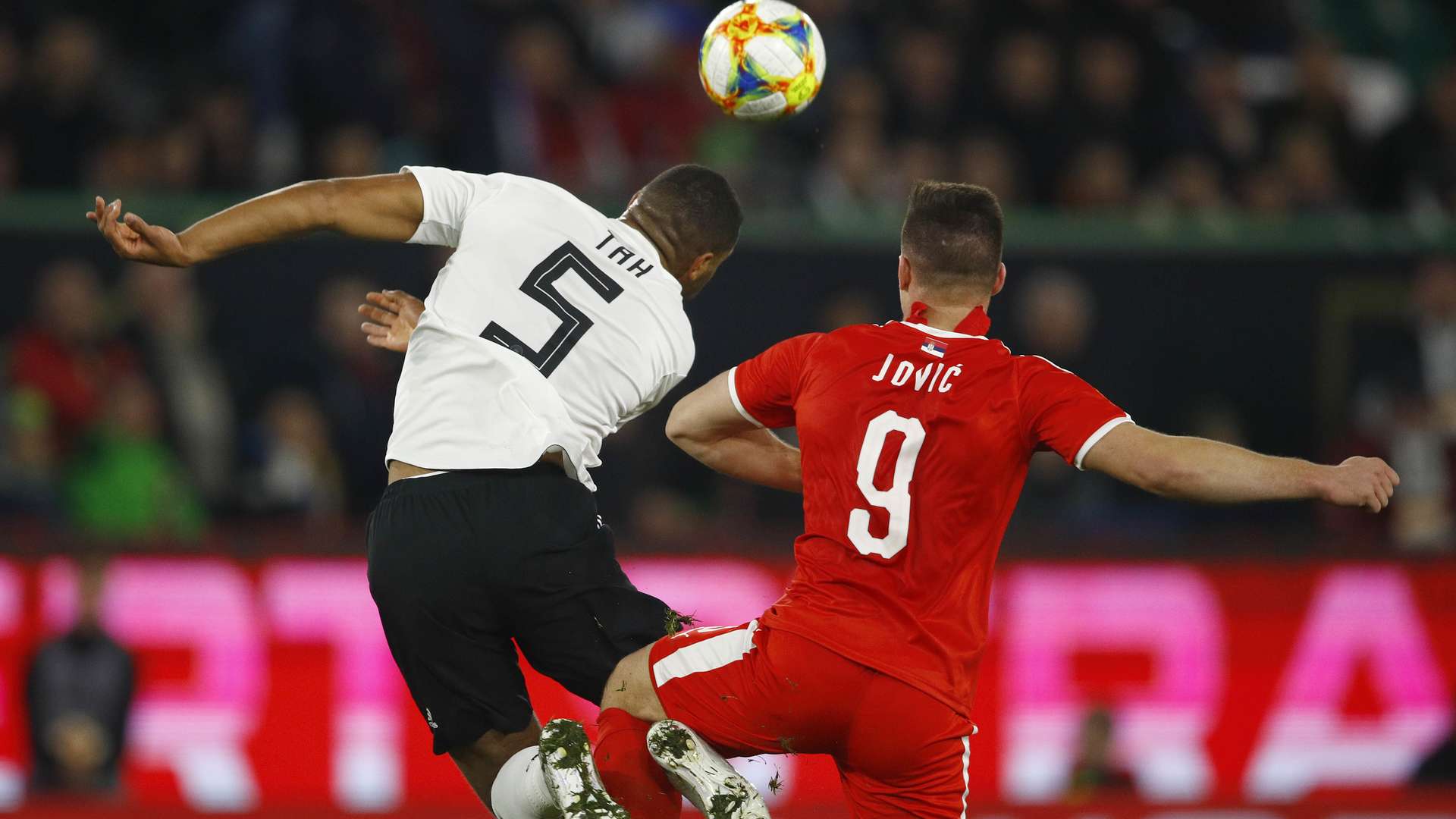
The visitors made the better start in front of 26,101 fans at the Volkswagen Arena in Wolfsburg. Serbia took the lead with less than 15 minutes on the clock with a goal from Eintracht Frankfurt's Luka Jovic (12'). The striker was completely unmarked from a corner and was able to direct his header past the 32-year-old goalkeeper Manuel Neuer into the net. Germany then took control of the game and created two good chances from Timo Werner on 22 minutes, with good work in the build-up from Kai Havertz, and on 37 minutes. Both times, the RB Leipzig striker was unable to beat the Serbian goalkeeper Marko Dmitrovic.

Kai Havertz was substituted at half-time with Marco Reus coming on for the second half. The Germany team. coached by Joachim Löw, upped the pressure after the restart but missed a number of promising chances to level at 1-1 through Reus (59'), Leroy Sané (64') and Ilkay Gündogan (65'). However, there was not long to wait after that: Substitute Leon Goretzka netted the deserved equaliser with a shot from 15 yards out on 69 minutes. Julian Brandt was not on the pitch at this point. The lively Werkself pro was substituted on the hour mark.

After that, Sané (73') and Reus (75') had the best chances to put Germany 2-1 up. The friendly did end with an unsavoury scene: In added time (90+3'), Milan Pavkov cut down Sané with a reckless challenge that earned the Serbian a red card. The Manchester City winger was able to hobble off the pitch. Then came the end ofthe game that saw Jonathan Tah go the full distance.
Germany are back in action on Sunday 24 March with the first competitive international of the year. The Netherlands are the opponents in the European qualifier In Amsterdam. The match kicks off at 20.45 CET.

Harry Gniech was born on 14 October 1951 in Leverkusen-Schlebusch. At the age of six, he joined SV Bayer 04, initially in the athletics section. The boy actually wanted to play football, but was only allowed to switch to the football team when he turned nine. Harry quickly established himself as a playmaker in midfield. Despite his talent, the path from the youth team to the first-team squad was a long one back then. In the 1973–74 season, his former U19 coach, Friedhelm Renno – who was by then in charge of Bayer 04’s first team – selected him for his first match with the professional squad.
Show more
Henrique Adriano Buss, known as Henrique, was born on 14 October 1986 in Marechal Cândido Rondon, a town in the Brazilian state of Paraná. At the age of 13, he joined Coritiba FC and made the step up to the first team in 2006. Henrique helped the team gain promotion to the Brazilian top flight and then moved on to Palmeiras FC. After just five matches for his new club, the 1.85-metre-tall centre-back was signed by Barcelona in 2008 for ten million euros and loaned to Bayer 04 for one year for a fee of €400,000.
Show more
Constant Djakpa was born on 17 October 1986 in Abidjan, Ivory Coast. He started playing football at the age of five. He took his first steps in professional football at Stella Club d’Adjamé, before moving on to Sogndal IL in Norway. His path eventually led him to Germany via the Romanian club Pandurii Târgu Jiu.
Show more
In this video you can see impressive and important goals in the history of Bayer 04 from the month of October. It's not always about the beauty of the goals, but also a reminder of special games and players.
Show more
In the first week of October 1966, professional footballers decided to take an unusual step – they went on strike. They felt compelled to resort to this action, which was relatively uncommon until then, to give greater weight to their demands for fair pay. They reasoned that, with three draws, they were entitled to a bonus; at the very least, a points bonus of 75 Deutschmarks that was agreed before the start of the season.
Show more