Many happy returns, Erich Ribbeck
He was the first coach to take Bayer 04 into a European competition in 1986 and two years later he won the UEFA Cup. Erich Ribbeck today celebrates his 85th birthday. We take a look back at his career.
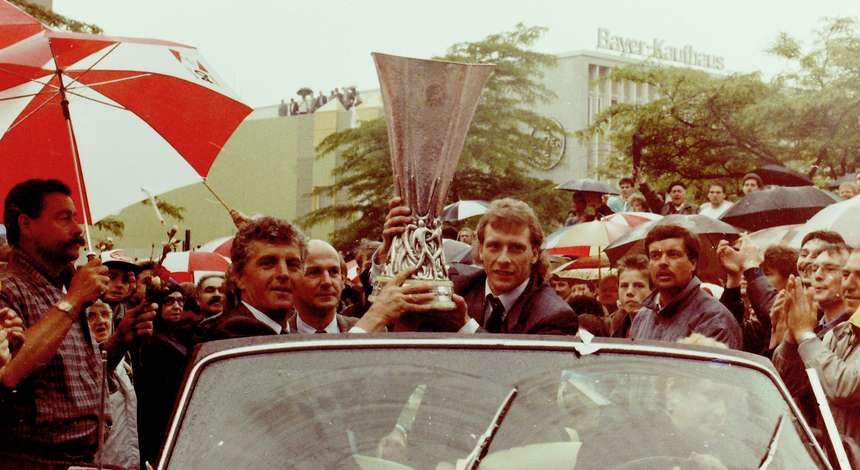
To a certain degree, he could be described as the father of internationalisation at Bayer 04. Of course, not in the marketing sense but more in terms of football. When Erich Ribbeck succeeded Dettmar Cramer at Leverkusen in 1985 the club had never before finished higher than seventh in the Bundesliga, the previous season had ended in 13th position in the table and six years after promotion to Germany's top flight they were not taken seriously. Hardly anybody in Europe had heard of Bayer 04. And that didn't change with the signing of the South Korea international Bum-kun Cha or Herbert Waas. And the internationally renowned Dettmar Cramer, who had won the European Cup – the predecessor to the Champions League – twice with FC Bayern was unable to improve the image of the club over the long term. Then came Erik Ribbeck – and he succeeded in taking Bayer 04 straight into the UEFA Cup.
Ribbeck was also not an unknown force in football. He played as a defender for SSV 1904 Wuppertal (later Wuppertaler SV) add up to the middle of the 1960s at Regional League club SC Viktoria Köln. His teammates there included the future Bayer 04 coaches Gero Brisanz and Willibert Kremer. The head coach at Viktoria was the great Hennes Weisweiler under whom the sports student Ribbeck earned his coaching badge.
The Wuppertal-born player almost ended up under the Bayer Cross in 1965. He had already said yes to Leverkusen, then playing in the Oberliga West, but finally accepted an offer from the Bundesliga club Hertha Berlin. Unfortunately, the Berlin team had breached the rules of the DFB and were compulsorily relegated to the Regional League due to illegal payments to a number of players. Ribbeck was suddenly without a club so he ended his is playing career and followed the call from Hennes Weisweiler. He had just brought Borussia Mönchengladbach into the Bundesliga and he offered Ribbeck job as assistant coach. "I was flabbergasted as I was only 28 years old. I didn't want to hang my boots up but it was worth it for that challenge," he later recalled in an interview with the ‘RevierSport’ journal.
A couple of months earlier he had been playing against Günter Netzer and Jupp Heynckes at the Bökelberg ground. "Now I was suddenly their coach." He learned a lot from Weisweiler. "Sometimes he could be quite tough and also unfair from my perspective. That's why I later tried to be fair myself. I don't know whether that worked," said Ribbeck who worked as a sports teacher at a school in Remscheid during his time at Gladbach. However, he soon had to give up that job as he was appointed head coach at Eintracht Frankfurt in 1968. The 31-year-old was the youngest Bundesliga coach at the time and at Frankfurt he worked with Germany international players Jürgen Grabowski and Bernd Hölzenbein. Five years at Eintracht were followed by another five at FC Kaiserslautern. Ribbeck was involved in a legendary Bundesliga match in his first season at the Betzenberg: His team beat FC Bayern 7-4 after the Munich side had led 4-1. The goalscorers for Kaiserslautern on that 20 October 1973 included a certain player called Klaus Toppmöller.
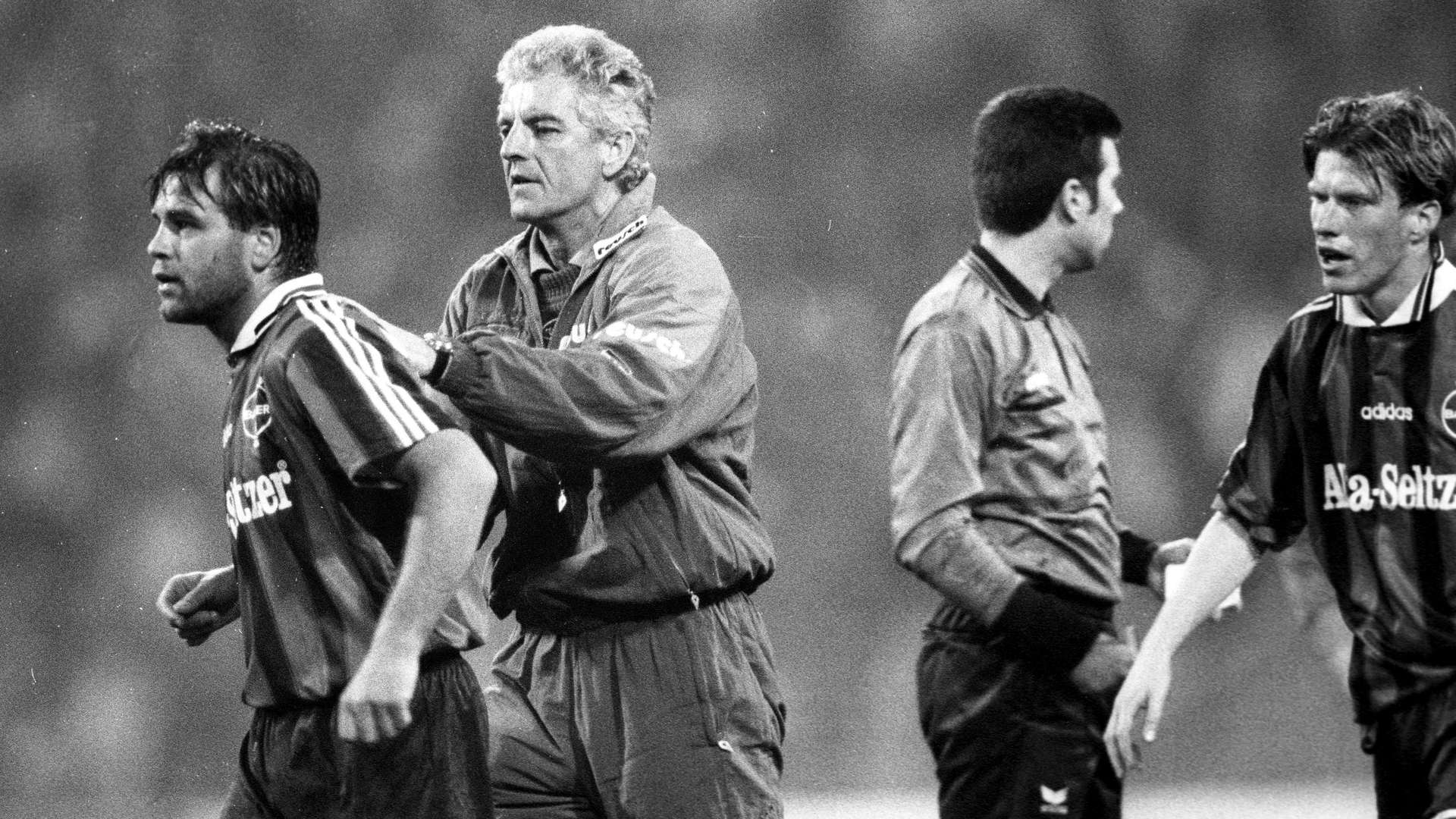
After 13 years as a club coach, Ribbeck became the assistant to Germany coach Jupp Derwall in 1978 and he helped to win the European Championship in Italy in 1980 and two years later was a World Cup runner-up in Spain. He took charge of the Olympic team in 1983 and he reached the quarter-finals at the Los Angeles Olympic Games in 1984. He then returned to club football and became the Borussia Dortmund coach in the autumn where he saved BVB from relegation to the second division.
And then, 20 years after the first contact, he finally signed for Leverkusen. When he was taken on under the Bayer Cross in July 1985, one of the first questions from the club management to Ribbeck was which player he would like to sign. "I answered: I don't want any new players. You're competing for the German league title nearly every year with youngsters. We can make the most of that and bring other players in later if required." Ribbeck said that answer came as a big surprise. The new coach banked on youth including talents like Peter Zanter, Dirk Hielscher, Günter Drews, Thomas Zechel, Knut Reinhardt and Marcus Feinbier. And he also ensured that he kept the unhappy goalkeeper Rüdiger Vollborn at Bayer 04. "Ribbeck definitely wanted to keep me. If I hadn't had his confidence than I would probably have gone back to Berlin in 1985," said Vollborn.
Under the new coach, the young team finished sixth on the final day of the 1985/86 season with a 2-2 draw at Schalke 04 taking Bayer 04 into Europe for the first time in the club's history. And two years later the club won the UEFA Cup after a dramatic penalty shootout in the final against Espanyol. That was Ribbeck's biggest triumph as a club coach. "This title means a lot to me. We made a name for ourselves in our second season in the UEFA Cup. Something that was always important to me in addition to sporting success was: I thought we had to be more likeable. And the fact we did that was due not least because of our young players." For many of them he was a father figure. In the team, where stalwarts Thomas Hörster and Wolfgang Rolff were key players, there was a great feeling of comradeship.
Ribbeck, who announced at the end of 1987 he would leave the club at the end of the campaign, was in tears after the final whistle of the UEFA Cup final in a warm embrace with his assistant coach Gerd Kentschke on the halfway line. He was brought up close to water and in such situations he became emotional. A few years later – Ribbeck was now working in sports communication for Opel after being the sporting director at Hamburg SV – a tabloid gave him the title of Sir. He didn't like it. Just because he always wore a tie, was smartly dressed and was always eloquent in this phase of his career, he was suddenly considered to be a smart gentleman. "Later as a coach I always wore a tracksuit but that didn't help. At first I tried to fight against it because I didn't see myself like that. But I quickly realised I couldn't do anything to stop it. The image stuck fast. But being a Sir in football is no advantage."
It was clear that Ribbeck would attract the attention of FC Bayern at some point. He worked at Säbener Straße for two years from 1992 to 1993. There were no titles in that time but Bayern were Bundesliga runners-up in 1993
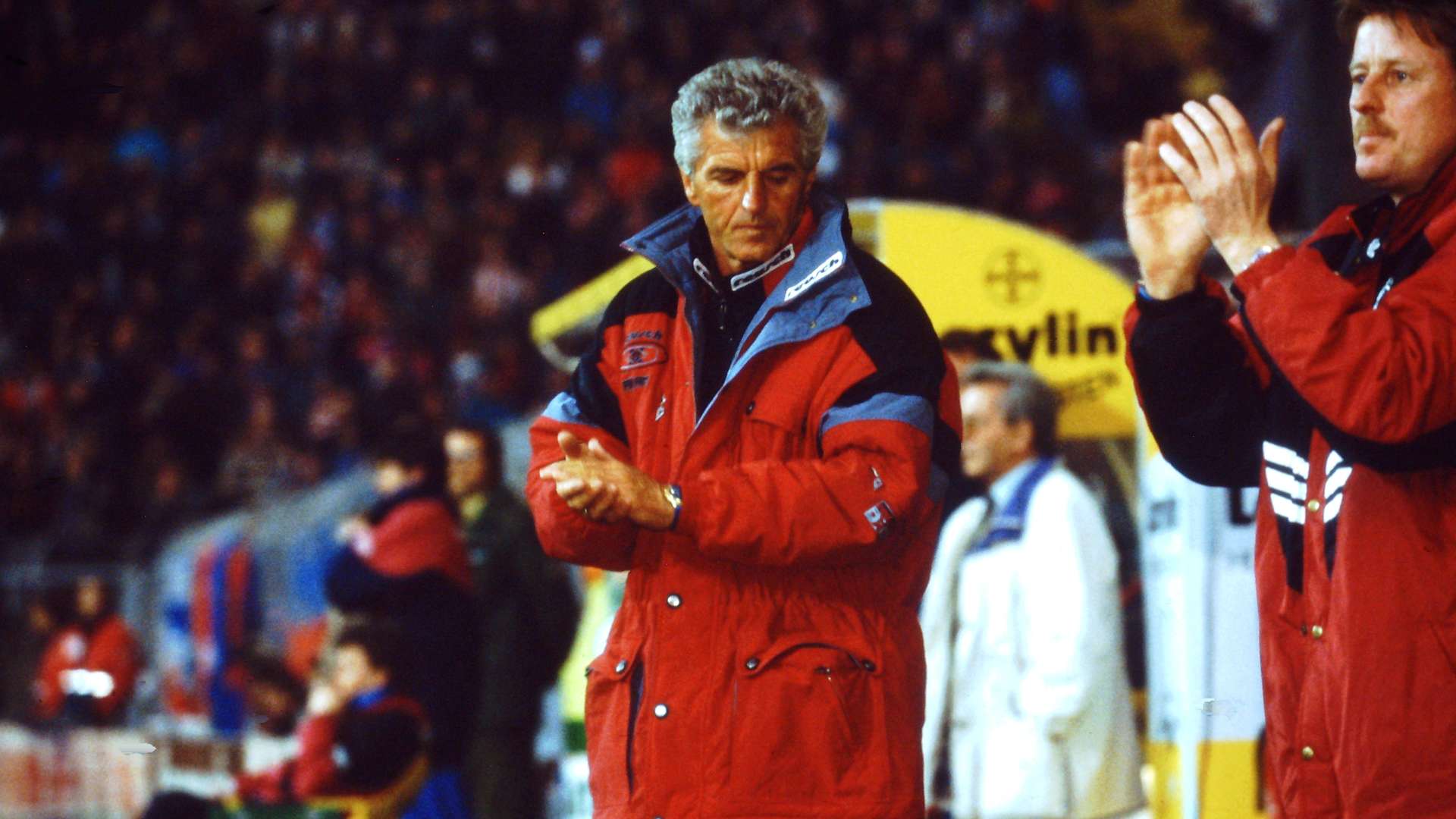
His last two clubs as a coach were not crowned with success. Ribbeck's second period in charge at Leverkusen ended after just one year in April 1996. His team, in sixth place at the winter break, tailed off in the rook run the and, with five games left to play in the season, they were 13th just three points above a relegation spot. Assistant coach Peter Hermann took charge and Bayer 04 retained top-flight status on the final match of the season with a 1-1 draw against Kaiserslautern.
Two years later, a dream of Erich Ribbeck's came true out of the blue. The now 61-year-old, formerly the youngest Bundesliga coach at 31, was brought out of retirement as the successor to the Germany coach Berti Vogts and he became the oldest Germany head coach. He took Germany to the European Championships in Belgium and the Netherlands in 2000 but an exit at the group stage saw him resign after the tournament. "I would have preferred a different end with the national team and it was clear before the European Championship that I would give up after two years," said Ribbeck looking back at that time without bitterness.
In his 30 years as a coach, he was always a distinctly polite and friendly person. He still follows football closely these days but keeps himself to himself. Being a pundit on TV is not for him. He continues to watch a lot of football on television. "But I don't need to appear in broadcasts and lead discussions. That's not my cup of tea." In terms of health, he is well "with the exception of the usual aches and pains as you get on." He and his wife Ulla swap between living in Tenerife and close to Cologne where Erich Ribbeck is celebrating his 85th birthday on this Monday.
Many happy returns from Bayer 04 to our former coach and here's wishing you all the best.
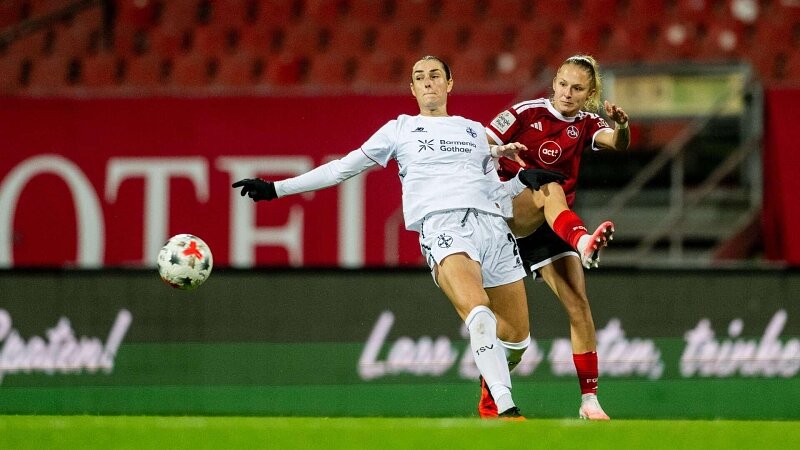
Werkself-TV shows the highlights of Bayer 04 Women's 0-2 loss at 1. FC Nürnberg on Matchday 8 of the 2026/27 Google Pixel Women's Bundesliga.
Show more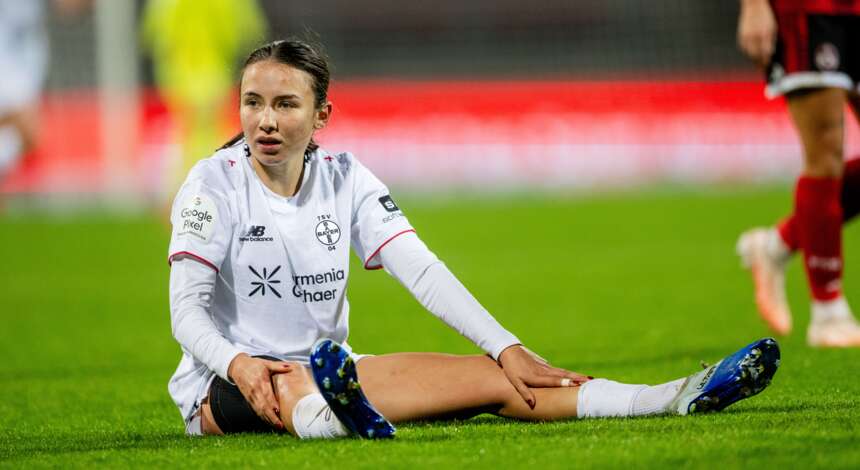
After nine points from their first three away matches of the 2026/27 season, the Bayer 04 Women suffered their first away defeat on Sunday afternoon. The 2-0 defeat away to FC Nürnberg, who were winless before today, represented a setback for coach Roberto Pätzold’s team in the race for the top spots in the Google Pixel Women’s Bundesliga. Fany Pronietz scored both goals (62’, 85’) for the home side.
Show more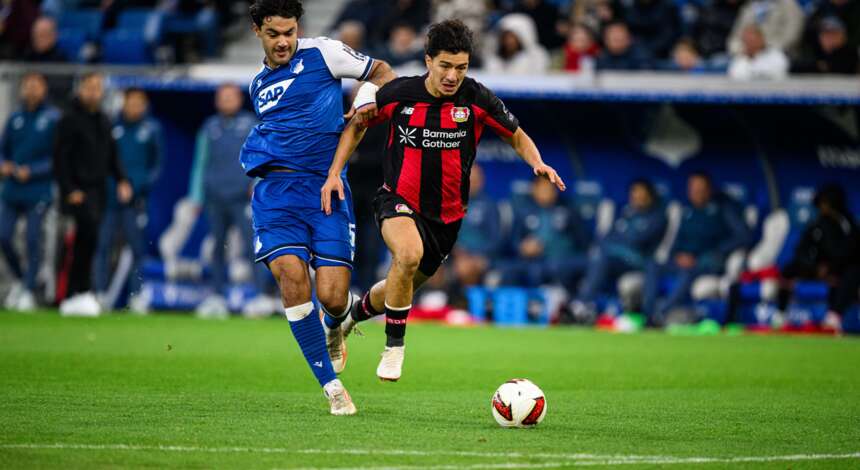
After six consecutive wins, the Werkself have hit a rough patch: Bayer 04 lost 3-0 away to TSG Hoffenheim. Andrej Kramaric put the hosts ahead from the penalty spot (79'), with Alexander Prass and Max Moerstedt adding to the tally shortly before full-time (89’/90+5’). After ten matches under Carles Martínez, with the Black and Reds always scoring at least twice, Leverkusen failed to find the net for the first time.
Show more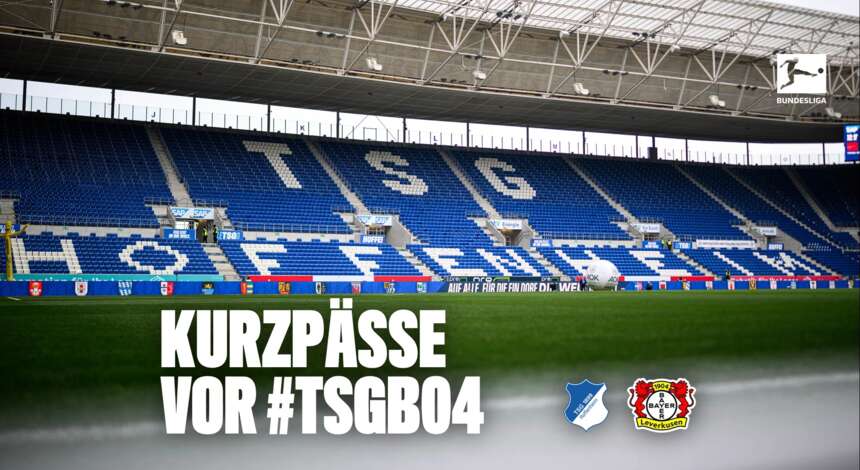
The Werkself still have a score to settle with TSG Hoffenheim: Bayer 04 lost both matches against the Kraichgau side last term – after the Black and Reds had won all the previous five encounters. Leverkusen are currently on a roll and looking to kick off a new winning streak against TSG in Sinsheim on Sunday 25 October (kick-off: 15:30 CET), and Patrik Schick is keen to continue his current run of form. However, it will not be easy, as coach Christian Ilzer’s team have also gained confidence recently. Today’s matchday news.
Show more