Yes, I'd like to see videos dispalyed.
In 1995, Zé Elias made his debut for Brazil, and he went to win ten international caps. At the 1996 Olympic Games in Atlanta, he won the bronze medal with Brazil and subsequently moved to Europe to join Bayer 04. Zé played his first Bundesliga match for the Werkself on matchday 5 of the 1996/97 season in a home match against 1860 Munich. Within three months, he learnt German almost perfectly and was well-liked by his team-mates thanks to his cheerful and fun-loving nature. As competition for his position was fierce, with players such as Carsten Ramelow and Niko Kovac, he made only 23 Bundesliga appearances and, after just one season in Leverkusen, decided to move to Italy to join Inter Milan.
He won the UEFA Cup with the Milan team in 1998. A year later, he joined Bologna for one season. Following a three-year spell in the Greek league with Olympiacos, he returned to Italy in 2003 to join Genoa, where his younger brother Rubinho, a Brazilian goalkeeper, would also go on to play many years later. From 2004 onwards, Zé Elias went on to play for a number of other clubs: FC Santos, Metalurh Donetsk, Guarani FC, Omonia Nicosia, Londrina EC and SCR Altach. He finally brought his career to an end in 2009 with the Austrian Bundesliga side.
Since retiring from playing, Zé Elias has remained closely involved with football. He works as a pundit for various media outlets, analysing matches in the Brazilian league as well as international competitions. With his specialist knowledge and many years of experience, he is able to explain football to viewers in a way that is easy to understand. Zé Elias remains a prominent figure in Brazilian football to this day.
Dear Zé, I wish you all the best on your 50th birthday. Stay healthy and let everyone celebrate your big day.
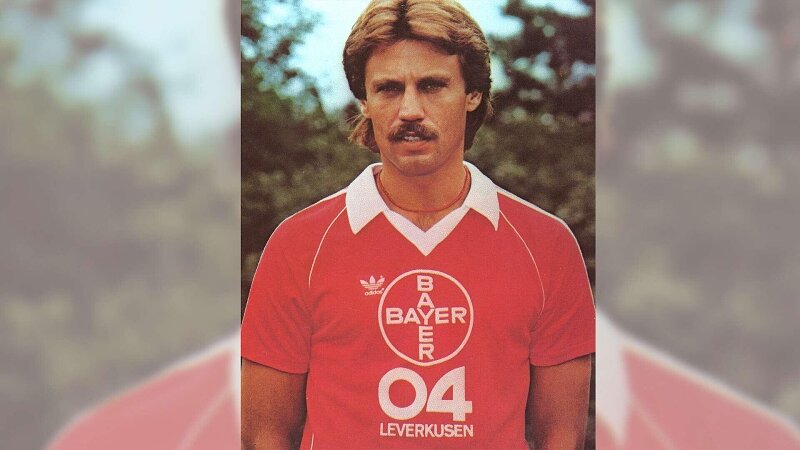
Harry Gniech was born on 14 October 1951 in Leverkusen-Schlebusch. At the age of six, he joined SV Bayer 04, initially in the athletics section. The boy actually wanted to play football, but was only allowed to switch to the football team when he turned nine. Harry quickly established himself as a playmaker in midfield. Despite his talent, the path from the youth team to the first-team squad was a long one back then. In the 1973–74 season, his former U19 coach, Friedhelm Renno – who was by then in charge of Bayer 04’s first team – selected him for his first match with the professional squad.
Show more
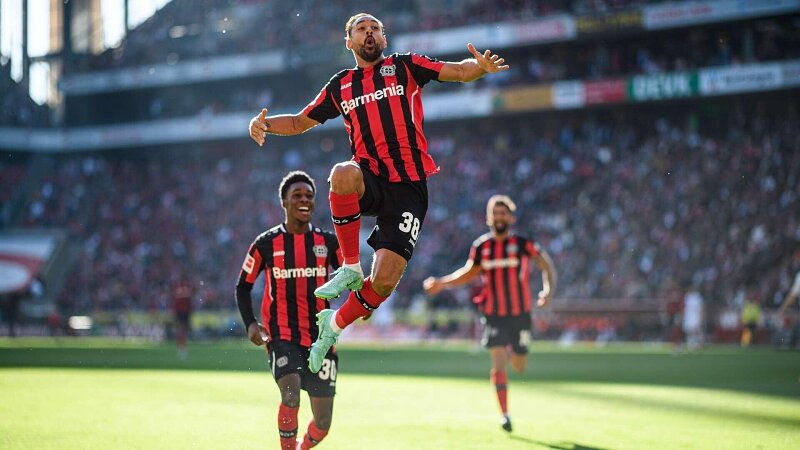
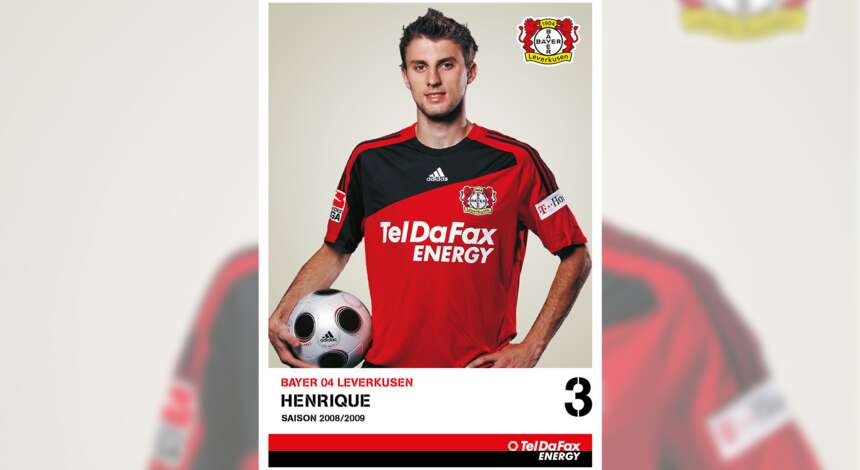
Henrique Adriano Buss, known as Henrique, was born on 14 October 1986 in Marechal Cândido Rondon, a town in the Brazilian state of Paraná. At the age of 13, he joined Coritiba FC and made the step up to the first team in 2006. Henrique helped the team gain promotion to the Brazilian top flight and then moved on to Palmeiras FC. After just five matches for his new club, the 1.85-metre-tall centre-back was signed by Barcelona in 2008 for ten million euros and loaned to Bayer 04 for one year for a fee of €400,000.
Show more
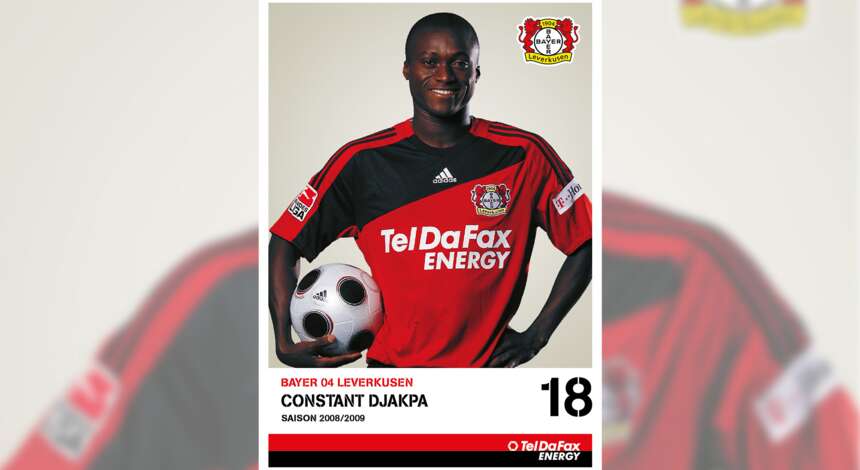
Constant Djakpa was born on 17 October 1986 in Abidjan, Ivory Coast. He started playing football at the age of five. He took his first steps in professional football at Stella Club d’Adjamé, before moving on to Sogndal IL in Norway. His path eventually led him to Germany via the Romanian club Pandurii Târgu Jiu.
Show more
In this video you can see impressive and important goals in the history of Bayer 04 from the month of October. It's not always about the beauty of the goals, but also a reminder of special games and players.
Show more
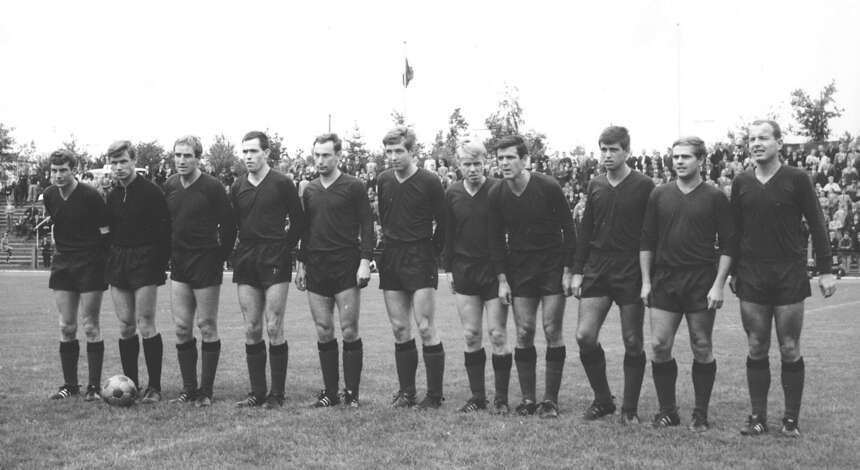
In the first week of October 1966, professional footballers decided to take an unusual step – they went on strike. They felt compelled to resort to this action, which was relatively uncommon until then, to give greater weight to their demands for fair pay. They reasoned that, with three draws, they were entitled to a bonus; at the very least, a points bonus of 75 Deutschmarks that was agreed before the start of the season.
Show more