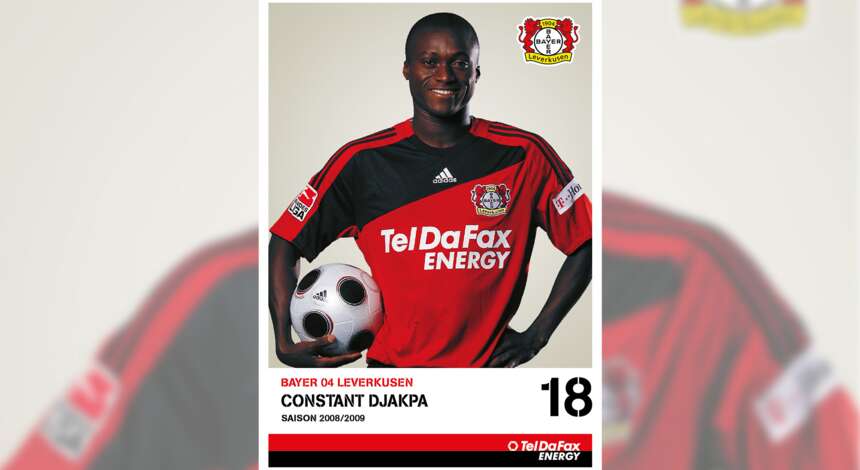
At the age of 16 he then joined the Kickers, trained with the first team as a youth player and he also worked in the offices at the Offenbach club as part of his apprenticeship. In November 1977, at the age of 17, he made his first-team debut. But he had to wait a while for his first goal. On matchday three in the 1978/79 season in the Bundesliga 2 South he opened the scoring for Offenbach on 20 minutes in their 3-2 defeat against Wormatia Worms.
After two and a half years at Kickers Offenbach, Rudi signed for 1860 Munich in the Bundesliga for the 1980/81 season. But his nine goals were unable to prevent the Lions from Munich being relegated. The following season Rudi really took off in Bundesliga 2. He was the top scorer with 37 goals. 1860 were unable to get promoted even with the goals from Völler. But he then made the next step in his career: Werder Bremen signed the pacy striker for the 1982/83 season.
In the next five years, Rudi scored 97 goals in 137 Bundesliga games for the North German side and in 1982 he made his first of 90 international appearances for Germany, was a runner-up at the 1986 World Cup and in 1987 he moved to Italy to play for AS Roma.
In 1990 he celebrated his biggest success in the Italian capital with Germany in winning the World Cup. A year later he secured his first club title – he won the Italian domestic cup competition with AS Roma in 1991. The same year saw them reach the UEFA Cup final where they lost to Inter Milan (0-2, 1-0).
After five successful years where Rudi Völler became a crowd favourite for the Rome side he moved on to France to play for Olympique Marseille. With the French club, he was the first German player to win the first UEFA Champions League, previously the European Cup, with a 1-0 victory against AC Milan.
The Bayer 04 boss Reiner Calmund succeeded in bringing Rudi to Leverkusen in 1994. In two years at Bayer 04 he played 62 Bundesliga games and scored 26 goals and he ended his great playing career on 21 May 1996 with a testimonial in front of a full house at the Ulrich Haberland Stadium.
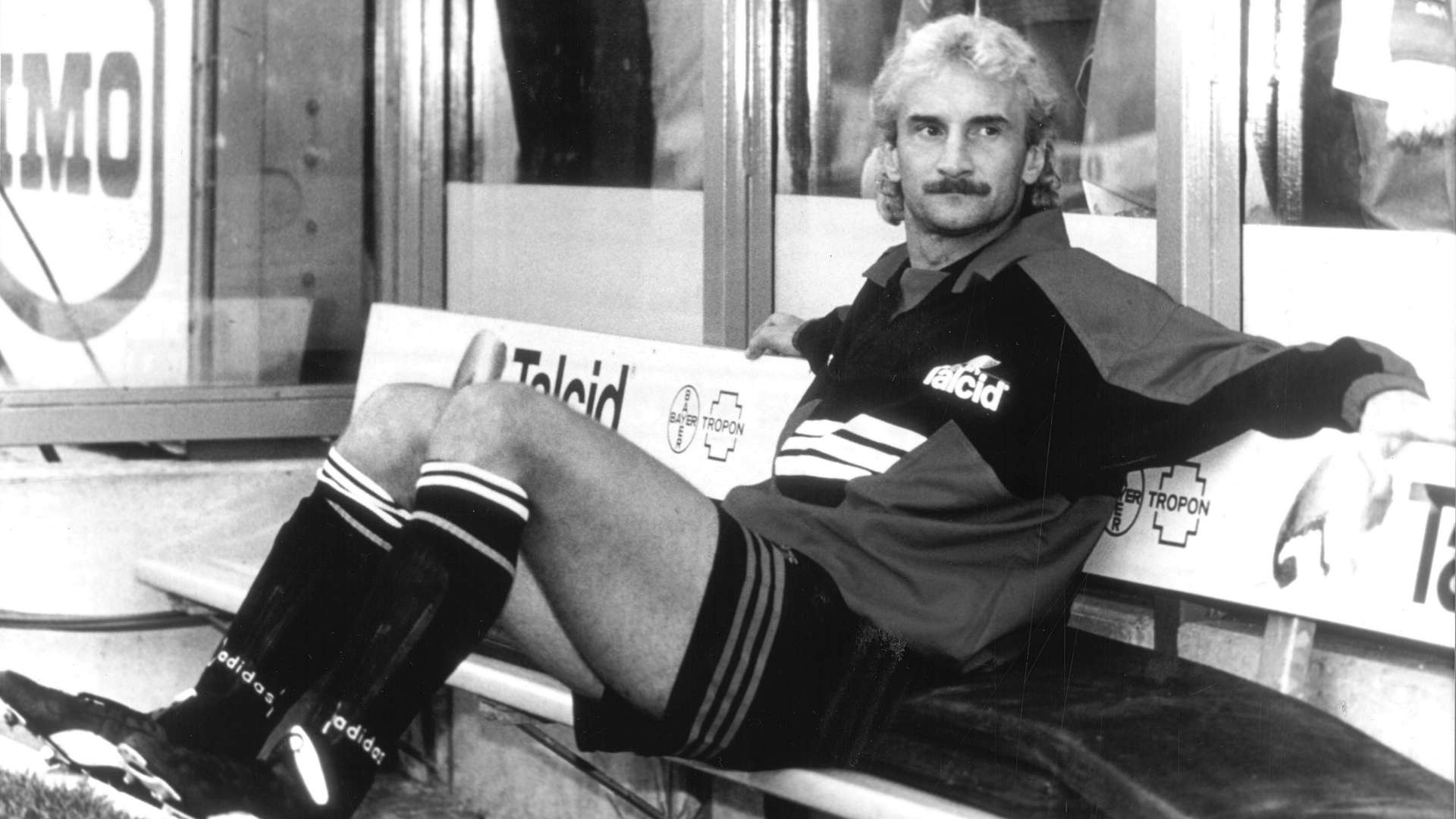
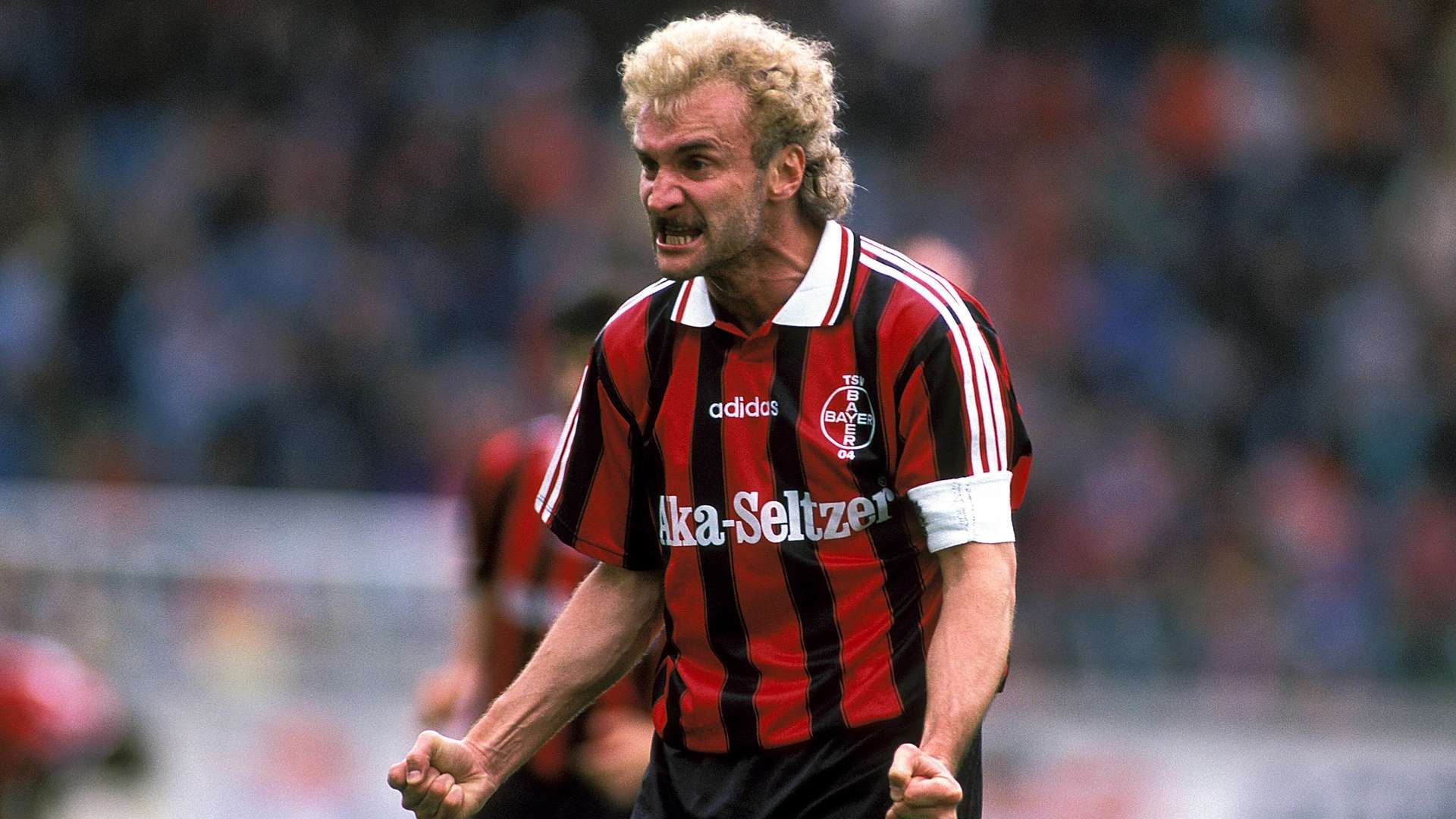
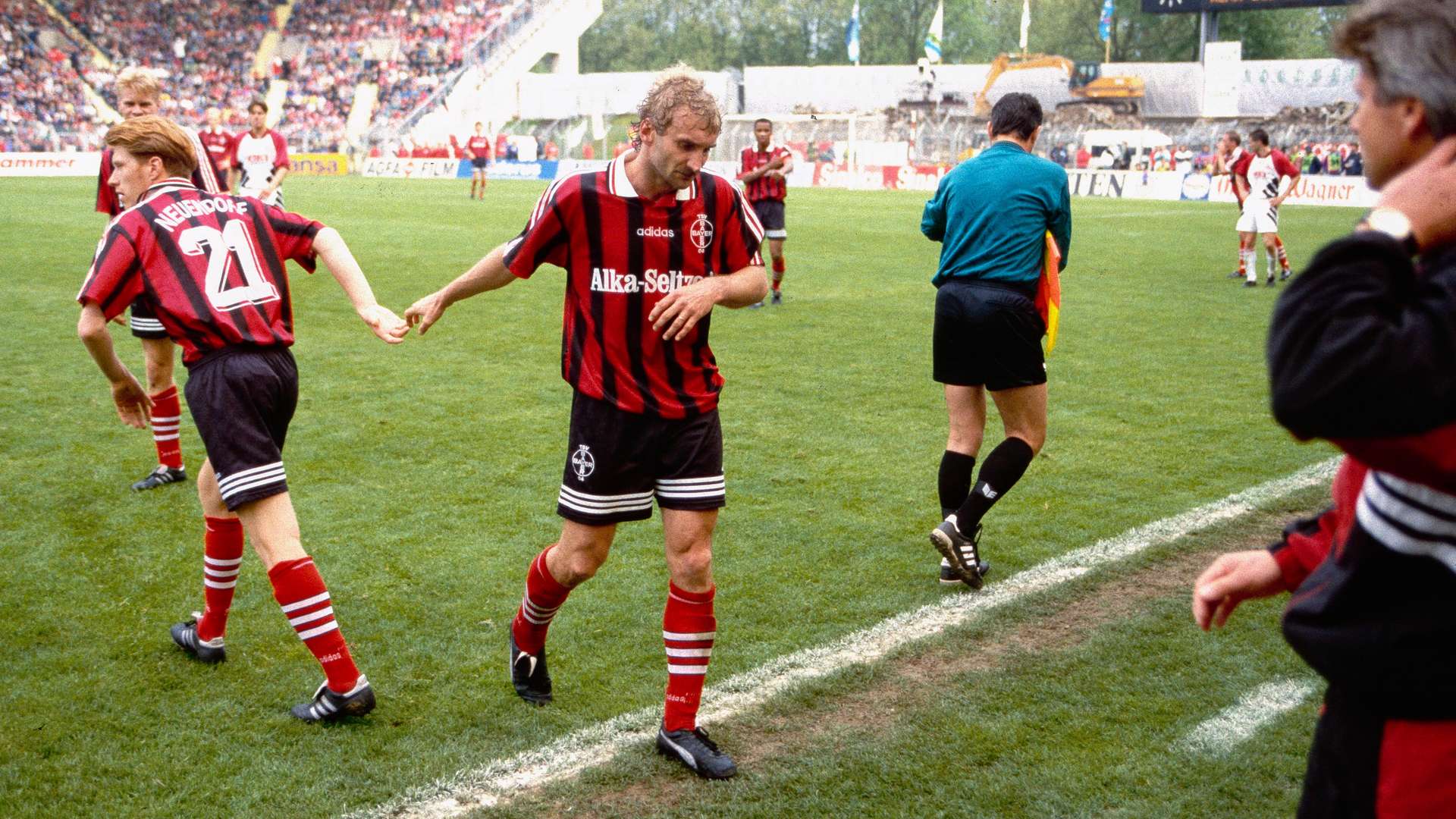
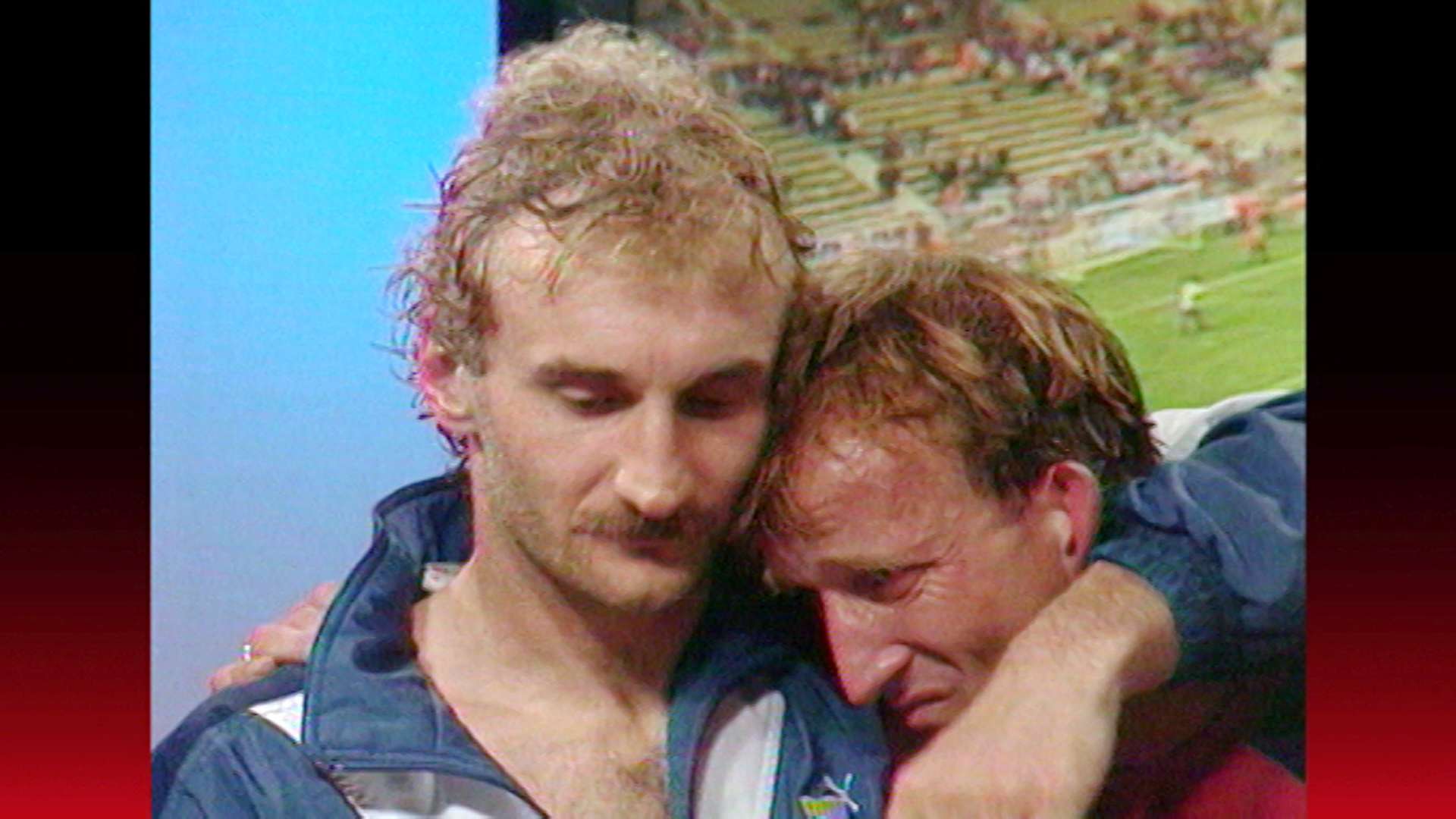
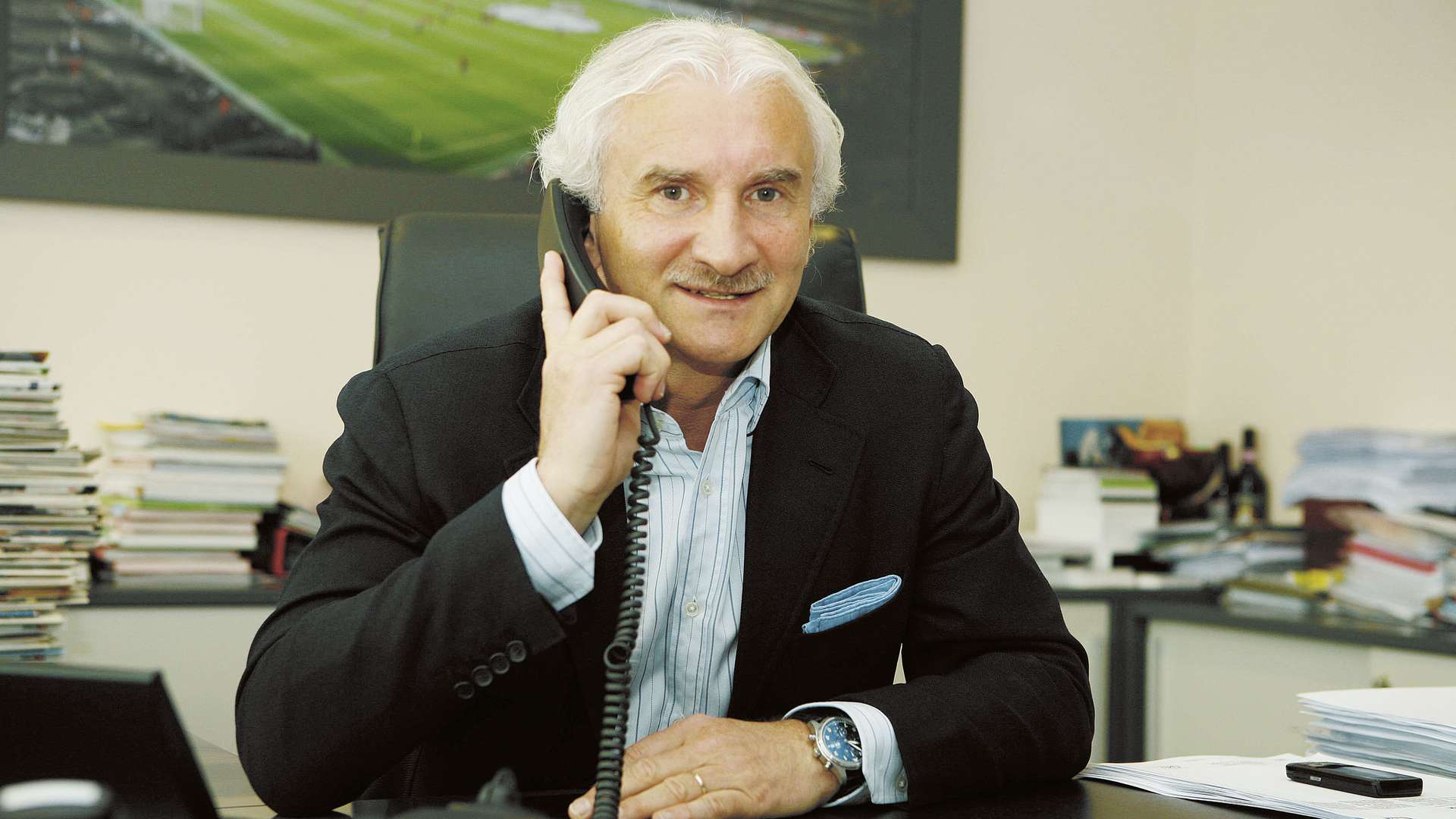
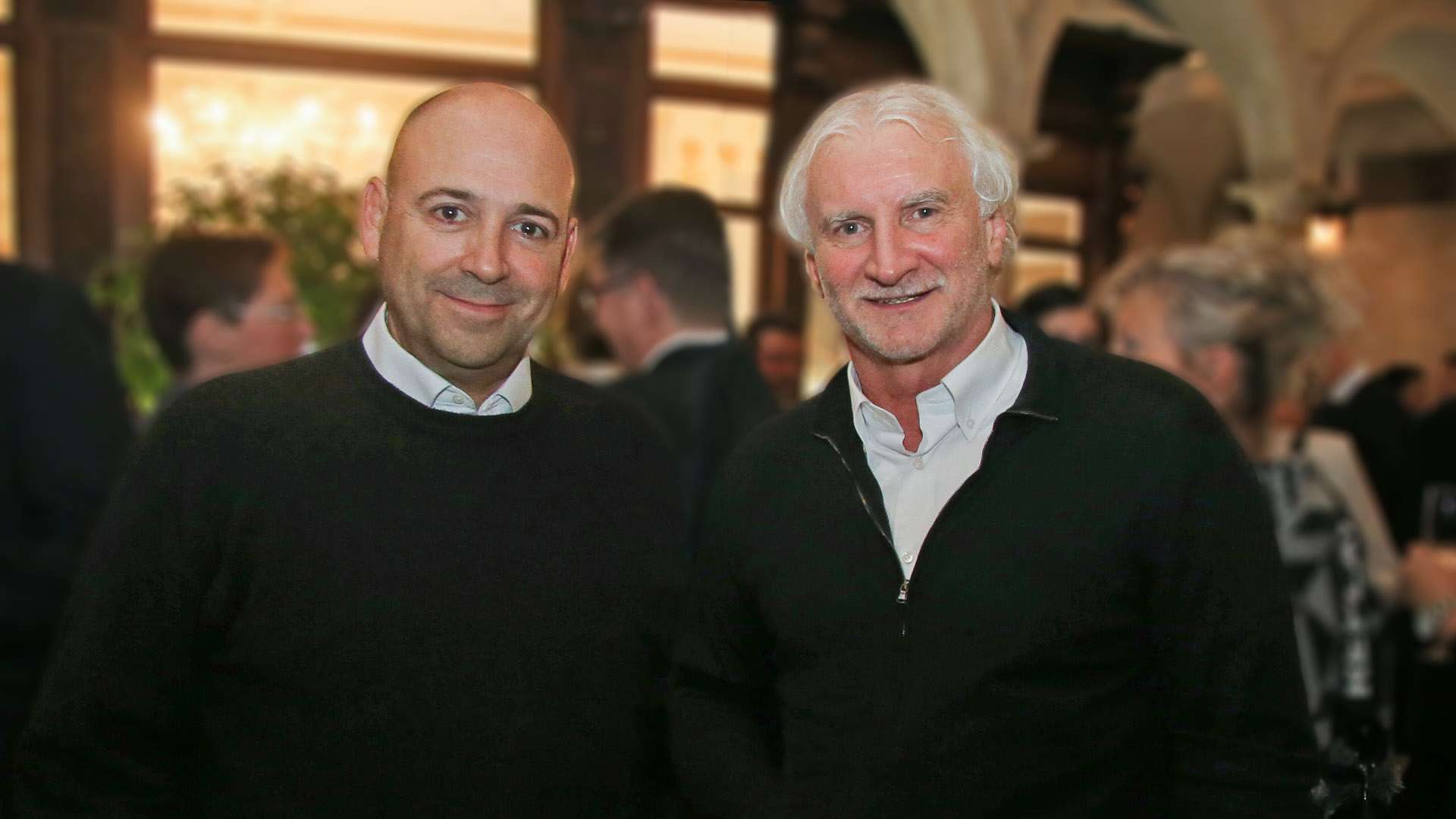
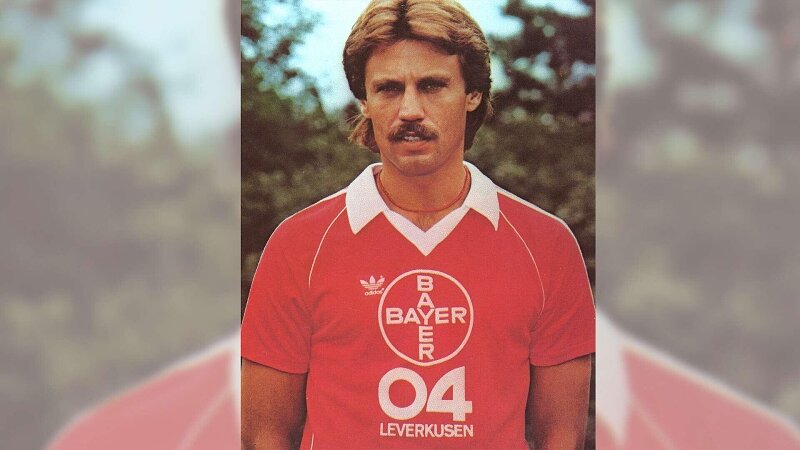
Reiner Calmund took him under his wings from 1996: Rudi was the Bayer 04 sporting director for the next four years. In the autumn of 2000 he was the caretaker coach for Germany. Originally he was to be in charge until the contract of the then Bayer 04 coach Christoph Daum ran out in the summer of 2001. But that all changed with the affair involving the Werkself coach.
Rudi was the Germany coach for the next four years and in 2002 he led the team to finish runners-up at the World Cup in Japan and South Korea. Two years later he resigned after a disappointing Euros in Portugal where Germany went out at the group stage. After a brief period as a coach at AS Roma he signed a contract as sporting director at Bayer 04 in the summer of 2004 and he stayed with the club to the summer of 2022. During his long time under the Bayer Cross, Rudi Völler was the face of Bayer 04. On the last matchday in the 2021/22 season he received a farewell from the Bayer 04 fans with a big choreography.
Today Rudi is director of the Germany team.

Christoph Daum was born on 24 October 1953 in Zwickau. As a child, he moved to West Germany with his mother and grew up in Duisburg. He developed a great enthusiasm for football at an early age, even though it soon became clear that his future lay less on the pitch than on the sidelines. Even at a young age, his passion for analysing, explaining and improving things became apparent.
Show more
When the Bayer 04 players celebrated Christmas in 1960, they spent the winter in second place in the Oberliga West 2 on 20 points - but already five points behind leaders Schwarz-Weiß Essen. However, coach Erich Garske's team are struggling to get back on track in the new year. A goalless draw against Bonner FV at home at the Ulrich Haberland Stadium was followed by a 2-1 away defeat in Erkenschwick. The following home game also yielded just one point. As a result, the team's promotion ambitions dwindled to a minimum, as the gap to the coveted spot has now grown to a challenging ten points.
Show more
In this video you can see impressive and important goals in Bayer 04 history from the month of February. It's not always about the beauty of the goals, but also a reminder of special games and players.
Show more
It is 11 February 2006 and Schalke 04 and the Werkself kick off at 3.30 p.m. in a match that ends up being historic - at least from a Bayer 04 perspective.
Show more
As league leaders, the Werkself welcomed the relegation-threatened team from Rhenania Würselen. On 4 February 1951, 5,000 spectators line the touchlines despite the Sunday carnival parades. And they see a home team that is superior on the pitch. Without Theo Kirchberg, who was ill, and Emil Becks, who was suspended, the hosts attacked the opposing goal from the start. Battling against a strong wind in the first half, Bayer 04 created chance after chance, but were repeatedly thwarted by the Würselen goalkeeper. With the score at 0-0 at half-time, Karl Heinz Spikofski tried his luck on 55 minutes and hammered the ball into the opposition net from 20 metres out. Rhenania can no longer counterattack. The siege of the Würselen penalty area continued right to the end, but the game ended in a narrow 1-0 win.
Show more