Yes, I'd like to see videos dispalyed.
Following the reunification of Germany in 1990, FC Karl-Marx-Stadt was renamed Chemnitzer FC, and ‘Balle’, as he would later be known in Leverkusen, made his debut for the Chemnitzer FC first team in Bundesliga 2 in 1995 and also played his first match for the Germany U21s in March 1996. Although Chemnitz were relegated that season, Michael stayed on and, in the 1996–97 campaign, he was a regular starter for his team in the Regionalliga Nordost. When he came to the attention of FC Kaiserslautern, just promoted back to the Bundesliga, the decision to move to the Palatinate was a very easy one for him.
In his first season in the Bundesliga, he made 16 league appearances, but only started in three of those matches. Yet, at the end of that season, newly promoted FC Kaiserslautern sensationally won the Bundesliga title, and Michael held the trophy in his hands for the first time. Things went much better for him the following season. He was given significantly more playing time for the Palatinate side and even made his debut for the German national team in April 1999.
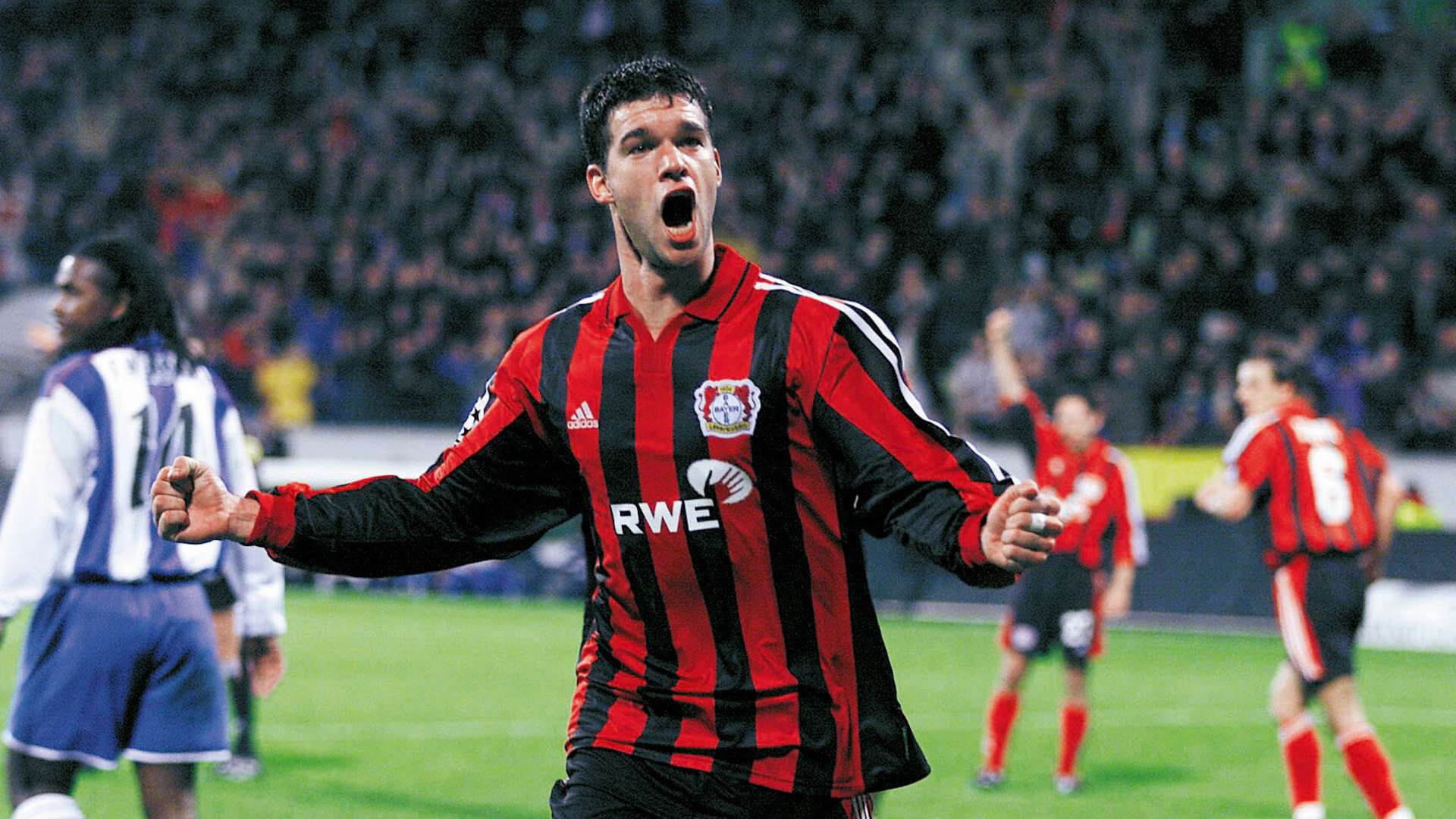
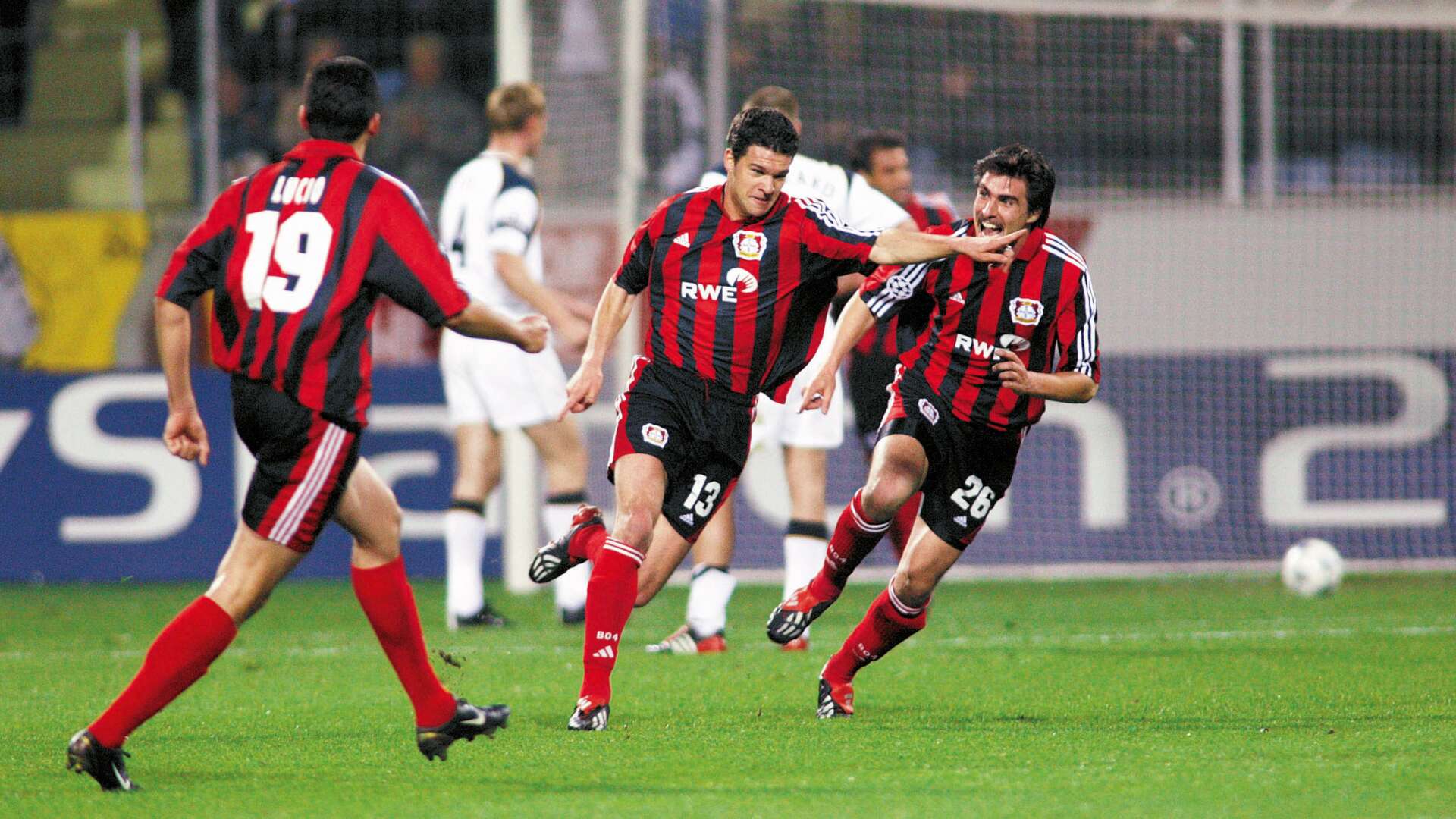
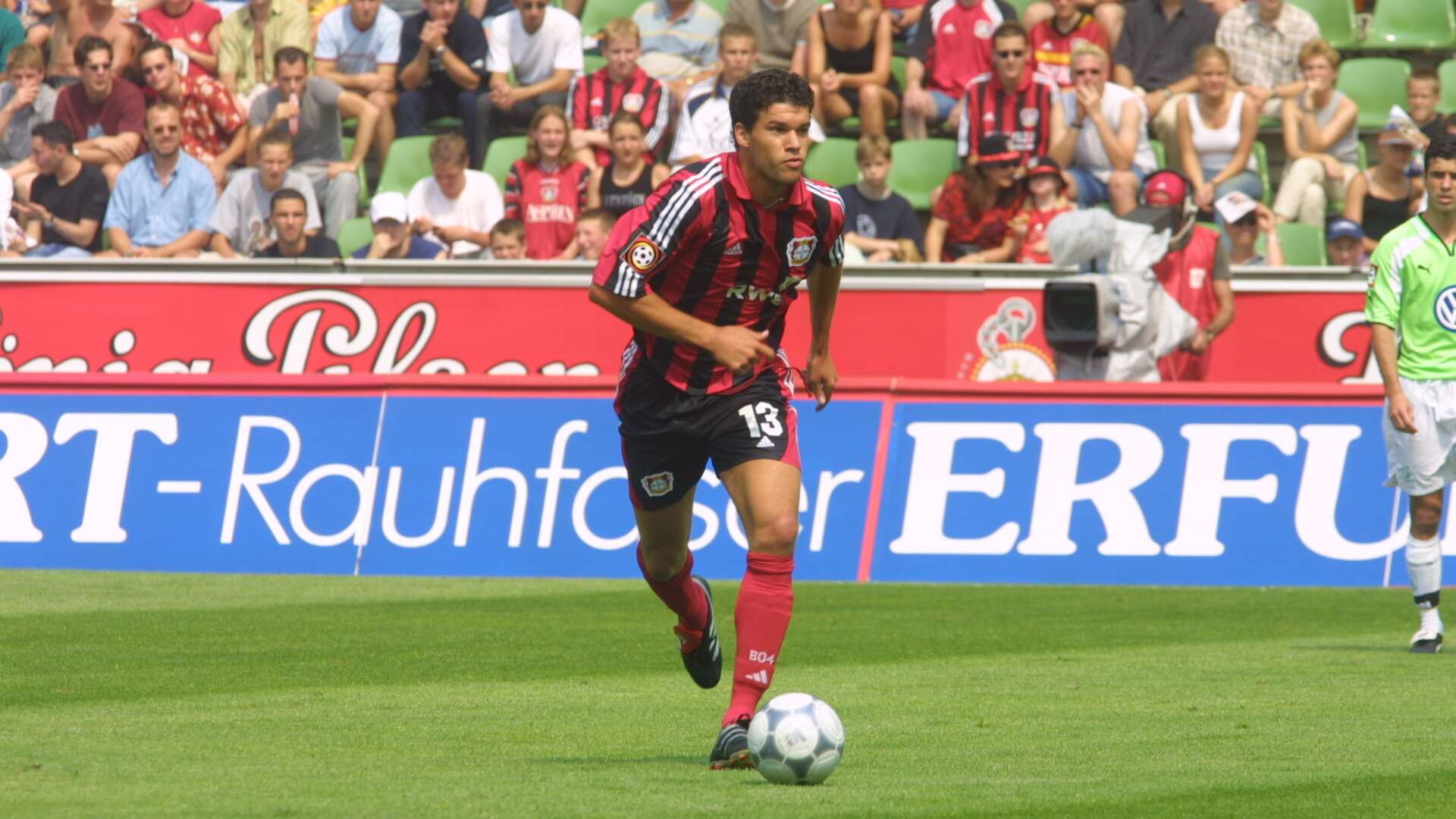
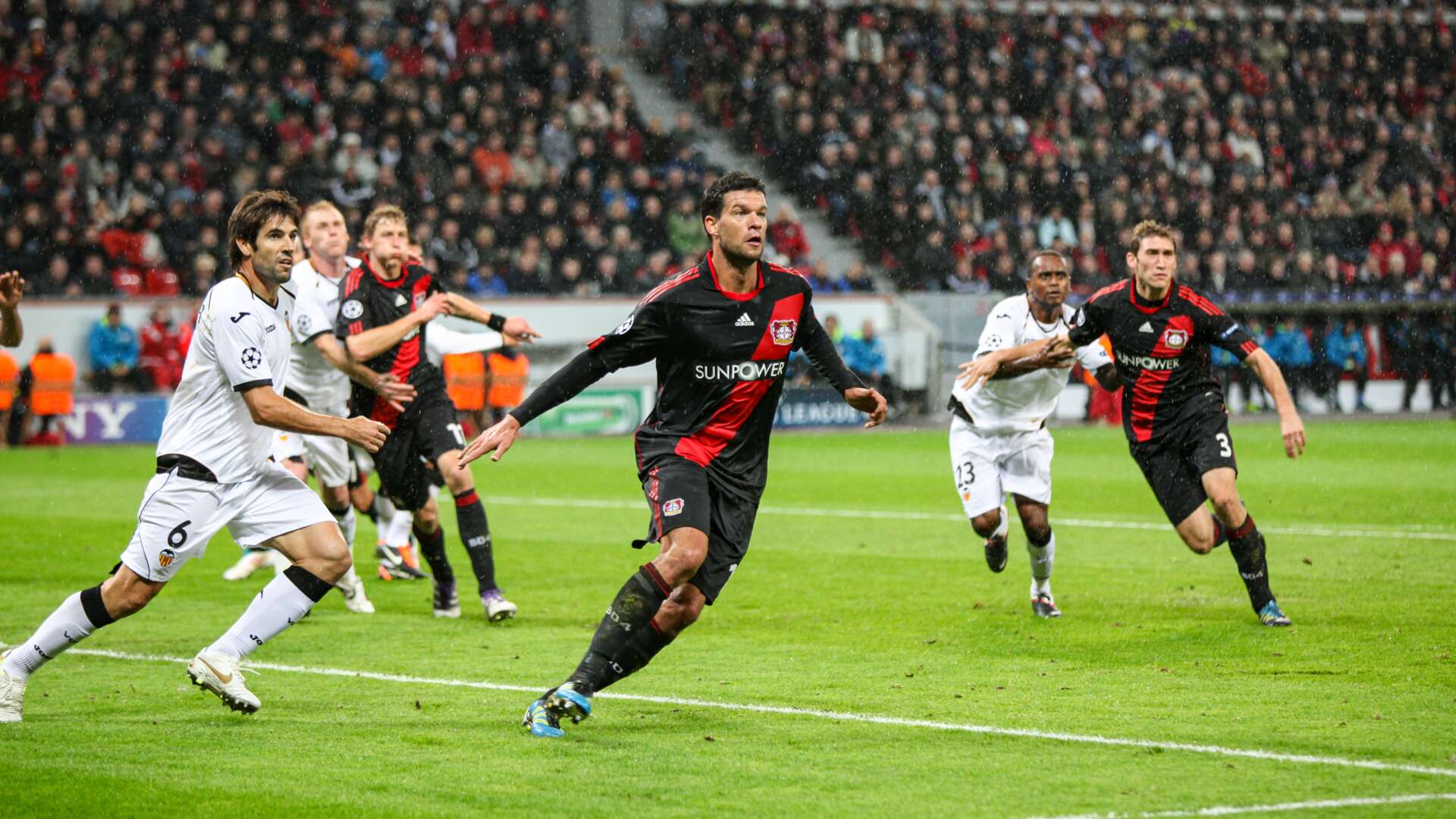
Michael Ballack then made his sporting breakthrough at Bayer 04, where he played from 1999 to 2002. Here, under coaches Christoph Daum, Berti Vogts and Klaus Toppmöller, he developed into a complete midfielder – technically gifted, a goal threat, with a good overview of the game and leadership qualities. In his first season for the Werkself, he became a first-team regular. However, it ended with the Unterhaching drama and his own goal that led to the 1-0 loss. Yet the 2001–02 season proved to be his definitive breakthrough. In what was arguably his most important, perhaps even best season – where he scored seventeen goals in the Bundesliga and six in the Champions League, and that saw the Werkself finish as runners-up in the Champions League, the Bundesliga and the DFB Pokal – he announced as early as December 2001 that he would be joining Bayern Munich for the following season. And in the months that followed, he proved all the sceptical Bayer 04 fans wrong with outstanding performances. In total, he made 155 appearances for Bayer 04, scoring 42 goals.


He also put in outstanding performances for the national team. With him as their leader, Germany reached the final of the 2002 World Cup in Japan and South Korea, after Balle scored the decisive 1–0 winning goal in both the quarter-final and the semi-final. Shortly before his goal in the semi-final, he committed a tactical foul just outside the penalty area. He brought down a South Korean player, who was in a promising shooting position just outside the box, rather roughly and was shown a yellow card. That meant he was suspended for the final against Brazil. No one knows how that match would have turned out with Michael Ballack, who had been in outstanding form that year. He was rightly voted Footballer of the Year for the first time.
In his very first season, he won the double with FC Bayern and was once again named Footballer of the Year. He went on to win the league title and the DFB Pokal with the Munich side in 2005 and 2006 as well. In 2005, he was once again named Footballer of the Year. However, he was unable to fulfil his big dream of winning the Champions League during his time at FC Bayern. That is why, in 2006, he moved to England to join a club he hoped to achieve this goal with.
Although he only won the Premier League title once in four years with Chelsea, he did secure three FA Cup victories and, above all, a place in the 2008 Champions League final against Manchester United. After a 1–1 scoreline after 120 minutes, the match went to a penalty shoot-out. Balle converted the first penalty for his side. I’ll never forget how down he was after the final missed penalty and the resulting defeat – yet another missed opportunity to win the Champions League title. It was to be his last chance.
In the national team, manager Jürgen Klinsmann appointed him captain for the 2006 World Cup on home soil, and he was given his second nickname: ‘Der Capitano’. He led the national team onto the pitch as captain for every match right up until the 2010 World Cup. In the FA Cup final between Chelsea and Portsmouth prior to the 2010 World Cup in South Africa, he suffered a serious injury following a foul by Kevin-Prince Boateng and never played for the national team again. His international career came to an end after 98 caps and 42 goals.
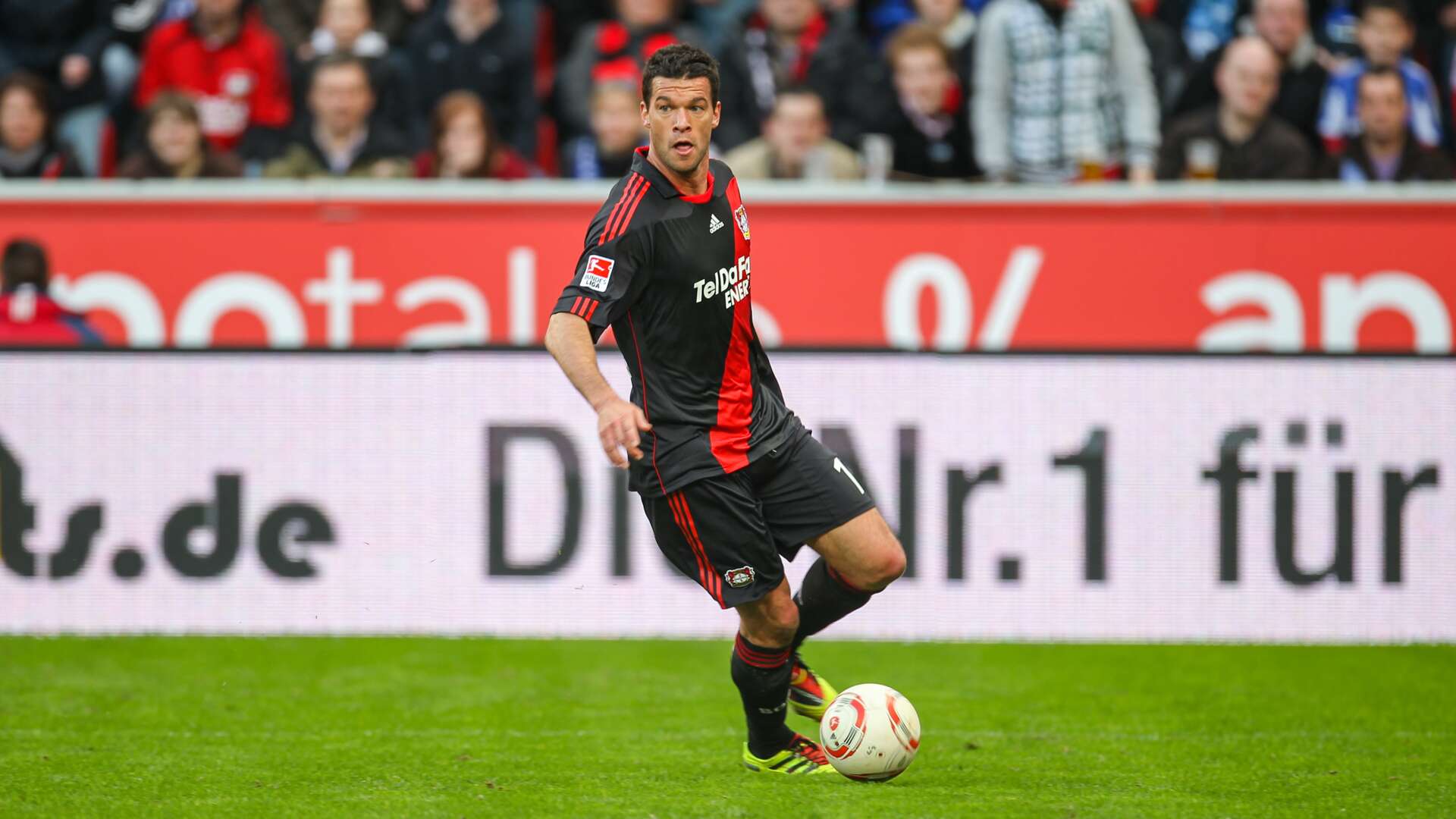
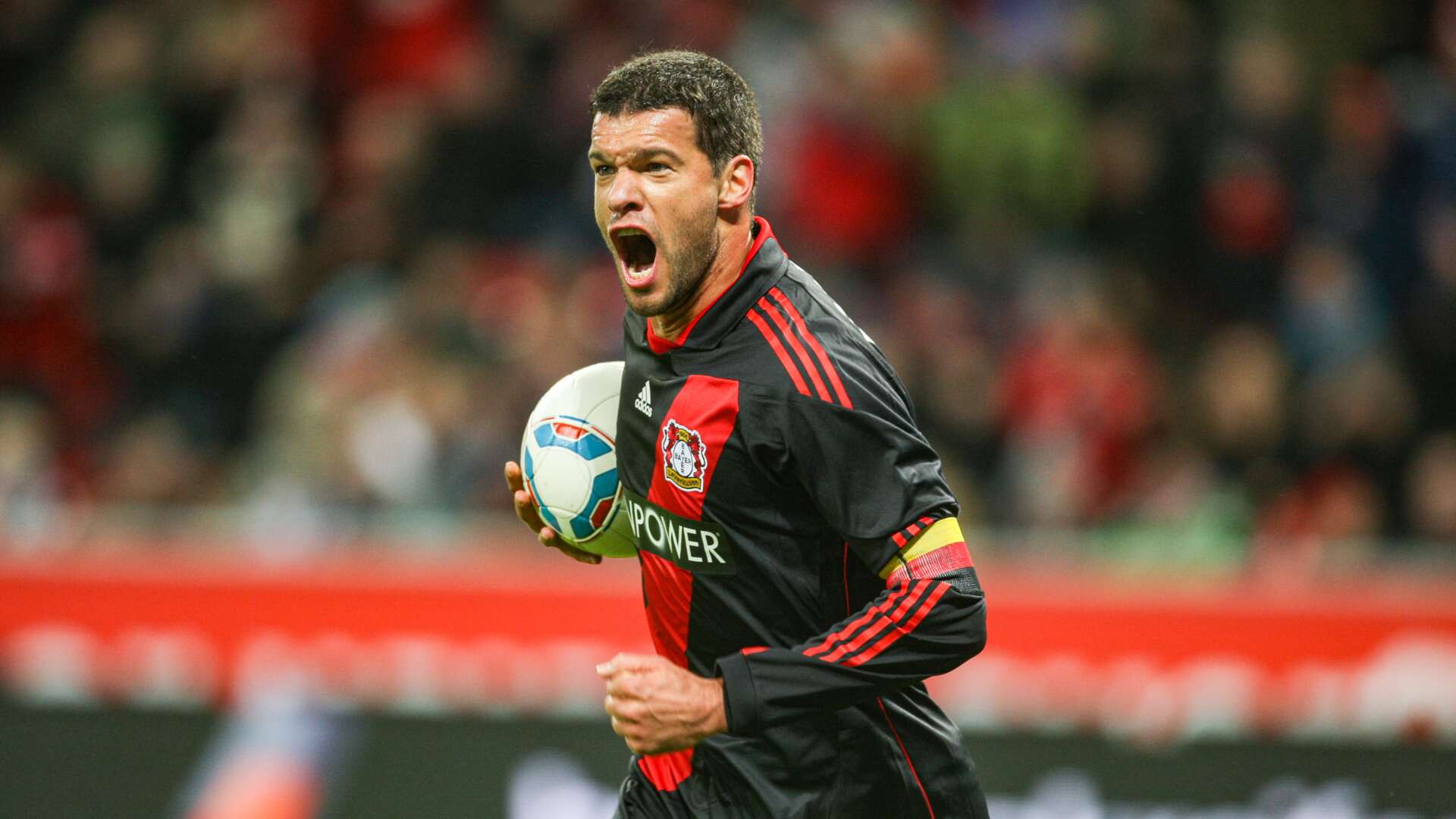
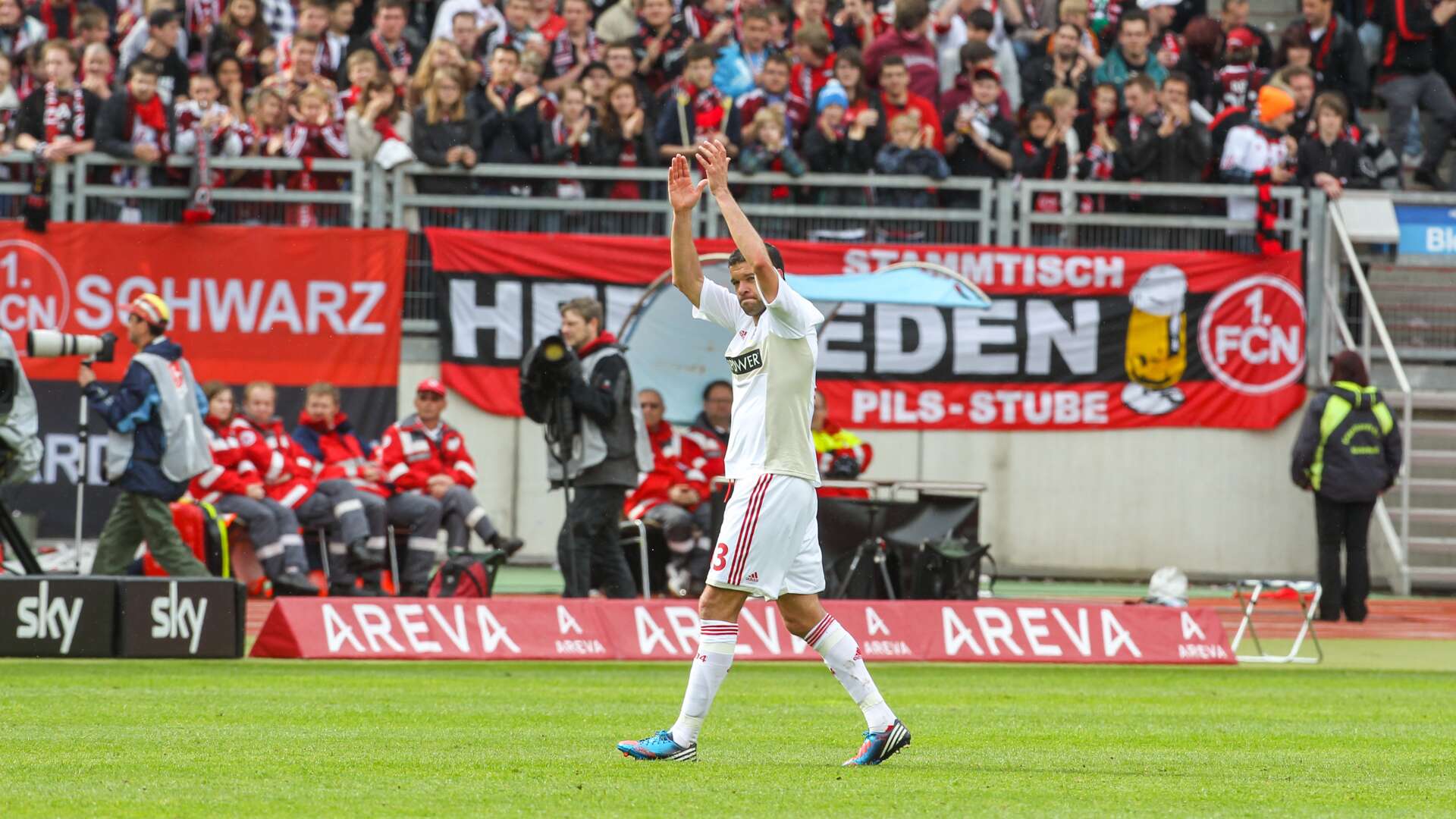
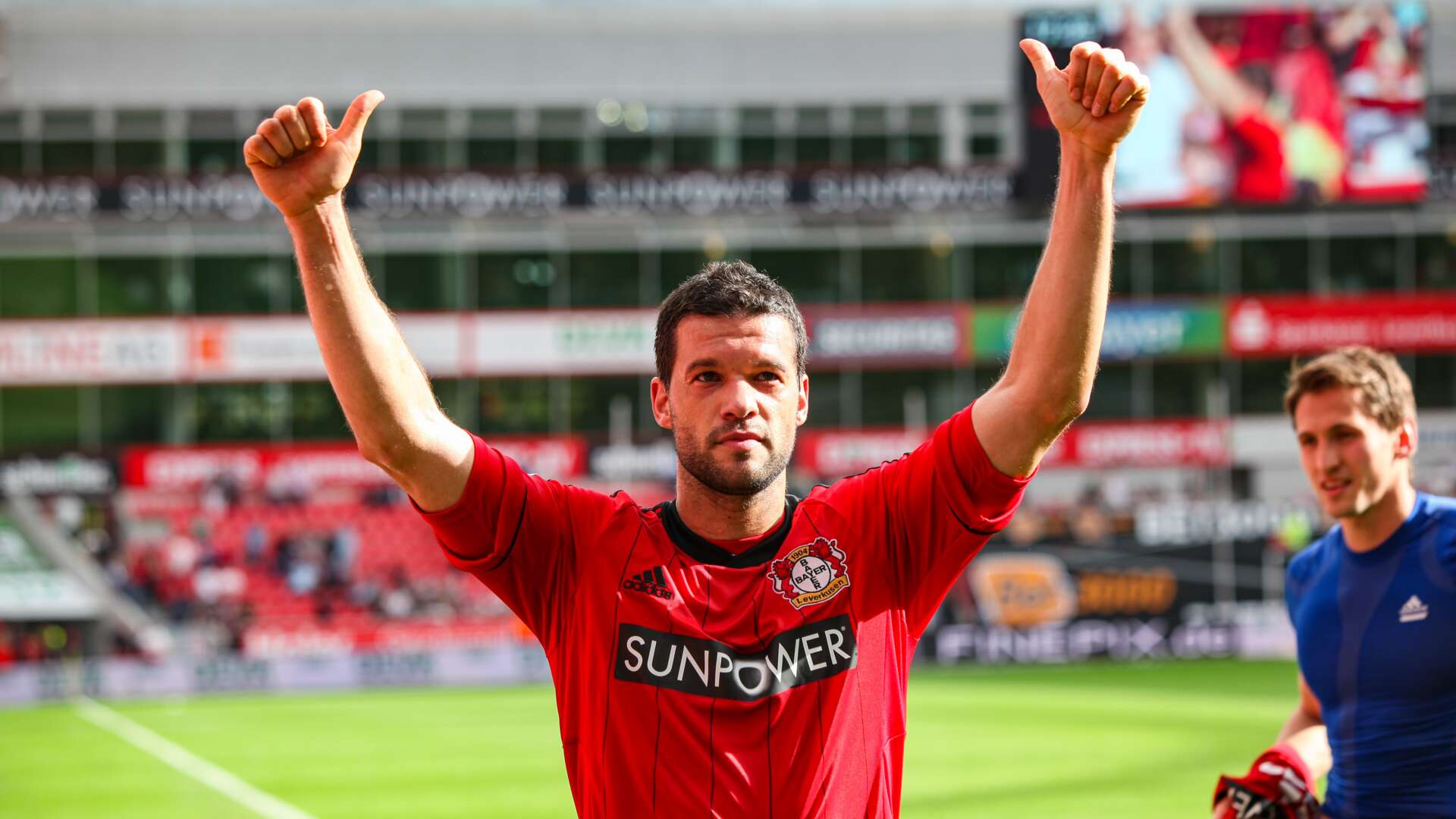
Chelsea offered Michael Ballack a one-year contract in 2010, but he insisted on a two-year deal, so he returned to Bayer Leverkusen. Even at Bernd Schneider’s farewell match on 9 October 2009 – to which Michael Ballack, as one of ‘Schnix’s’ former teammates, was also invited – the Bayer 04 fans chanted: “Micha, come back, Micha, come back, Micha, Micha, Micha, come back.” This is how the idea first arose to bring him back to Bayer 04 a year later. In the summer of 2010, he moved to Leverkusen for the second time on a free transfer. But on just the third matchday, he suffered a fractured shin and was sidelined for the rest of the Hinrunde. Although he only managed 17 appearances that season, the Werkself qualified for the Champions League. After his second season, Michael Ballack ended his time at Bayer 04 and, on 2 October 2012, announced the definitive end to his playing career.
Since retiring in 2012, Michael has been working as a TV pundit and on various community projects, amongst other things. He also continues to feature in advertising campaigns. The father of three sons – the middle one of whom was killed in a quad bike accident in 2021 – he played for Bayer 04 for a total of five years, during which time he became a defining figure for the club. Above all, it was his first spell at the club from 1999 to 2002 and his development in Leverkusen into a world-class player that made him a Bayer 04 legend.
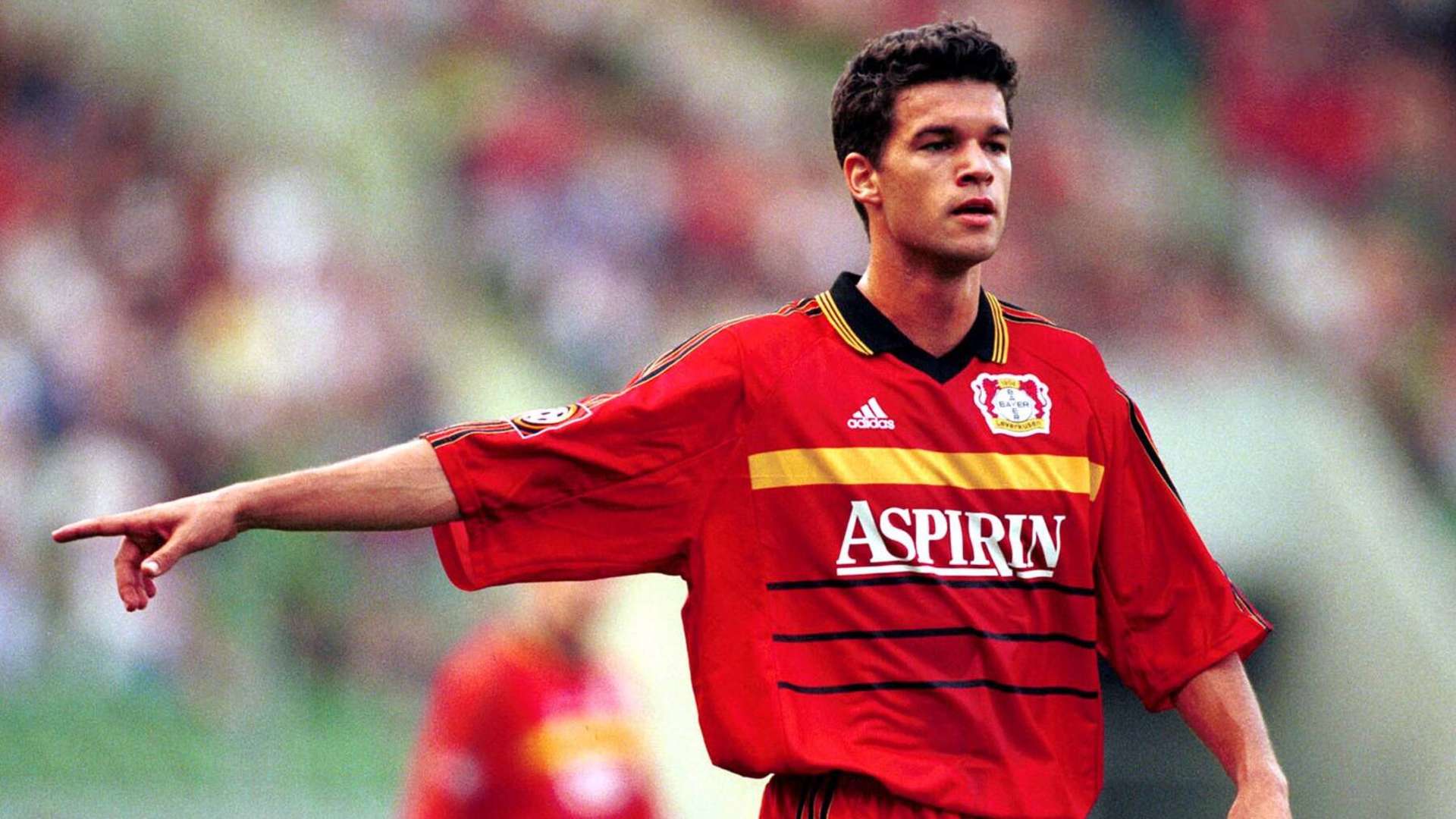
Michael Ballack was born on 26 September 1976 in Görlitz, in what was then East Germany. His talent for football became apparent at an early age. After his family moved to Karl-Marx-Stadt – now Chemnitz – he began playing football for BSG Motor ‘Fritz Heckert’ Karl-Marx-Stadt, where he steadily developed his skills. From Year 7 onwards, he attended the Children’s and Youth Sports School and received systematic sporting support, which, in 1988 – due to his growing skill as a player – led to a move to FC Karl-Marx-Stadt. At the age of 16, he had to take a six-month break due to growth problems, but after that, Michael was unstoppable.
Show more
José Elias Moedim Júnior, known as Zé Elias, was born on 25 September 1976 in São Paulo. He received his football training at Sport Club Corinthians Paulista, or Corinthians for short, and was promoted to the first team at the age of just 17. PSV Eindhoven had already taken notice of him by this stage, but the move to Europe was still too early for him. The tenacious defensive midfielder established himself in the first team over the following three years. With Corinthians, Zé Elias won the São Paulo City Championship and the Brazilian Cup in 1995. With his excellent vision, his determination and his assured ball control, he made a significant contribution to his team’s success.
Show more
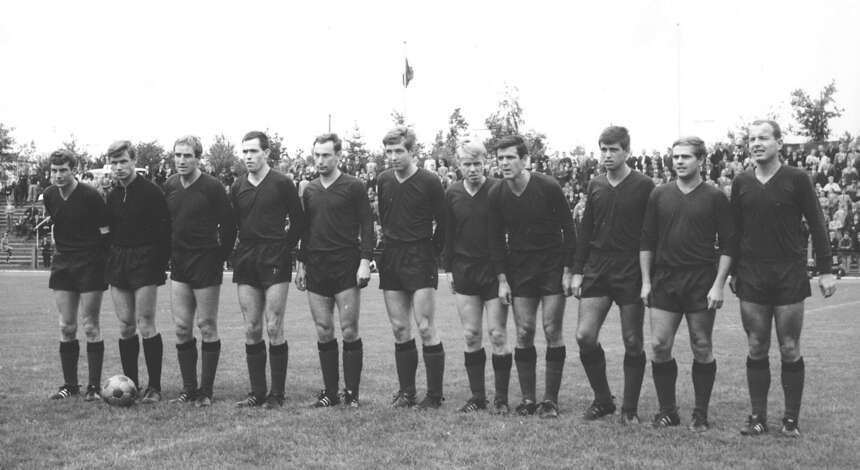
In their second season in Bundesliga 2 North, the Werkself face Fortuna Köln at their home ground, the Ulrich Haberland Stadium, on matchday 7. Both teams are level on seven points, sitting eighth and ninth in the table.
Show more
In this video you can see impressive and important goals in the history of Bayer 04 from the month of September. It's not always about the beauty of the goals, but also a reminder of special games and players.
Show more
September gets off to a disastrous start, though not for the Werkself: the German national team, featuring Bayer 04 players Jens Nowotny, Michael Ballack and Oliver Neuville, suffer a 5-1 thrashing at the hands of England in a World Cup qualifier at the Olympic Stadium in Munich. Jens Nowotny, in particular, came in for sharp criticism. With this defeat, Germany’s direct qualification is now hanging in the balance.
Show more