Bayer 04 mourn the loss of Willibert Kremer
The news has come as a big shock: Willibert Kremer, the coach who won promotion with the Werkself in 1979, has passed away at the age of 82.
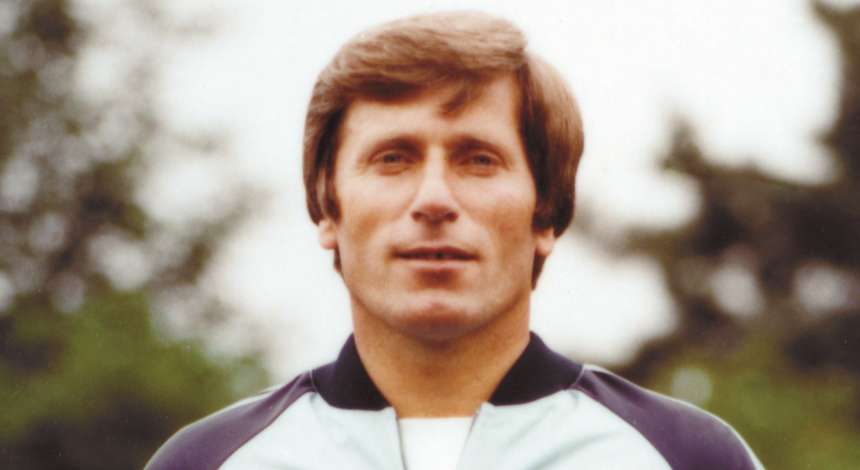
13 May 1979, which he later described as the "happiest moment of my time as a coach", started with a fit of rage. When the Werkself team bus drove up to the stadium on Bismarckstraße on a sunny Sunday for the match against Bayer 05 Uerdingen, Willibert Kremer could hardly believe his eyes: Right next to it, on the area of today's Ulrich Haberland Stadium, everything was set up for the big promotion party with the fans: countless drinks stands, sausage stands and pavilions, 3,000 litres of free beer. Bayer 04 had made thorough preparations but Kremer knew nothing about it. The coach, a cautious man by nature, was angry at that point. "It was the fourth from last matchday, we needed one point for promotion and we were playing against the team in second place. You know anything can happen in such a tense situation like that. That's why I lost it a bit and exploded."
That anecdote says a lot about the person and coach Willibert Kremer who was always against deception. It was a case of delivery first and then thinking about celebration. When Bayer 04 hit back from being 3-0 down against Uerdingen and drew level at 3-3 in the final 30 minutes and promotion to the top-flight became reality, Kremer was happy to let his players carry him on his shoulders across the pitch. The Werkself were finally in the top division: That was due in large part to the work of the affable coach and leader. The promotion crowned a fantastic season with the maximum and completely unexpected success.
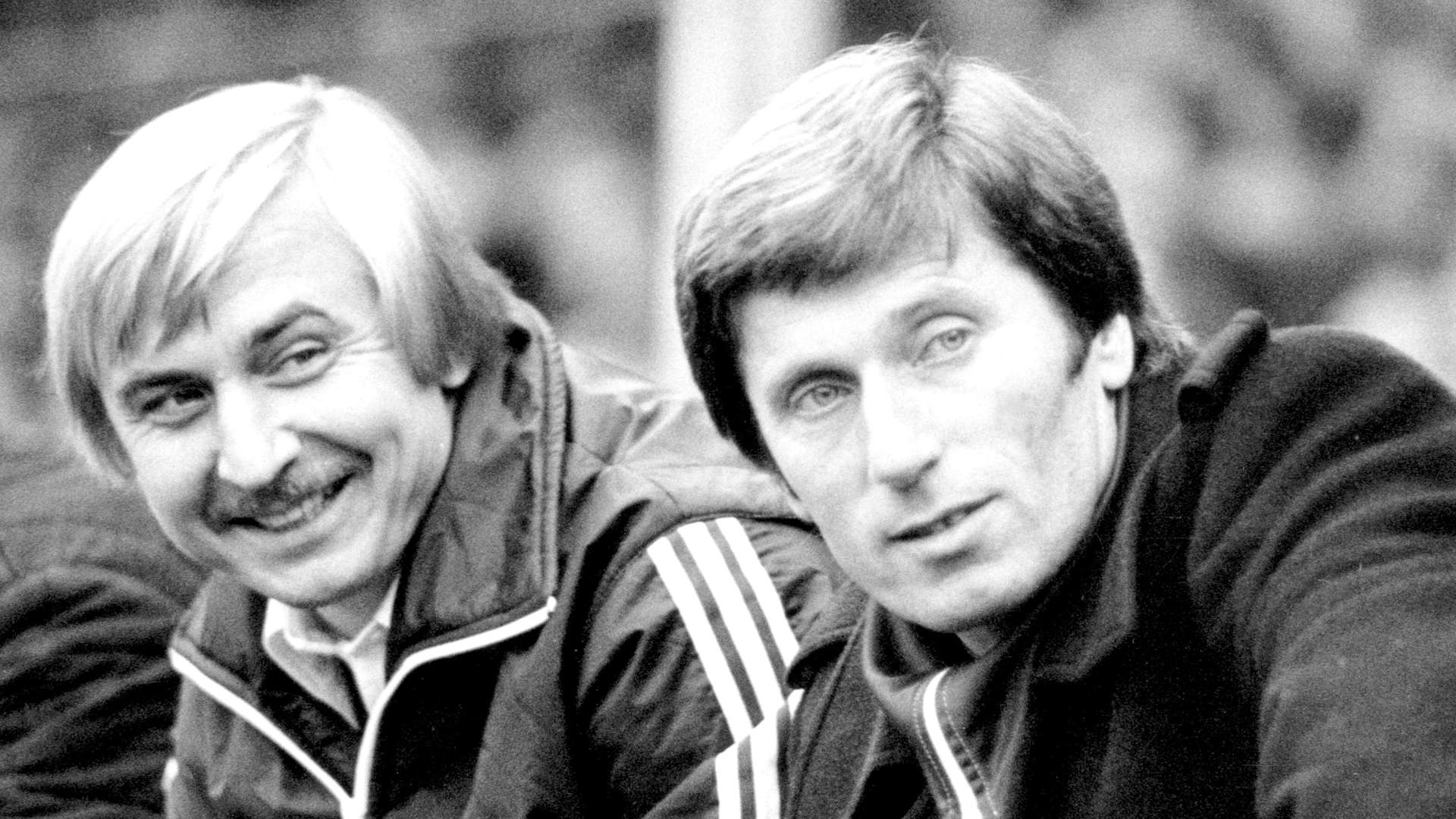
Three years before, there was no sign of that happening in Leverkusen. When Willibert Kremer was presented on 5 April 1976 as the new Bayer 04 coach and successor to Radoslav Momirski. The Werkself were deep in relegation trouble in their first season in the Second Bundesliga North. The 36-year-old had previously managed MSV Duisburg in the top-flight and, in his time with the Zebras, he he helped players like Bernard Dietz, Ronnie Worm and Rudi Seliger develop into international players. However, three years later, when MSV showed no sign of extending Kremer's contract, the coach announced his resignation two months before the end of the season – by registered mail with the following words: "I don't need to get on my bended knee to the board and plead for further employment."
Kremer, who played 119 Bundesliga matches for MSV Duisburg and Hertha Berlin, was trained by the legendary Hennes Weisweiler at the sport University in Cologne and he learned a lot from 'Don Hennes'. One of his most important principles: Authority does not come from shouting loud and being short and snappy but rather from expertise and the ability to lead people. At Leverkusen, Kremer was extremely disappointed after his first training session: "I led a relaxed warm-up routine as I was used to from the Bundesliga at the time, and several players were sick as they had put so much effort in for the half hour." In spite of the short-term discomfort, Bayer 04 led by Kramer finished fifteenth in the table and avoided relegation.
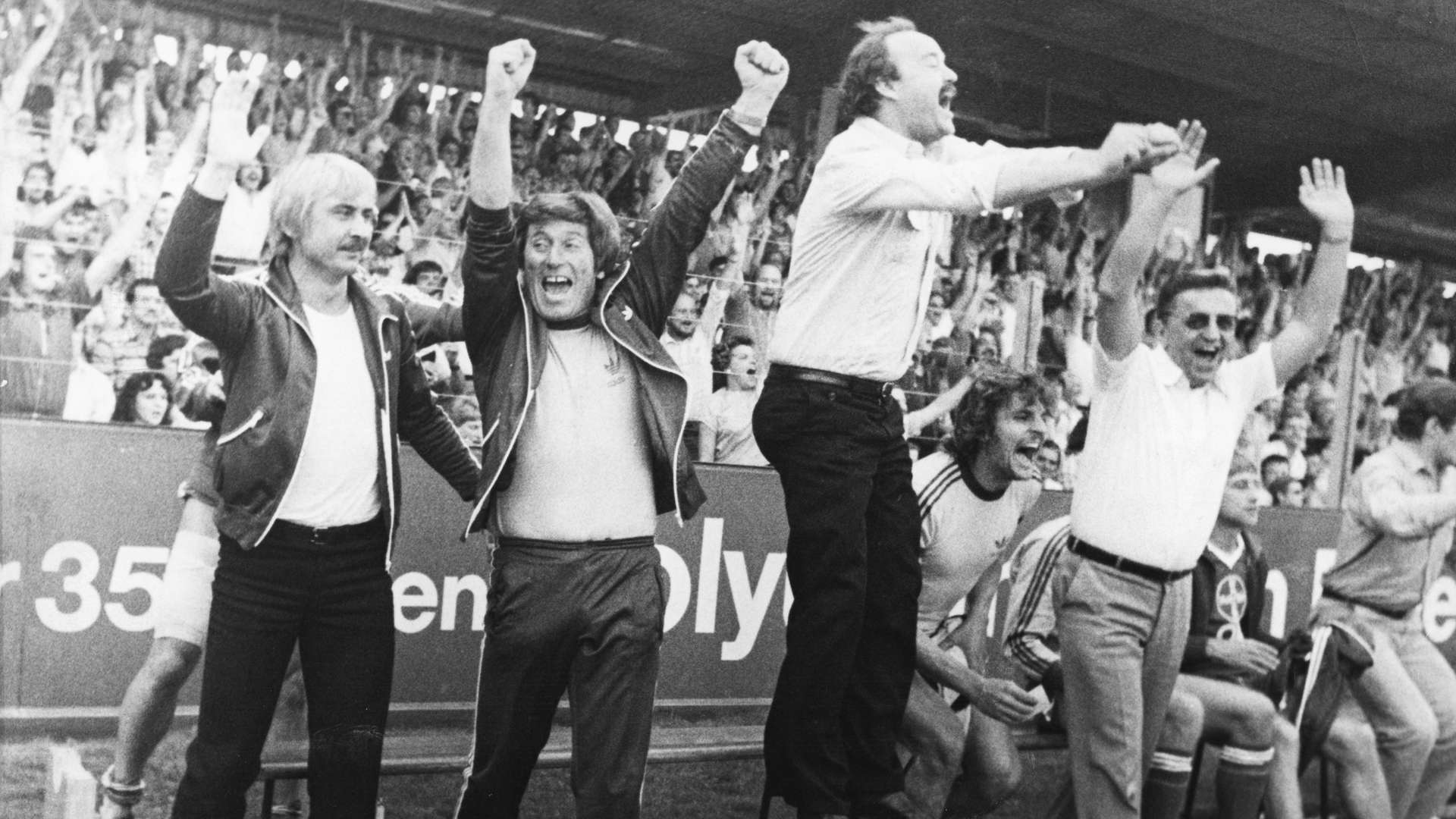
The saviour invested a lot of effort and energy in building up sustainable and professional structures at Bayer 04. For example, Kremer worked with the U19s we also involved in training with the senior players from the start. "They didn't even have a complete set of shirts at the time. A youth player, who had potential, didn't join Leverkusen but rather FC Köln or TuS Höhenhaus,” said the Rhinelander who look for talented youngsters himself and was also willing to argue with the ground staff when he had the impression that the newly so pitch was not growing properly. One of his most valuable signings: Reiner Calmund arrived as the new youth manager from Frechen 20.
Everything went brilliantly on the pitch under Kremer: Tenth place in the summer of 1977 and eighth a year later built up to the sensational season of 1978/79 when Leverkusen as underdogs proved irresistible on their way towards the Bundesliga 20 games undefeated in succession. In the first season in the top-flight, Bayer 04 finish twelfth but then had more and more problems in the tricky second year – and the coach increasingly came under pressure. Kremer was dismissed on 22 November 1981 and his assistant Gerd Kentschke was put in charge of the team. Kramer went on to work for another 14 years as the coach at 1860 Munich, Fortuna Düsseldorf, Eintracht Braunschweig, MSV Duisburg and Tennis Borussia Berlin Before returning to Bayer 04 as a scout in 1998 and he remained there sharing his valued expertise in identifying new talent and watching the opposition for over 15 years.
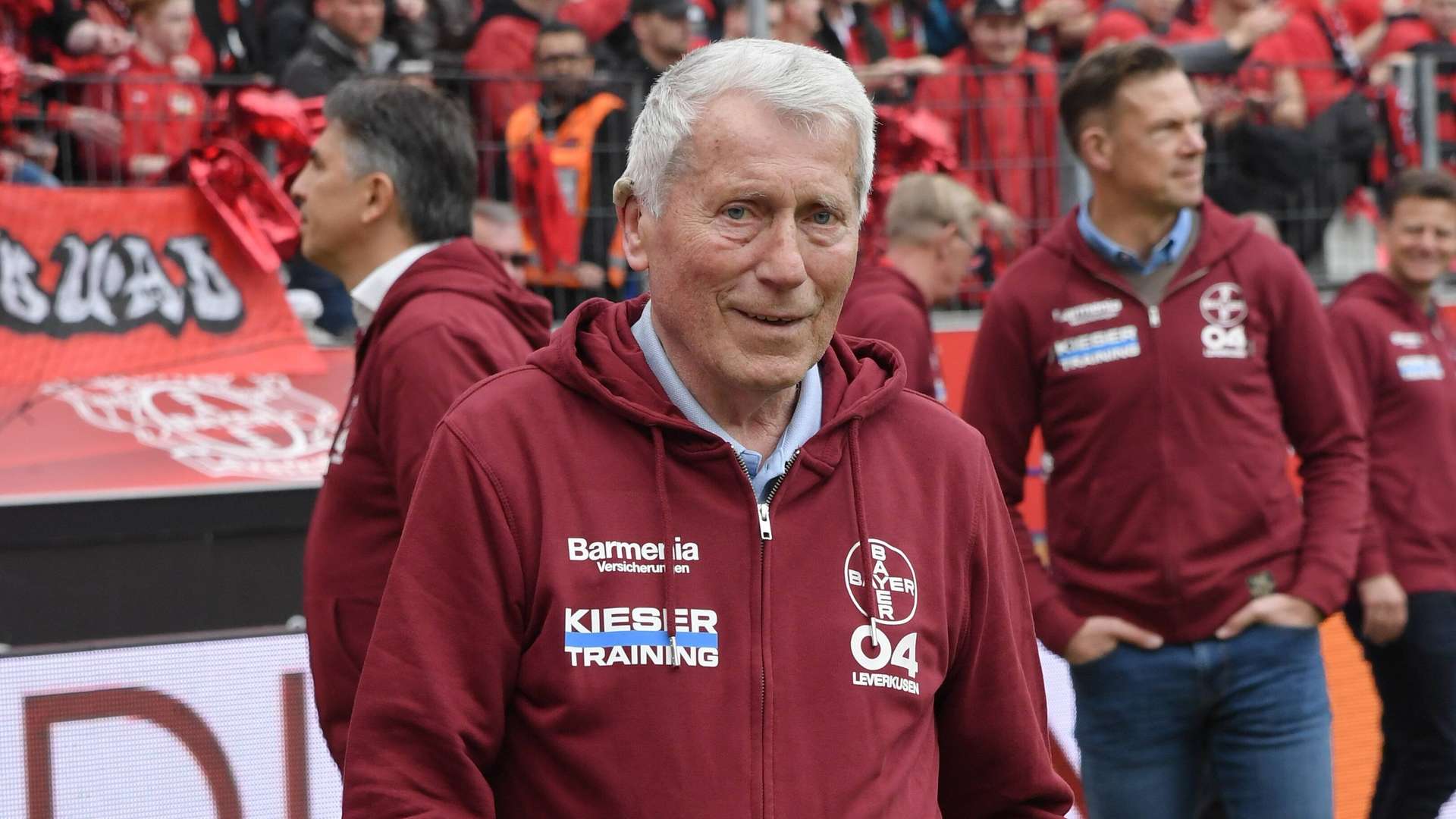
His public appearances became rarer in recent years but he never lost contact with Bayer 04 in general and the 1979 promotion team in particular. Anybody who met him in May 2019, when his health was in decline, amongst his former players at the celebrations of the '40 years Bundesliga under the Bayer Cross' as the elder statesman of the group, could fail to miss the real connection and could see pure joy at the moving reunion in his bright eyes.
Willibert Kremer passed away on Christmas Eve after a long and serious illness at the age of 82. His place in the Black and Red club history is untouchable. As a pioneer and innovator, as a champion and promotion coach.
An overview of current ticket sales for Bayer 04 home and away matches in the 2026/27 season.
Show more
Three games, three wins: Bayer 04 secured a 2–0 victory at Greek Cup winners OFI Crete with Jonas Hofmann scoring both goals at the Pankritio Stadium, right on the Mediterranean coast (35’, 38’). As a result, the Werkself have temporarily taken over top spot in the table on Matchday 3 of the league phase of the UEFA Europa League.
Show more
'40 Years Across Europe' - and for the first time ever, Bayer 04 are travelling to Greece's biggest island for a European clash. There they'll take on OFI Crete - full name Omilos Filathlon Irakleiou (‘Association of Sports Friends of Heraklion’) - on Matchday 3 of the 2026/27 UEFA Europa League league phase. The meeting with the Greek Cup winners kicks off at 18:45 CEST on Thursday 22 October at the Pankritio. We’ll bring you all the latest updates from the trip here…
Show more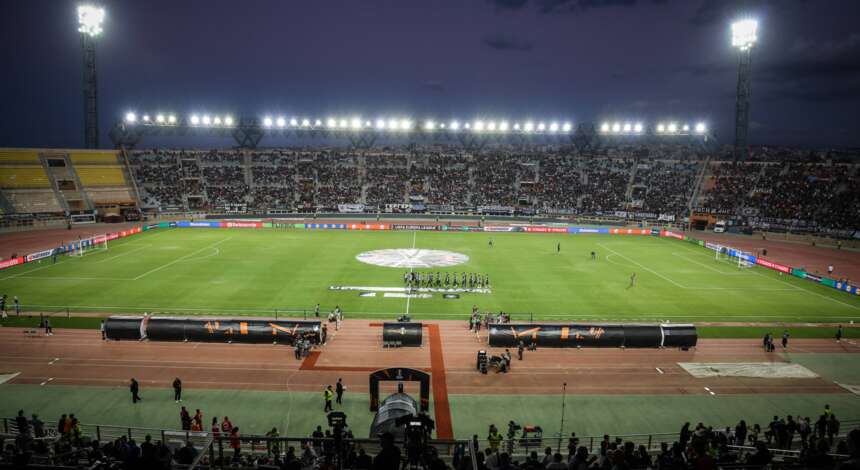
Two games – two wins: Bayer 04 have picked up maximum points from their two matches so far in the league phase of the UEFA Europa League. What's more, of their previous 14 UEL matches, Bayer 04 have lost just one. Away to OFI Crete, Carles Martínez’s side are looking to add another successful performance on the European stage to their string of impressive displays. The Greeks, for their part, have been waiting four matches for a win, but Leverkusen should be on their guard: OFI’s most recent victory came against a German side. Today's matchday news.
Show more
Ahead of Bayer 04's Europa League match away to OFI Crete in Greece, defender Jarell Quansah spoke to Werkself-TV...
Show more