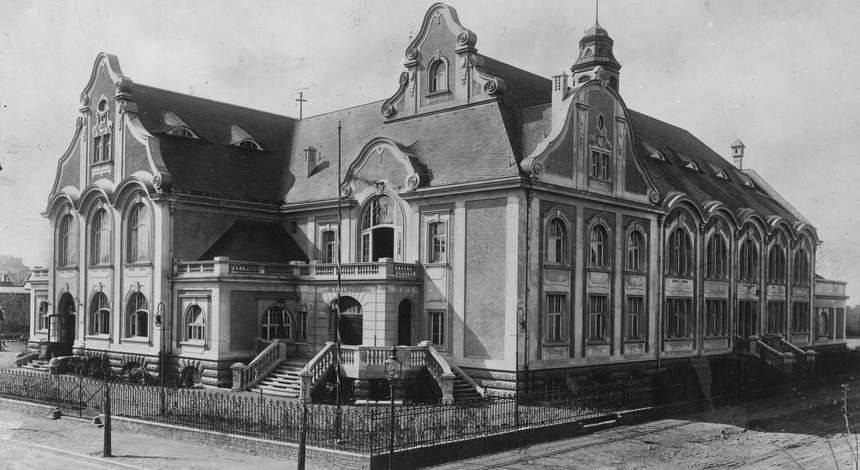
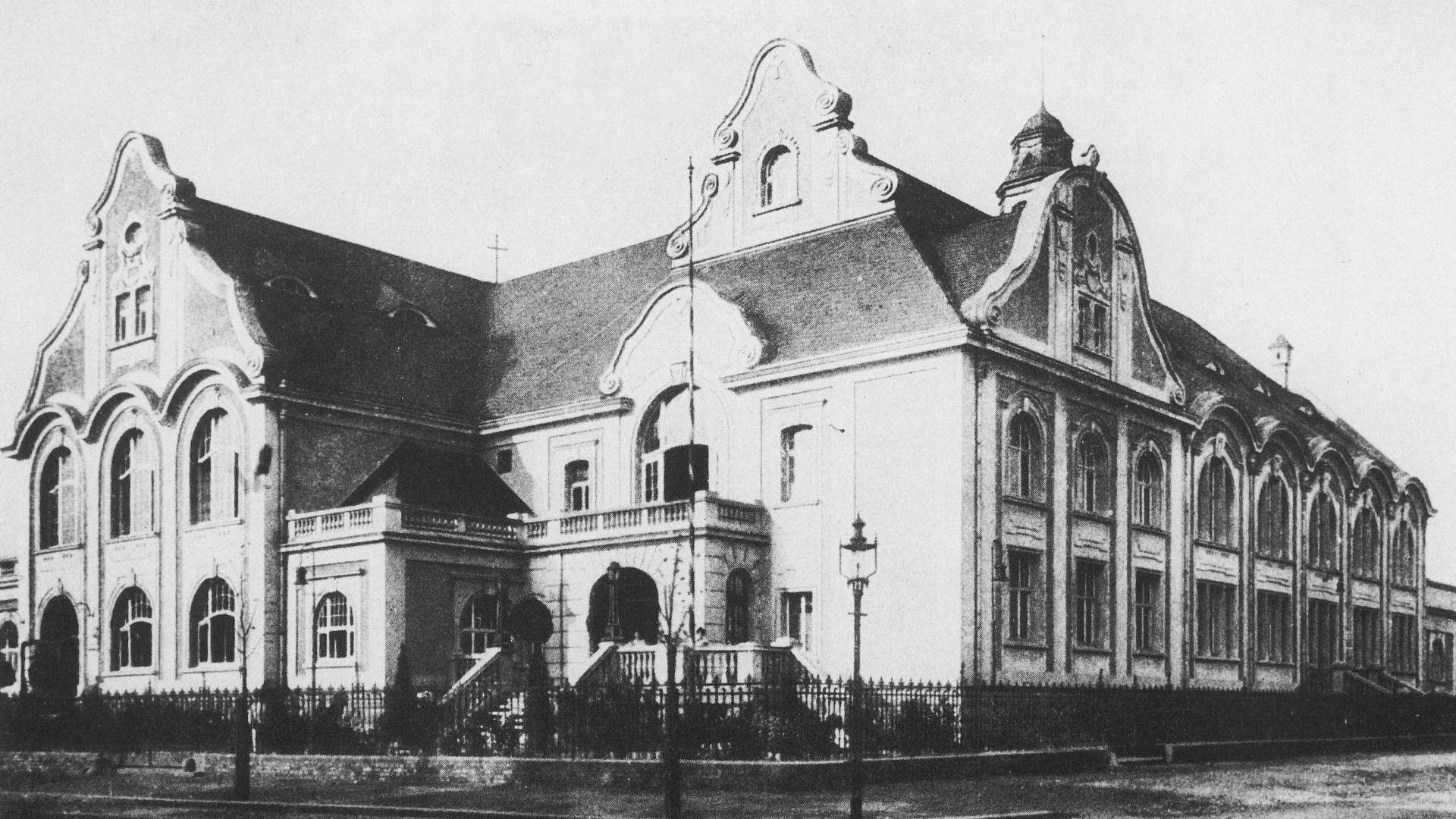
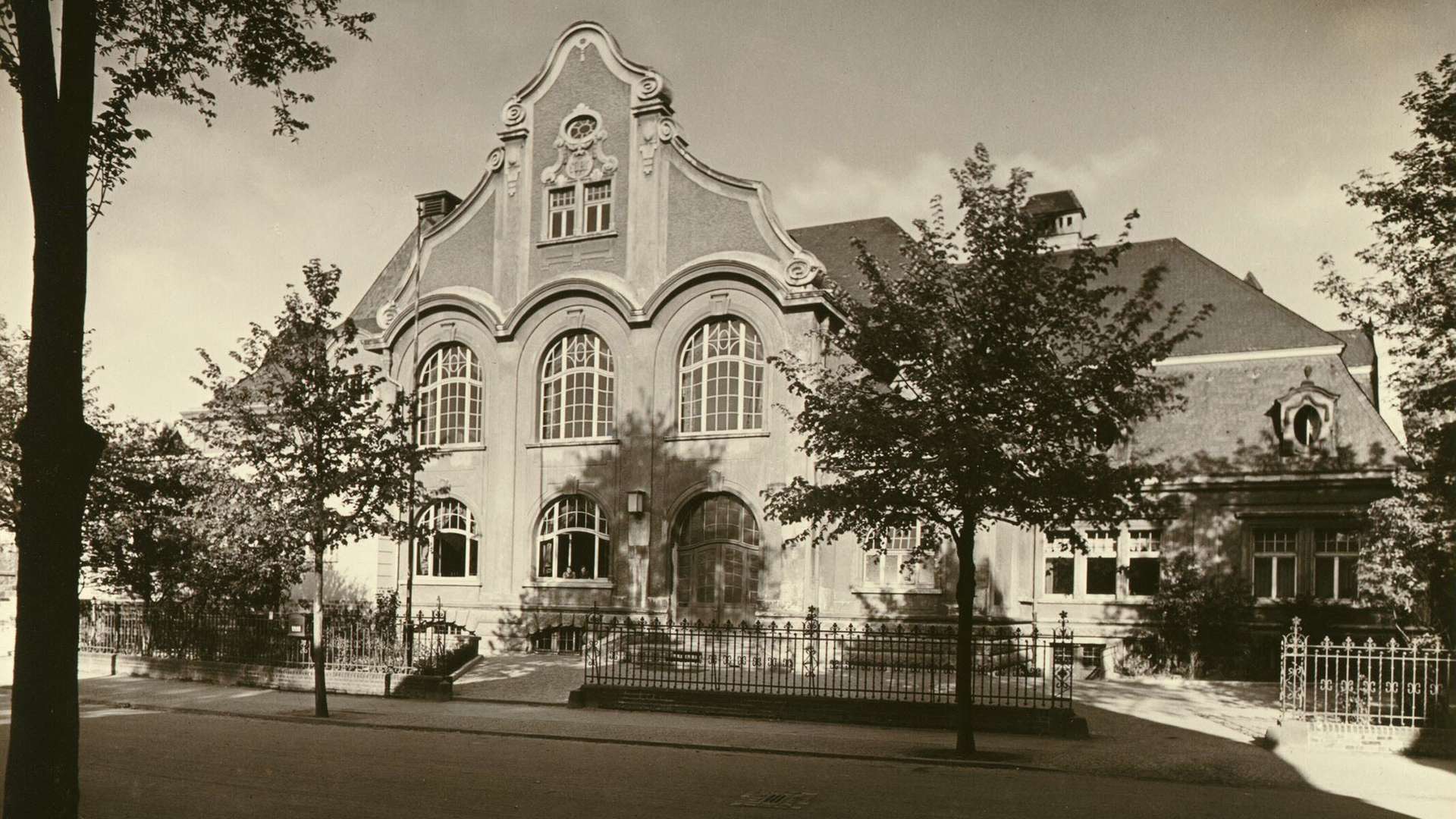
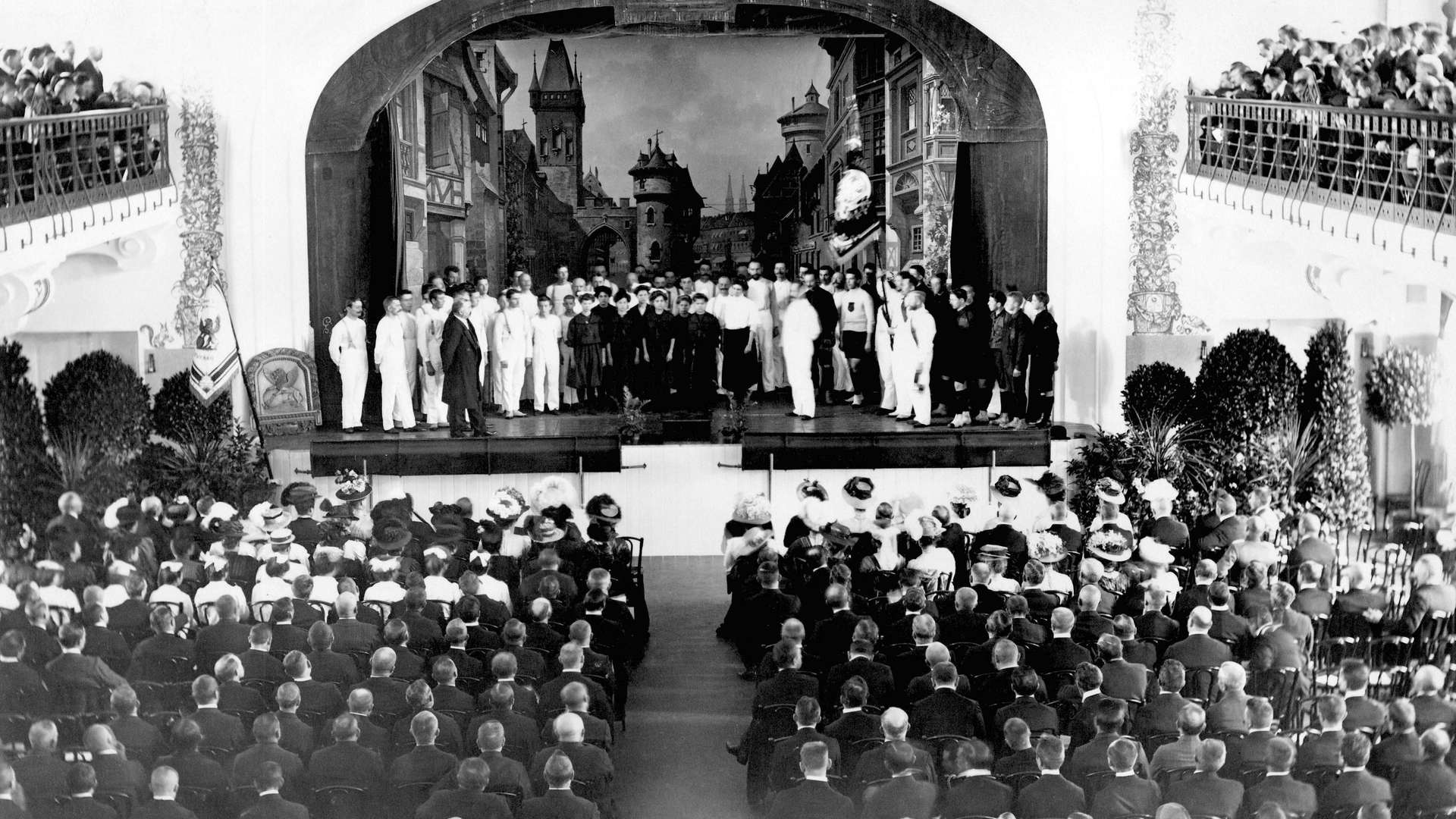
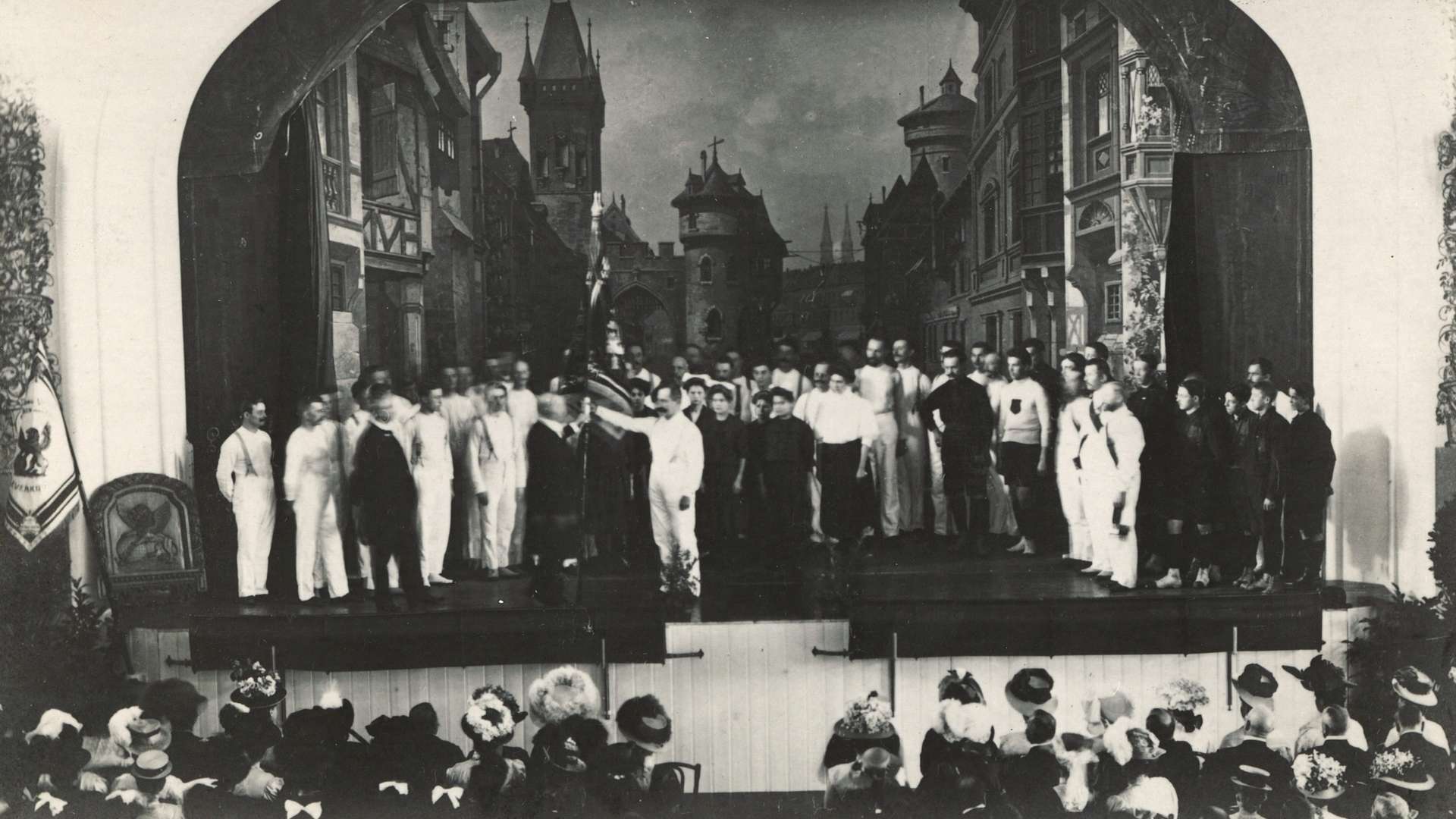
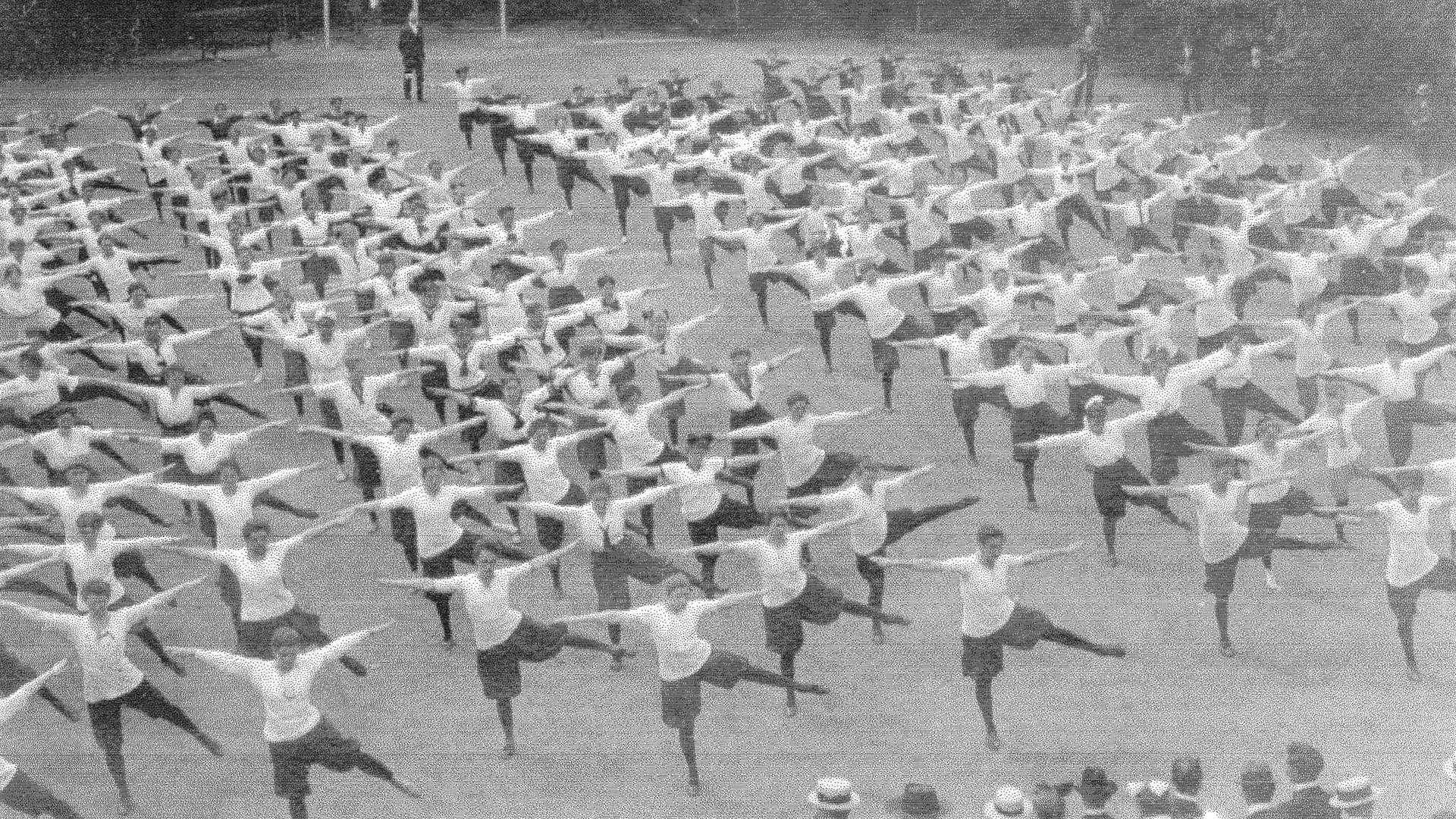
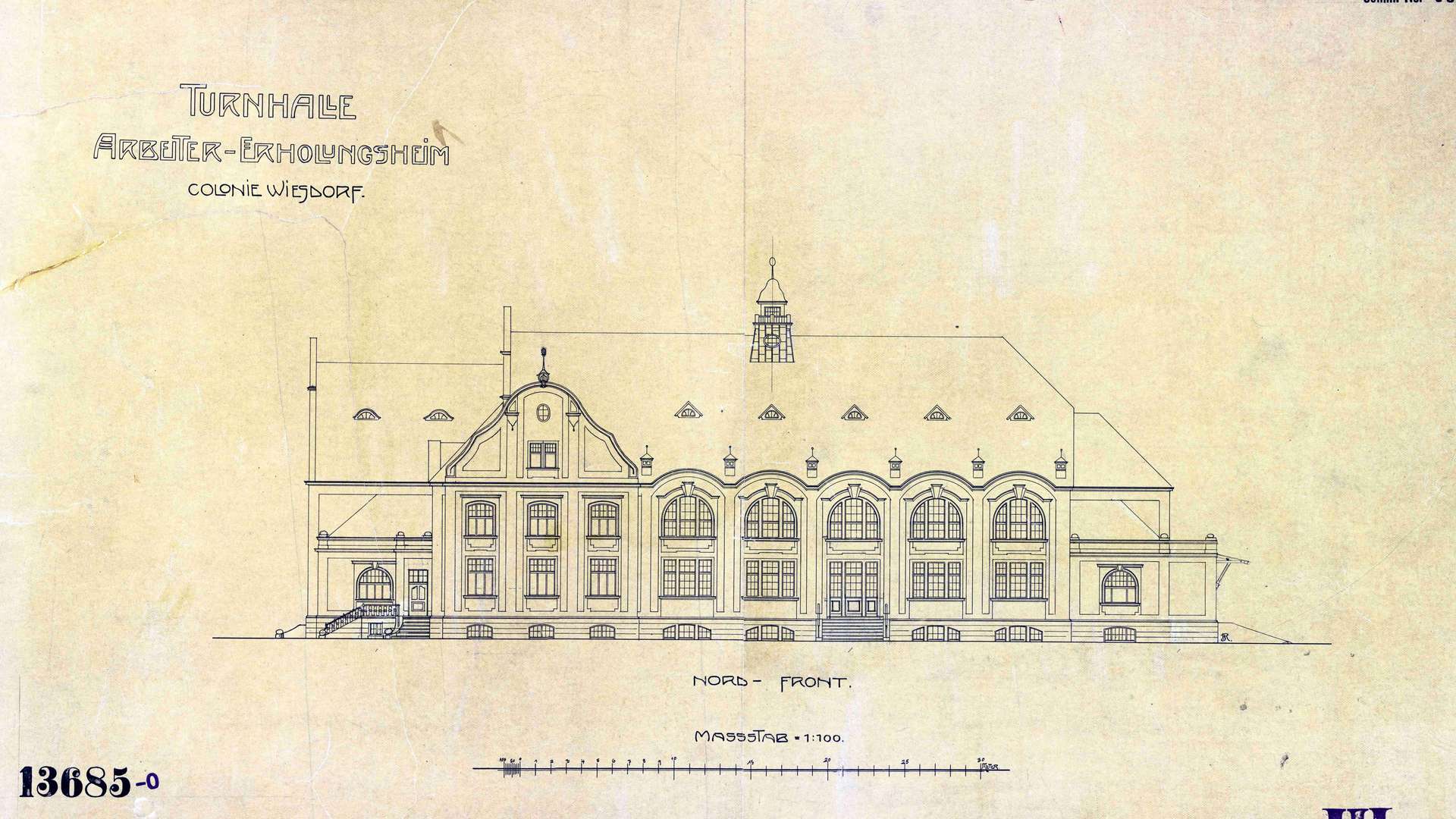
A wonderful hall is built in Wiesdorf in two years: the Erholungshaus (recreation house). The new sports hall is opened on 13 September 1908. It is fitted with up-to-date gymnastics equipment and a fold-out stage under which there is an equally large pit of sawdust that enables both long and high jump as well as shot putt to be practised. For a short time it is the home of TuS 04. A month later, the club celebrates the fourth foundation festival in the brilliant hall of the new recreation house. A high point is the presentation of the flag donated by Carl Duisberg, which is still in existence today. Now there was space for all sporting activities. And in today's recreation park there is a sports and playground.


The hall in the Erholungshaus, with rows of chairs, has a capacity capacity of 1,200 and is the biggest in Wiesdorf providing for events from other works clubs. The members of the TuS 04 committee bear that with a grumble. But unavoidable is the use of the hall over several weeks for exhibitions. The most persistent applicant is obviously the theatre group of the Farbenfabriken who can very well use both the stage and the hall for their shows. So another sports facility is planned with a sports hall, pitch and dedicated clubhouse but the First World War intervenes.

Heiko Scholz was born on 7 January 1966 in Görlitz. His first club as a youth player was Dynamo Görlitz. From there, he moved up to the sports school in Dresden and played in the youth teams at SG Dynamo Dresden from 1978-1982. Not considered good enough, Scholle, as he was nicknamed, had to leave the sports school to play his last two youth years at ISG Hagenwerder. Via BSG Chemie Leipzig and 1.FC Lokomotive Leipzig, who Heiko won the DDR Pokal with in 1987 and he also reached the European Cup Winners' Cup final (a 1-0 defeat against Ajax), his path finally led him back to his favourite club, Dynamo Dresden. For one million Deutschmarks, the highest transfer fee ever paid for a player in the former GDR, he moved from Lok Leipzig to the capital of Saxony in 1990.
Show more
Stefan Kießling was born on 25 January 1984 in Lichtenfels, Franconia. Even as a young boy, he spent countless hours on the football pitches of his home town, chasing after the ball and dreaming of playing football. His parents supported him, but they bring him up in a down-to-earth manner - hard work, honesty and modesty are values that characterise him from an early age. His talent became apparent early on, but his ambition was even more striking. Kießling always wants to improve, wants to give more than others.
Show more
On Sunday 26 January 1936, the local derby between relegation-threatened BV Wiesdorf and league leaders SSV ‘Bayer’ Leverkusen took place in the first district league of the Rhein-Wupper district. On the old BV Wiesdorf pitch, where the Leverkusen job centre is today, 1,800 spectators gather to watch the match.
Show more
It is Friday, 31 January 1986, the derby in Cologne is coming up and we're full of confidence after the home win against Hamburg SV a week earlier, having turned a 2-0 deficit at the break into a 3-2 victory. In particular, the Greek amateur player Minas Hantzidis, who came on as a half-time substitute, turned the game around. Two goals from Bum-kun Cha and a penalty from Christian Schreier gave us two important points in the battle for a UEFA Cup place. We are one point behind the North Germans in fifth place in the table, six points ahead of our neighbours from Cologne.
Show more
In this video you can see impressive and important goals in Bayer 04 history from the month of January. It's not always about the beauty of the goals, but also a reminder of special games and players.
Show more