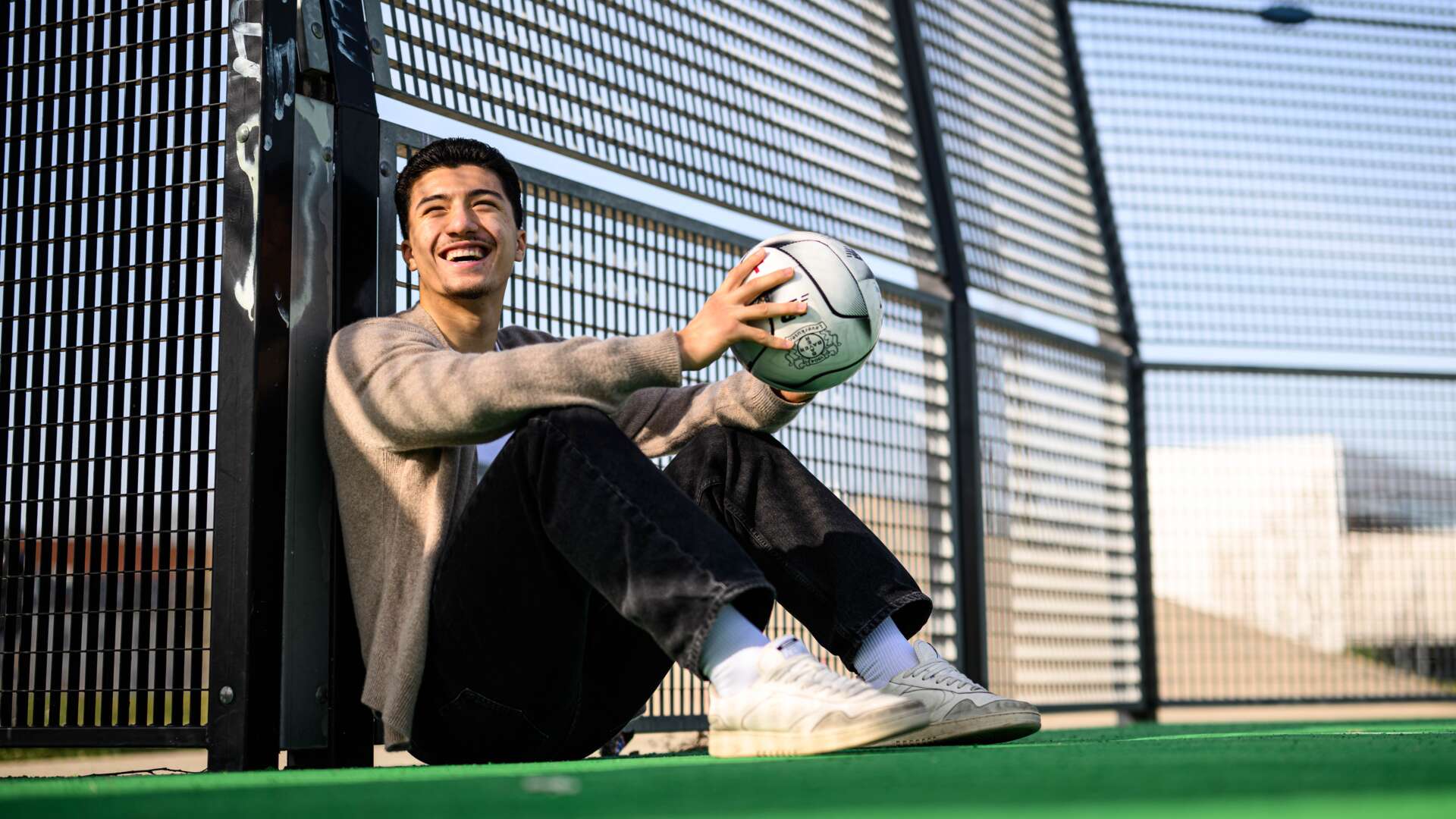
"I wanted to show the world what I can do"
Ibrahim Maza interview in the Werkself magazine
In his first season at Bayer 04, Ibrahim Maza has become a key player. The 20-year-old can already look back on an outstanding season. He made his debut in the UEFA Champions League and for Algeria in the Africa Cup of Nations, scored goals in both competitions and established himself as a Bundesliga player. In an interview with Werkself Magazin, in issue 55 to be published for the home game against VfL Wolfsburg, the midfielder describes his childhood in Berlin as the son of an Algerian father and a Vietnamese mother and emphasises the importance of the neighbourhood pitch to his career. He also reveals his career aspirations beyond football and talks about his targets for the current season, that should lead to the World Cup.
Ibo, were you a good student?
Maza: I think I was average - not bad, but not the best either, I had a lot of Cs, a few Bs and sometimes a D. I was very good at maths, sometimes I had a few problems in German. (laughs)
There’s a reason for the question, of course: coach Kasper Hjulmand and managing director sport Simon Rolfes have praised you for being eager to learn and enormously capable of learning. Qualities that also characterise a good student...
Maza: Of course, it's easier to learn things that you enjoy and that wasn't always the case at school. But I always try to learn something. I did that when I was playing football on the neighbourhood pitch, in my youth teams and now also at Bayer 04.
Why don't you take us back to your youth? How can you imagine a typical day for the then twelve-year-old Ibo in Berlin?
Maza: That's when I signed for Hertha and started secondary school. I went to a sports school. So we always had training in the mornings from eight to ten - football training as lessons. After that, we had school until the afternoon and then a few hours break in the evening before training. At 5.30 we trained until 8 pm, after which my father picked me up and we drove home. The sports programme brought a lot of calm and discipline into my life. When your daily routine runs from eight to eight, you're far too busy to do anything silly and you're simply tired in the evening.
What was your family life like? Your father is Algerian, your mother Vietnamese, you all lived in Germany...
Maza: It was great. My parents met at university, I think in Cologne, here in the Rhineland. My father is a senior doctor, my mother a day care centre manager. Fortunately, we did very well, we had everything and got on very well. My mum was more the one who looked after us at school. My father looked after me and my little brother, who now plays for Hertha, more in terms of football and he encouraged us. (laughs) My sister is studying medicine now. We are a happy family.
What language did you use at home?
Maza: It varied. German was spoken most of the time, but I also spoke Arabic with my father. I rarely spoke Vietnamese with my mum. It was too complicated back then, but hopefully I'll learn it properly one day.
How did you define home for yourself as a young man?
Maza: That's difficult. Berlin was of course my home at first. I grew up there, my family and friends lived there. But then I spent every summer in Algeria with my father and got to know my father's family. That also influenced me. In winter, I usually went to Vietnam, where the weather was still nice, and I liked that too. (laughs)
You come from an academic family, which wasn't the case for all the boys you played football with on the neighbourhood pitch. Did you notice that back then?
Maza: To be honest, I never thought about that. Everyone is the same in football, it's all about the game. We played football, everyone was happy, having fun and we forgot about the outside world around us. You concentrate on scoring a goal or a nutmeg so you can tease the others afterwards. Those were great times.
How did you get the time to play there?
Maza: There wasn't too much football for me back then. If we had a game on a Saturday, we met up at the pitch on Sundays. And otherwise in the summer and during the holidays, when there was no club football. Then we always met at a certain place. It was perfect for a five-a-side. But there were so many people there that not everyone could play, so we played 'winner stays on'. It often went on for three to four hours and if you had to leave the pitch as the loser, you were really annoyed. I learnt a lot from that time. You can always learn something new, and you can still become a street footballer even if you're already at a youth development centre. You learn different things on the pitch, but you learn them very quickly because of the intensity.
What was the most important thing you learnt on the Berlin pitches?
Maza: Having fun. But also: playing seriously and always wanting to win. Because sometimes you were penalised if you had too much fun. Then you got careless, lost and had to watch from the sidelines. The mixture of having fun but always wanting to win was very important. Winning was always at the back of my mind, that was an important realisation. And when I think about it now, it's probably even more important than having fun. (laughs)
You're not a hothead, although things may have been different back then compared with clubs with referees and coaches. Is it important to you to be a good role model and perhaps also to avoid certain clichés?
Maza: It's part of football to have a certain discipline. You have to recognise that from an early age, otherwise it becomes too difficult to keep up at a high level. That also applies off the pitch: If you still go out in the evening and only eat unhealthy things, don't sleep well, then you get muscular problems and lose touch. And when I play, I think I'm a very fair player. I can't remember diving and I try to take as much stick as I can.
With the experience from the past and from your professional career: Eleven artists play against eleven workers. Who wins?
Maza: That depends. If the artists don't work, it's probably always the workers. An artist who doesn't work isn't worth that much on the pitch. Unfortunately, there's only one player who can do that. That's Lionel Messi. But if the workers give their all, they'll probably win against the artists most of the time.
When did you start combining the two?
Maza: I've actually always worked in football. My father had a big influence on me. As a child, sometimes you don't want to work extra shifts, you just want to go on PlayStation. But my father often gave me extra training back then, sometimes even on Saturdays after matches if I hadn't played well. He was a bit annoyed then. (laughs) We had a kind of goal in our yard, so we would train there - regardless of whether I was tired or it was already dark. My mum would sometimes - luckily - bring us in. (laughs) I didn't think the extra training was cool back then. But now, when I look back, it's made me the player I am today. My father had a really big influence on my development.
He was also your first video analyst...
Maza: Yes, he started recording all my matches very early on. Even as a child, we had our first analyses on TV. (laughs) He had a tripod for his camera, so he recorded the games on the sidelines. Then the camera was connected to the TV at home. Later, he even edited certain scenes together.
Did you ever feel uncomfortable as a youngster that he was so active on the sidelines?
Maza: More so when he shouted: 'Run!' or 'Shoot! I was only uncomfortable with the camera at Hertha at the beginning because no other parents did it. But at some point I didn't care - and I also realised that it helped me. I have to say, though, that he's a bit more relaxed with my brother now. I actually think that's unfair. (laughs) But they always say that the youngest sibling always has it best - and that's the case with us. But my brother also works very hard, I'm happy for him that things are going well, I give him tips and hope that he'll soon make it in the Bundesliga. He's tall, left-footed and I actually hope that he's even more talented than me.
Do your parents still challenge and encourage you to the same extent?
Maza: My parents are very proud of me, but they still challenge me. For example, my mum wants me to start studying soon. I will - on a distance learning course. I don't know exactly what I'm going to study yet. But I always wanted to be a teacher. I just think it's a cool job. There were always the relaxed teachers and the strict ones. I would like to be the relaxed and cool teacher for the children. The one who sets boundaries, but who makes sure that the children have fun and enjoy going to school.
At the moment, however, you can still concentrate fully on your football career. When did you realise you could turn professional?
Maza: That wasn't actually until I trained with the first team for the first time, when I was 17 as an U19 player at Hertha. That's when I realised I could do it. It felt special.
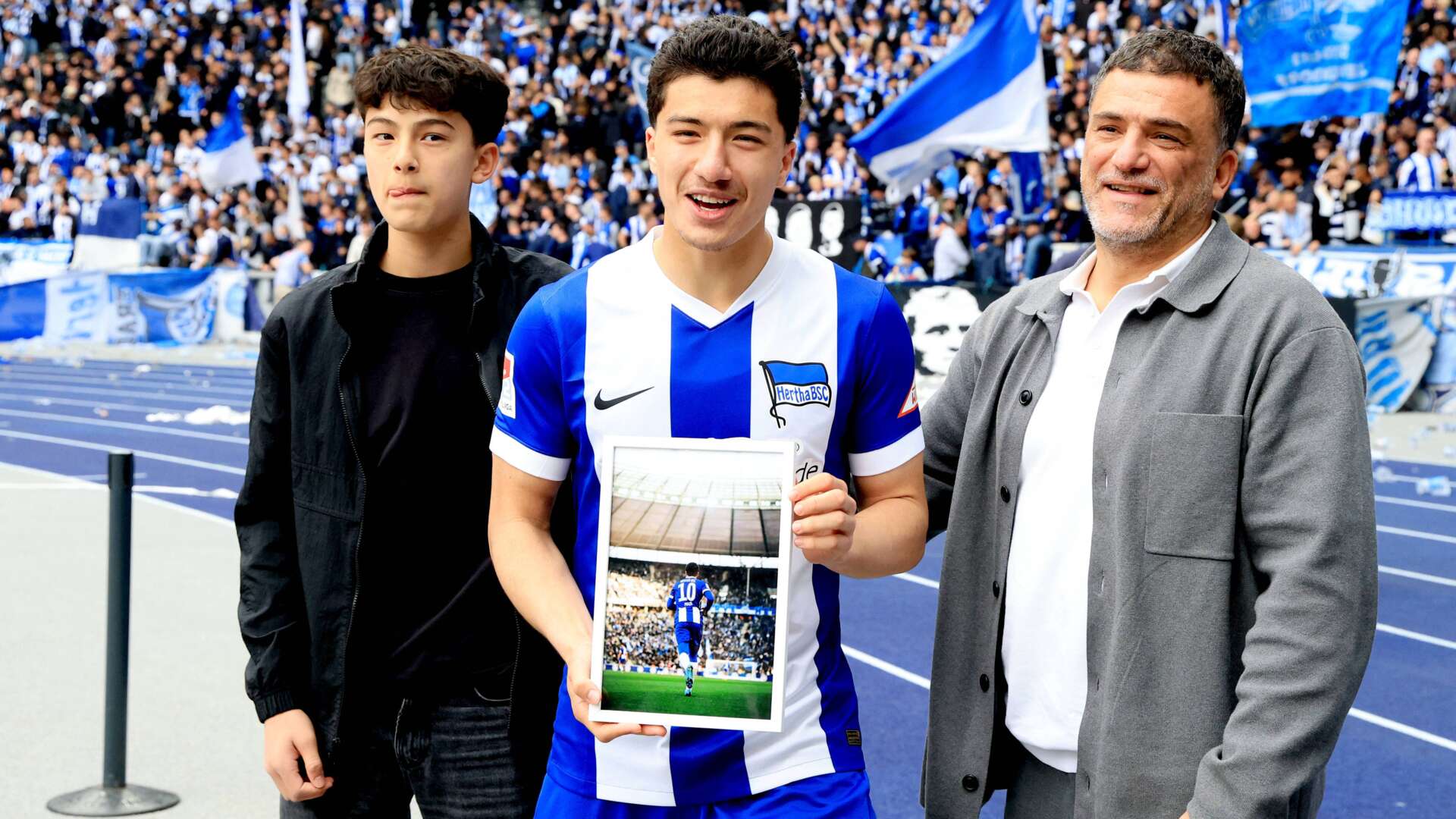
Didn't you know how good you were before? Or did you think that the first team players were better?
Maza: Probably both. When I joined the first team, I probably overestimated them a little and underestimated myself a little. At first, I thought that everyone there could do rabonas and Okocha tricks. But when you start training with them, you realise that they're just people - just adults - playing football. (laughs) Receiving, passing, dribbling, it's not too demanding. Of course, physically and mentally it was a completely different level to youth football, but with the ball at my feet I even thought I was one of the best there. Before that, I thought that everyone defended like Sergio Ramos or Virgil van Dijk and that you couldn't do anything against them with tricks. Once you realise you can hold your own against senior players, you become more and more relaxed and confident.
Was it similar at first when you joined Leverkusen, a Champions League team?
Maza: I already knew what I was capable of here. But the first sessions were a bit similar. But then I noticed the other players also realised quite quickly that I had what it takes.
There have been many comparisons with Florian Wirtz due to your position, but also your style of play. He also needed time to get going in the Premier League. Did that tell you it's normal not to hit the ground running at the next level?
Maza: Yes, it was similar. You've seen before what Flo has done here, what he can do. I also knew that he would make it at Liverpool. A certain period of adjustment is quite normal. A new league, a new team, a new environment - it does something to you. I also needed some time here, I had to settle in and get used to the intensity. Once you've adapted, you're ready to go.
How important is it to use your head in phases when things aren't going so well?
Maza: A lot happens in your head. You can't let it influence and intimidate you too much. If you always think that the other players are better than you, it doesn't help. If someone is better, that's good, then you just have to try to learn from them and copy things - and get to their level or maybe even get better.
Could you have imagined when you arrived that you would be where you are now after nine months?
Maza: I really didn't think it would go so well. But I'm delighted and I’ve nothing against that. I've never not felt valuable to the team. But one moment that showed me I could really help the team was when the coach put me in the number six and eight positions alongside Aleix Garcia. From then on, I became more confident, better and also more consistent. And I learnt a lot in terms of defensive work and tackling. I've certainly made a step forward there.
Given the comparisons with Florian Wirtz and nicknames like Mazadona, do you need to keep your feet on the ground?
Maza: It's always good when people try to keep me grounded. But I'm not really at risk because I always try not to take things like that to heart. I never heard Mazadona in Berlin, I thought that was funny, but that's not what I’m about.
Where do you still see the greatest potential for improvement in your game?
Maza: I think in terms of two-footedness, sometimes also in terms of deciding where the ball should go. When I came here, for example, I thought it was amazing how high the level of the basics was: receiving and passing at high speed under pressure. I really told Robert Andrich and Aleix Garcia how strong I thought they were, they do that superbly with perfect sharpness. And of course still in defence, where you always have more potential as an attacking player. I also realise how important regeneration, nutrition and sufficient sleep are due to the high number of games. I've always done well with sleeping, but the topic of nutrition has become a completely different focus. At Hertha, I often had kebabs or burgers with friends in my free time. But here it's always match preparation or regeneration, so you can't afford to do that.
Have you changed anything in your private life?
Maza: In the beginning, I ate too much rubbish, because cooking isn’t my strong point. But Schicki and Aleix then advised me to hire my own cook for the evenings and breakfast before the games. He knows exactly what to provide me with and what I need. There are also agreements with the club. And that's one of the most important changes.
You've already had offers in recent years, including from abroad. Why was last summer the right time to take the next step?
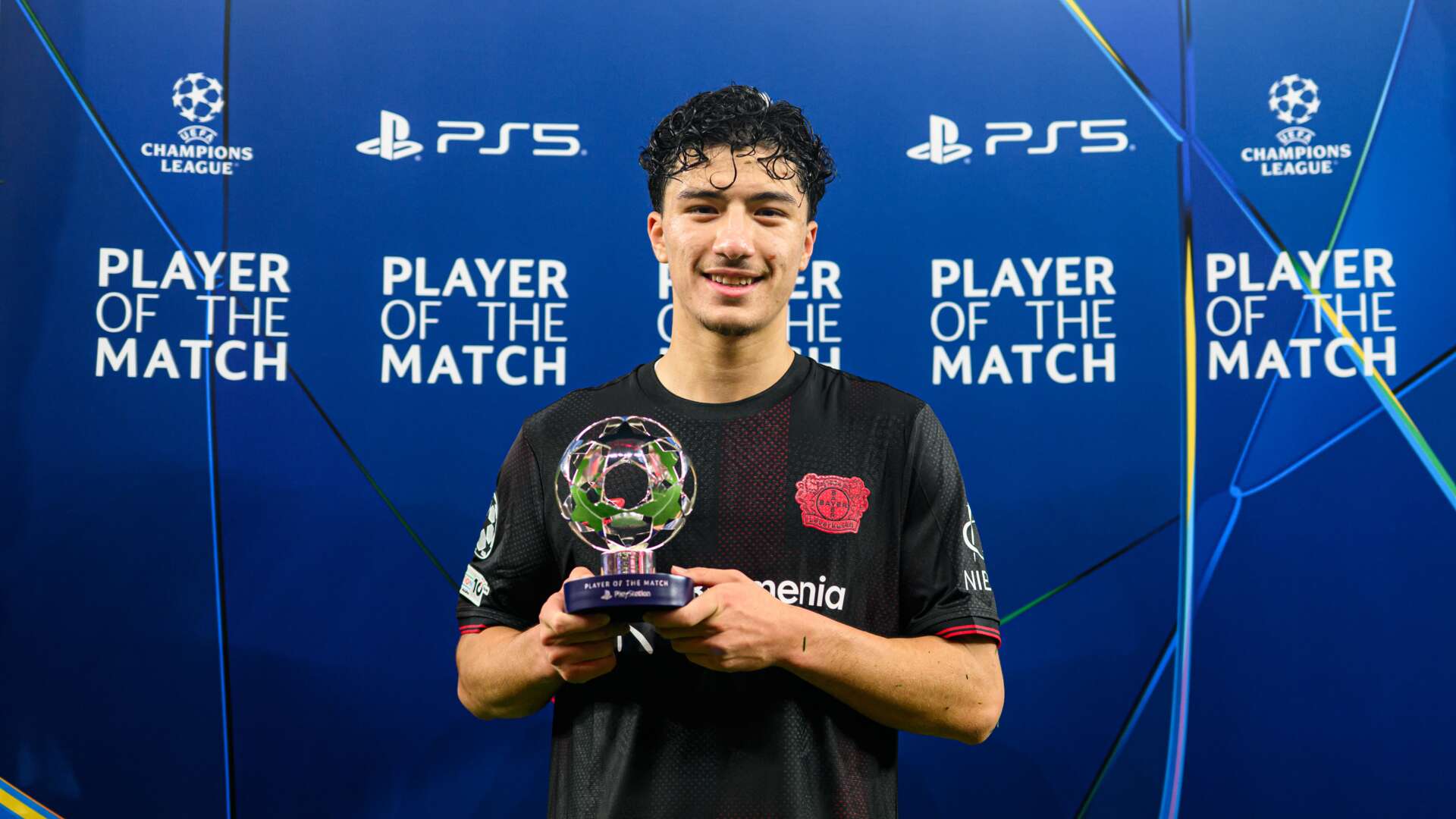
Maza: The years before that would have been too early, as I first had to really get to grips with life as a professional player. I had to become more stable and develop. That was easier for me at Hertha than at a bigger club, where you get less minutes as a young player. But before this season, I knew I was ready for the Bundesliga and the Champions League. I wanted to show the world what I can do. That's why it means a lot to me to have been voted 'Player of the Match' in the UCL after the game at Benfica. The trophy is in my living room next to my PlayStation. When I'm playing, I can always see how far I've really come. When friends are here, they sometimes say: 'Wow, that's really cool, congratulations on that'. But I have to be honest and say that I'm still most impressed myself when I see the trophy. It's really nice, then it becomes even more real. (laughs)
Was the win at Benfica, including the award, your favourite moment at Bayer 04 so far?
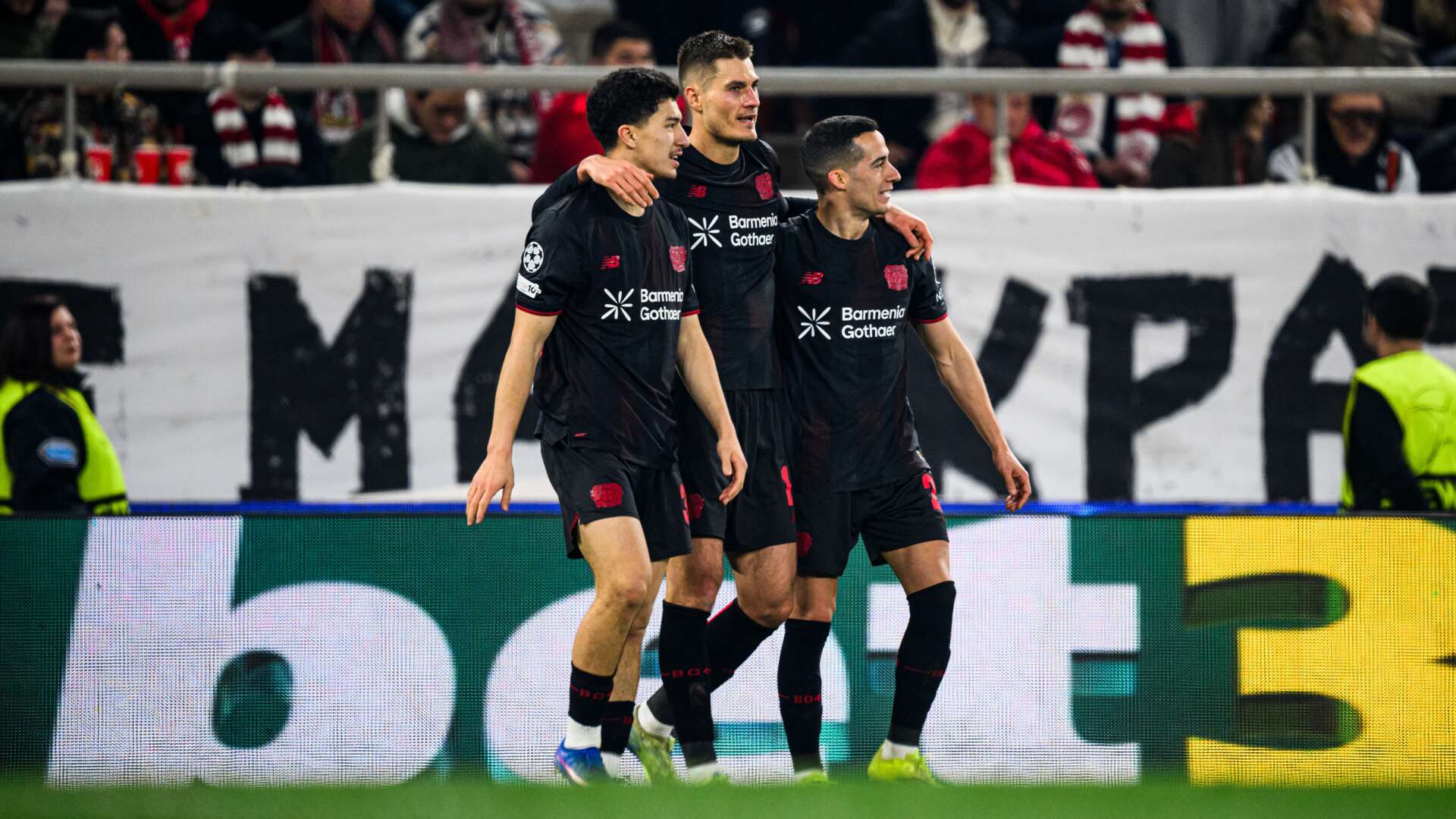
Maza: I would rather say the win against Manchester City, where I set up Patrik Schick's goal. City, Champions League - nobody would have thought we'd get anything there. Then we showed everyone and won 2-0, that was very special.
Are you a player for special matches, for knockout games? You scored in the Pokal at Dortmund, scored an important goal at Paderborn, were there in the Champions League when things got tight for Bayer 04...
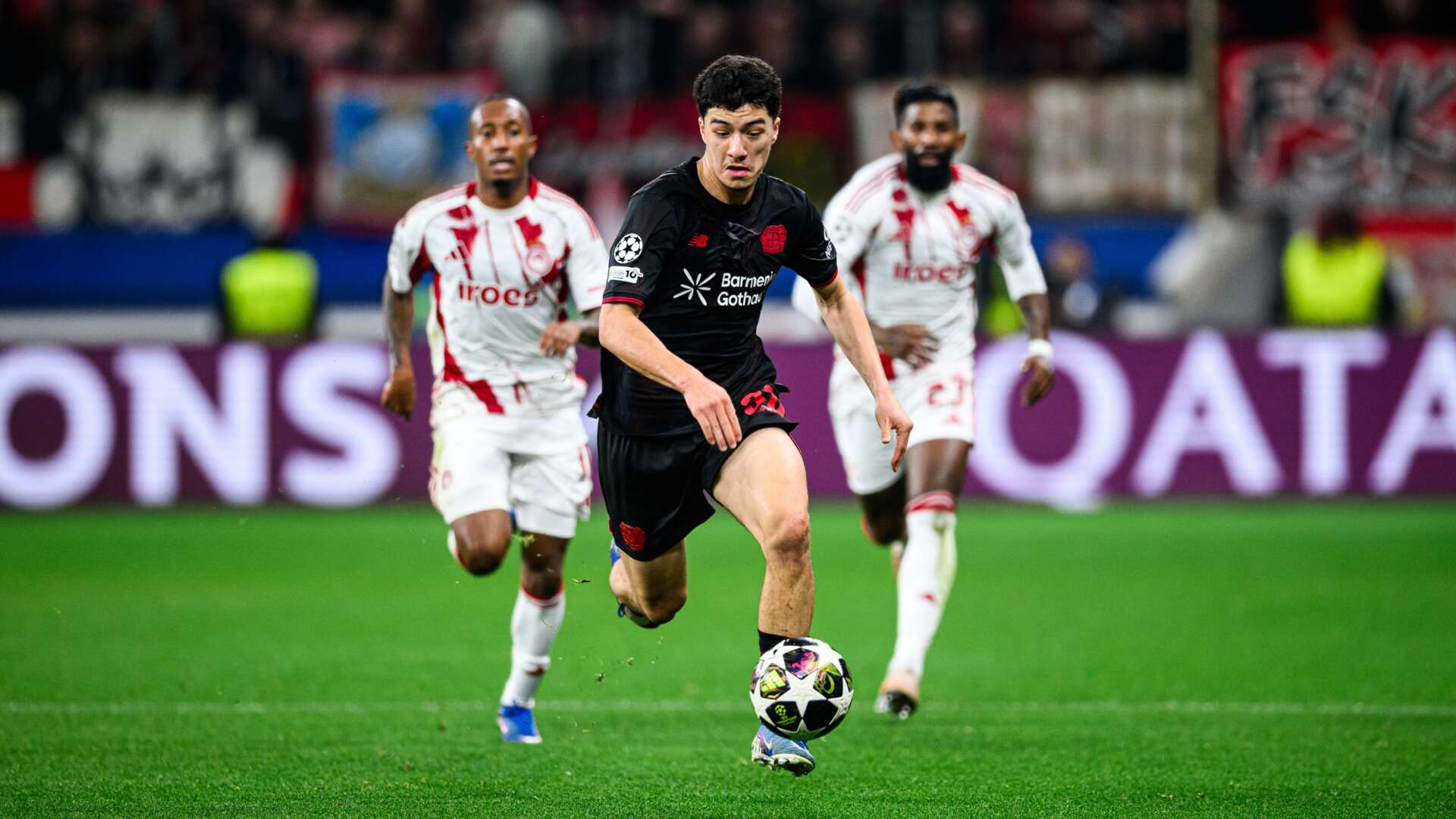
Maza: That's always an extra motivation and that suits me. It's still football, anything can happen. I don't feel any pressure and I just look forward to the games. We've often shown we can hold our own against the really big teams and we want to keep doing that.
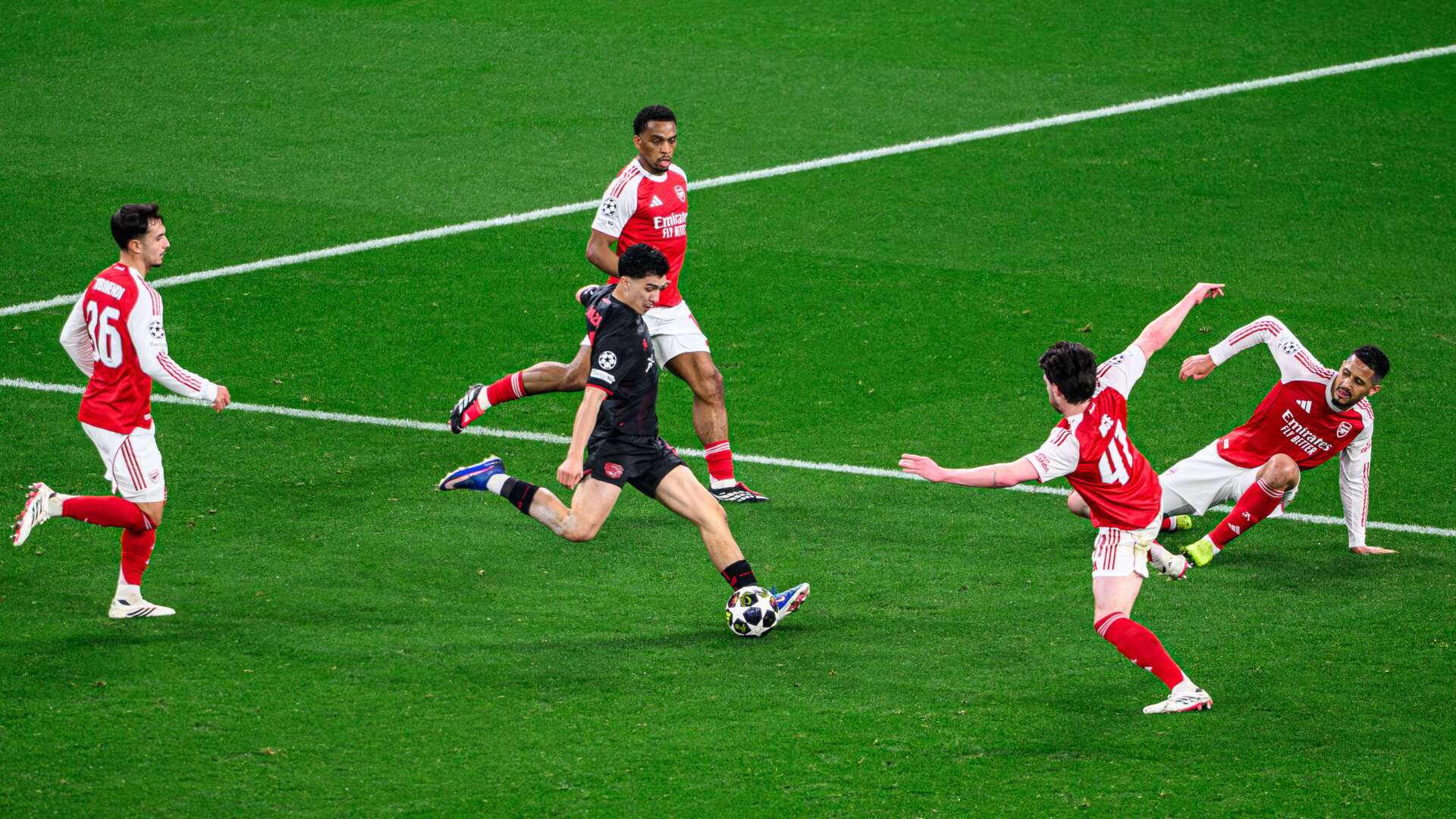
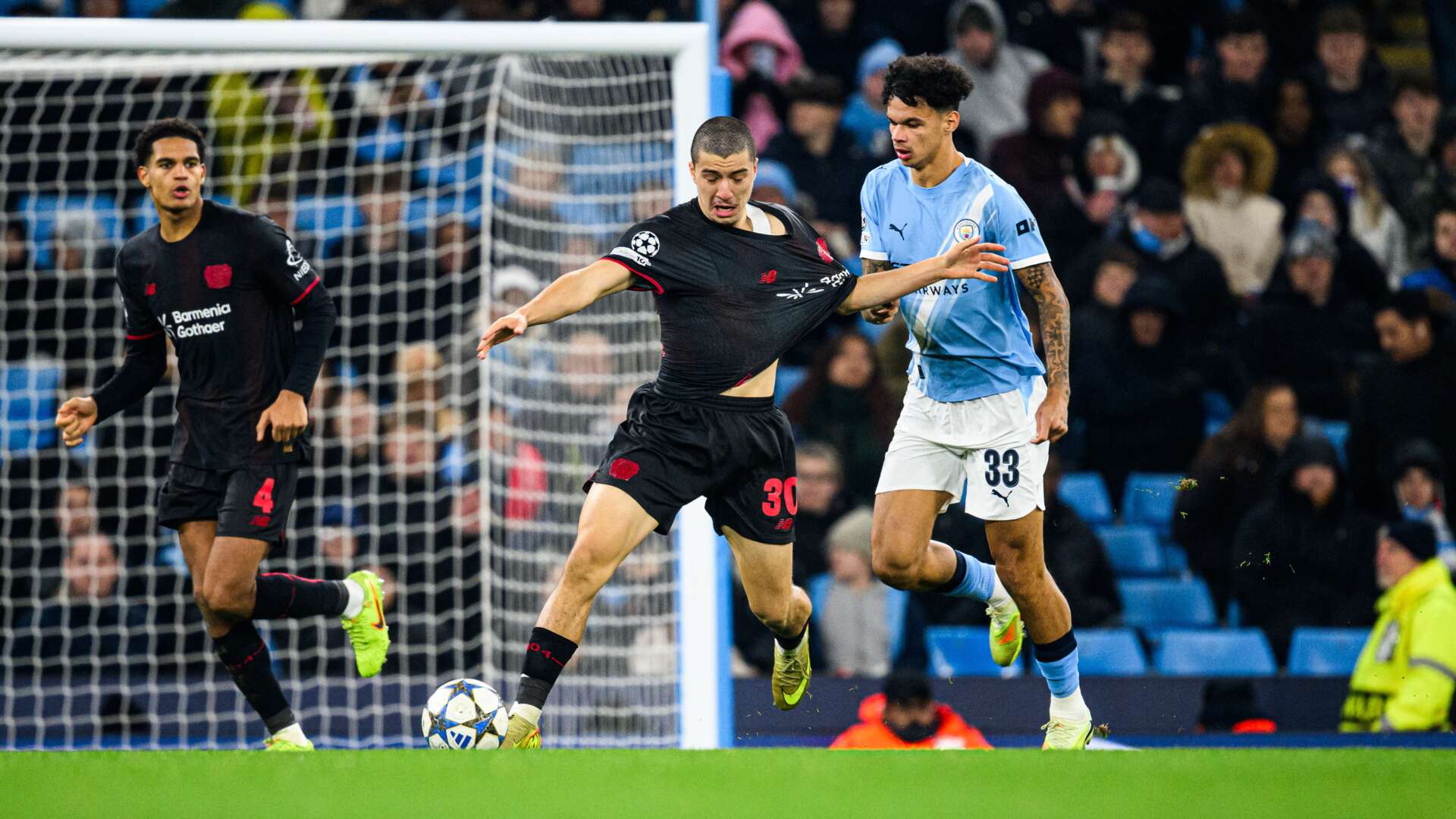
Is it still surreal to play against players like Erling Haaland or to see José Mourinho on the sidelines?
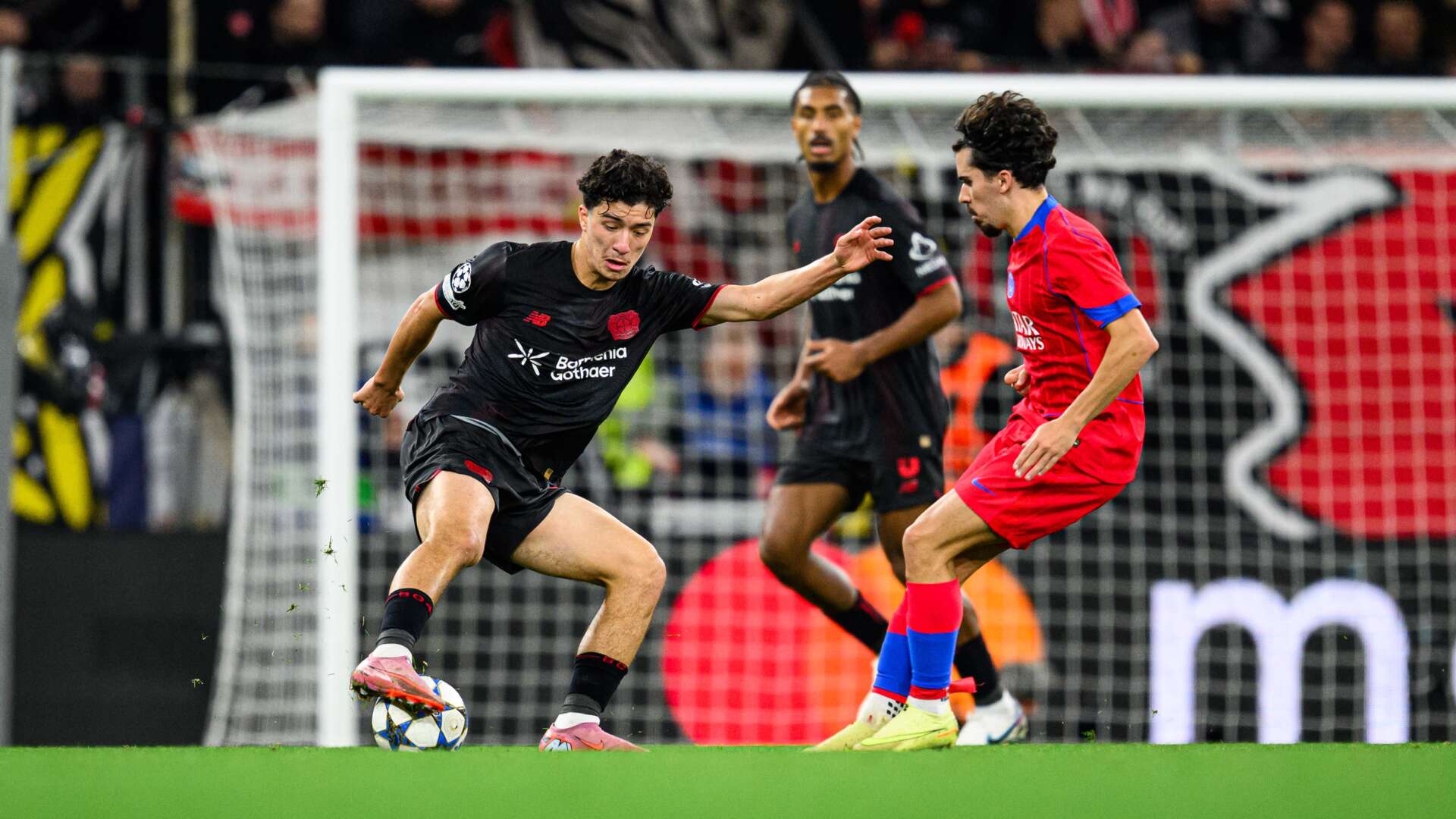
Maza: Against Benfica, I had forgotten during the game that Mourinho was the coach. Then I looked up and saw him - and then looked again more closely because he has grey hair now and I wasn't sure. But then I recognised him and just thought: Wow, it really is him! But it was even more special when I played against Phil Foden in Manchester. I knew him from TV, from YouTube videos, I always admired him. And then Haaland came in too, he had quite an aura, you have to say that. Such a huge beast, a monster, that was awesome. I feel the same way as any fan would. (laughs)
Did you get yourself a jersey from the game?
Maza: I swapped one with Rayan Aït-Nouri, who I play with in the national team. I also asked for one from Haaland, but he just said that someone else had already asked. But these are the moments when I realise that I'm living my dream and I'm no different from the fans. They are huge stars for me. It also makes me very happy that I'm now occasionally asked for my jersey by opponents, I look forward to that and, of course, I'm always happy to swap.
How does it feel that kids on neighbourhood pitches are now also wearing your jersey and that the youngster you were has become a professional that others emulate?
Maza: First and foremost, it's really, really nice. It's a good feeling to give the children and young people joy and hope. That when they play there, they have the conviction they can make it, even though it's just a local pitch and not a youth academy. For many there, it is a great motivation to see that there are players who have come from neighbourhood pitches and are now in the Bundesliga: Ibo did it, then I can do it too. Being a role model for these kids in this respect means a lot to me.