"Football is a reflection of life"
Kasper Hjulmand interview in the Werkself magazine
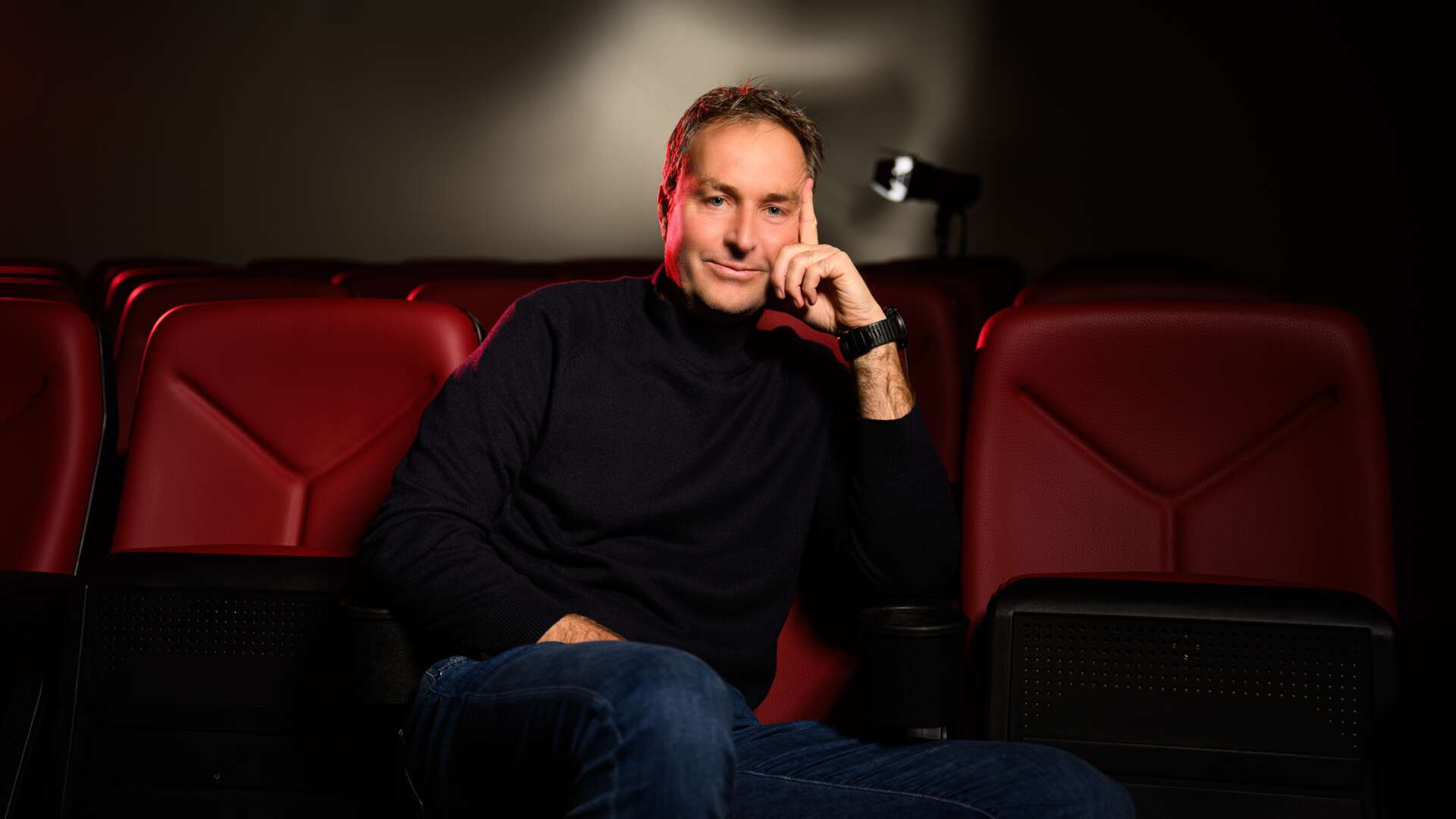
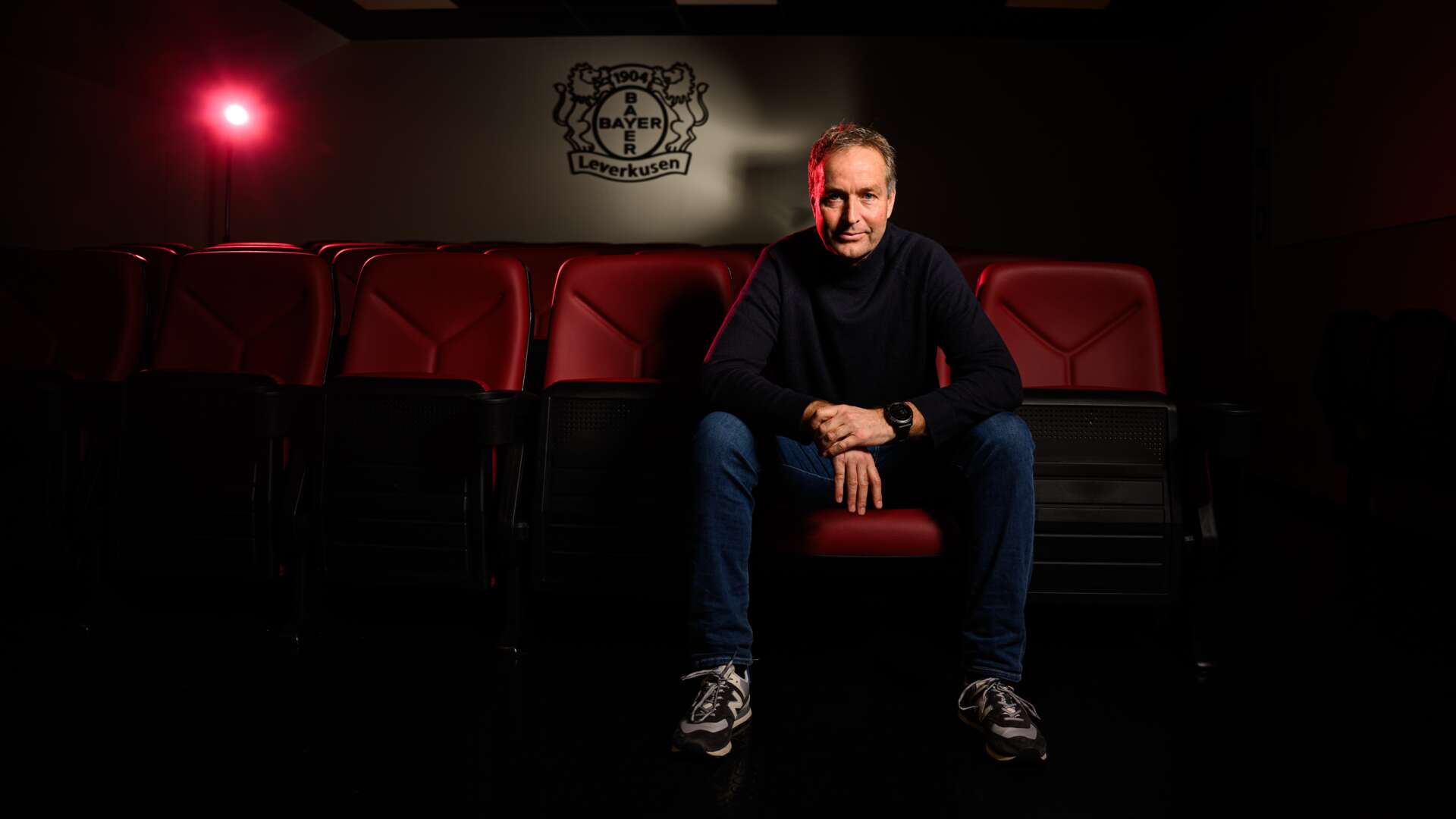
Kasper Hjulmand has led the Werkself back to winning ways and is back in the knockout phase of the UEFA Champions League with Bayer 04 after the 3-0 win against Villarreal on Wednesday evening. In an interview with the Werkself magazine at the BayArena in the team meeting room, directly opposite the dressing room, he provided some special insights for the current issue, which was published in January. A conversation with the 53-year-old coach about values, attitudes and personal experiences as well as interests outside of football.
Mr Hjulmand, you came to Leverkusen during the season. There was hardly any time to get to know you due to the large number of games. So let's start this interview with a personal question: What characterises you as a person?
Hjulmand: I don't know if I'm very different from anyone else. I'm a country boy from a small town. I've always loved sport, especially football. That was and is my passion. I really love what I do. I think I'm just a normal person who dedicates most of his life to football.
Is that self-assessment perhaps exceptional in the football business?
Hjulmand: I don't see it that way. Nowadays, a lot of things are labelled. But 99 per cent of us are just normal. Our children are often told they have to be the best. And if you're not the best, you're not good enough. But we are all somewhere between the poles and only very, very few of us are really special. My personal heroes, for example, are those who work with children or in hospitals every day.
Do you talk to your players at Leverkusen about things like that?
Hjulmand: I've only been here for a few months, so with all the crowded fixtures there's hardly any time for it. But I think it's important not just to talk about whether you position yourself a little further to the right or left on the pitch. I'm convinced it's important for players in their careers to think about other things as well. I've often seen players suddenly start to put things into perspective when they have their first child or start a family. But I would like to see us in this industry initiate these mental processes in the academies. In my opinion, it is very important and helpful - not just for football players - to be stable as a person. And that includes realising that life is not just about one thing. Life is so much more. But that doesn't mean that football is unimportant. We play with so much passion, that’s very important. But ultimately it's about football, the industry is not a parallel world, it's part of the real world. I think we can do a lot more in professional football to ensure we are also there for other people. Without these people, without the fans, we are nothing. That's another reason why I think it's important to keep our feet firmly on the ground.
Do you still have room for other topics and hobbies?
Hjulmand: That is indeed very difficult. And it's also something that I keep reminding myself of: I've been a coach since 1998. I was 26 when I had to end my playing career because of my seventh knee operation. I've been a coach ever since. Now my life has come a long way. And when I look back, I realise that I was so passionate and focused that I missed out on important things. I still remember very clearly the time when I left Mainz, which was in 2015. It was the first time in 17 years that I had time for myself. And it was as if I was regaining my senses. I could listen to music, read, see colours, taste and enjoy food. Sometimes this business is just obsessive. You become obsessed. I also believe that you have to be obsessed in a way to be successful. But I'm working on becoming more balanced and I'm also too curious about other things to just focus on football. I've learnt that it's important to sharpen my mind and my senses outside of football as well in order to do a good job as a coach.
What other things are they?
Hjulmand: I love hiking in the mountains, skiing, tennis and golf. I really enjoy that. I like to read, listen to music, enjoy good food and sometimes go to art exhibitions because it takes my mind off things. I also have my children, my family, my partner and very, very good friends, and I know lots of people who do interesting things, such as start-ups. So I have a lot of interests, but not much room for them. Sometimes I love my passion, but sometimes I hate my social life because I don't have much time for other people. So I appreciate it all the more when my children and the people who are close to me are with me and I can combine both worlds.
Your statements often have a deeper character. Is the - let's call it provocative - banality of football sometimes a welcome change?
Hjulmand: Yes, but I actually see football as anything but banal. Even with artificial intelligence, many machines work unsuccessfully to understand how complex this game is. Fortunately. Because although we can use AI to analyse data and all games by machine, we can't resolve the complexity. At the end of the day, they are all individuals and you can't create a formula for success that can be applied to all players and teams. But yes, sometimes it's quite simple, but always full of emotion. And I appreciate that. I always say to the players: We can be happy and we can all be very sad, but in how many places or workplaces do we feel those emotions? So let's enjoy it.
You also emphasised before you signed for Leverkusen that you were very happy. And yet here you are, back in professional football. How would you describe the special attraction that brought you back?
Hjulmand: Sometimes I ask myself the same question. For the first time in my life, I was able to decide what I wanted to do. I could see my children, enjoy a weekend off. And here I am now. (He laughs) So it must be passion. I really appreciate this everyday life. I love forming a family group with other people in football, achieving something together with passionate people. I like people with passion, whether they're carpenters, painters or footballers. I'm actually also very ambitious and like to compete. I love to win. I hate losing. That's also a part of me.
Apart from passion and team spirit, what other values are important to you as a coach?
Hjulmand: I think life is a team sport. The most important thing is the connection with each other. It's not about what I do or what the players do, it's about what we do together. In my opinion, football is a brilliant little reflection of life. It takes certain things and values to make a team work and it's the same in life. That's why I'm not just talking about football, but about values in life. Honesty is extremely important to me. I promise people that I will always say what I mean, even if it's not good news. I am very direct. Everyone deserves respect, no matter where they come from, how old they are or what they look like. At a football club, I therefore often say we have hidden heroes who are not in the limelight, don't score goals, don't even play, but work hard every day and support the team. This also includes all employees, everyone is part of the whole. For me, good leadership also means helping others. I'm not here to put people down and show that I'm a great guy. I'm here to help people. I also value generosity. I think all of us here are lucky to live in this part of the world. And can do more to share that good fortune.
Do you think the values you just mentioned are a reason why so many young players play so well in your team? Does that make it easier for them than working with, let's say a slave driver?
Hjulmand: Good leadership can come in many shapes and colours. Personally, authenticity is very important to me, the players should see the same person with the same values every day. If I try to be someone else, I'm finished. The players sense that. I am who I am. I have my qualities, but my qualities are also my weaknesses. Some people might say: 'Oh, he's very soft', but for me it has nothing to do with softness. It's just a different way. I'm very demanding, but I don't run around shouting at people all the time. That doesn't mean I'm not strict. I'm very honest and direct and often have to deliver harsh messages, but a friendly approach is fundamentally important to me, the two are not mutually exclusive.
It is important to you not to see just black or white. Ultimately, in football it sometimes comes down to one goal, one whistle that decides whether you win or lose, or whether it's black or white. How do you deal with that?
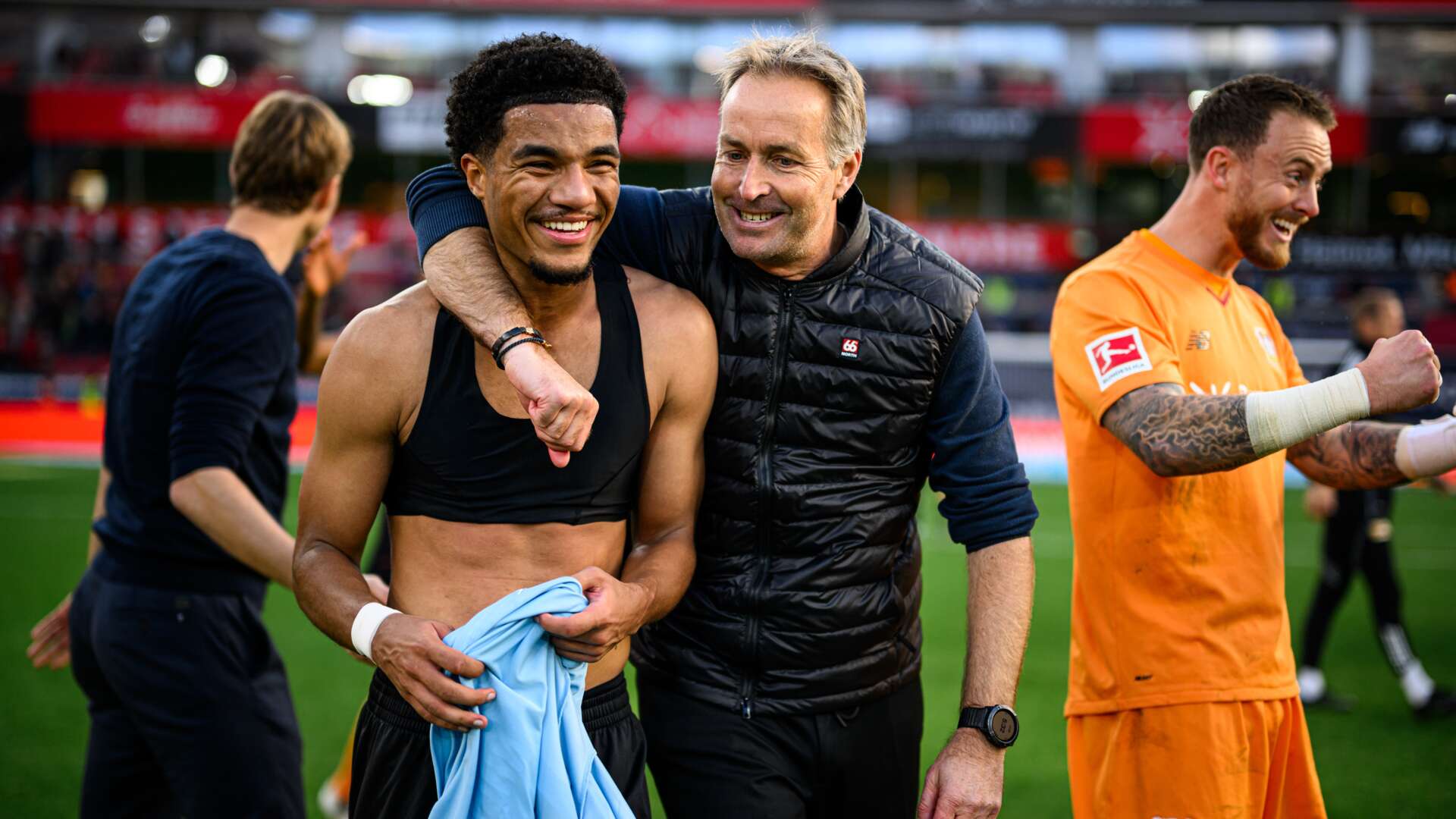
Hjulmand: It's really, really difficult. When I lose, I sometimes feel almost physically ill. It's painful to lose. I remember winning the Danish championship as a young coach in 2012 and then hoping that things would get better. But no, it's still really painful for me to lose. But whether we win or lose, it's never all good or all bad in football. Take the derby against FC Köln, for example. Just a few things had to go differently and we wouldn't have won. That's football. That's why we try to analyse games very objectively. It's not about the result. It's about how we play. And then we move on to the next game. Of course I'm beside myself with joy when we win. But the day after, it's about setting new goals and moving on.
You recently said you always try to be better tomorrow than you are today. Is that true for the coach or for the person?
Hjulmand: That definitely applies to people. I'm constantly learning how to do things better. My year without football has made me think. I didn't have the time for that before. I think we all have prejudices. We are shaped by who we are. I always try to question my prejudices. I see so many things in the world that shouldn't be the way they are. There is so much we can do better. At the end of the day, I really try to be a good person. Because it's more important to be a good person than to be a good coach. But at best, the two go hand in hand. In any case, I try to keep learning: as a coach, but also as a person. I hope that never stops. I am very curious and still have a lot to learn in both fields. It's a constant process for me.
When you look back on your time so far, do you think you have improved as a person or as a trainer?
Hjulmand: Yes, I think so. A few months ago I was still living in Copenhagen, living a completely different life. Within a week, I was on the touchline against Frankfurt. Since then, there have been so many games, processes and encounters. It feels like a year. Overall, I've learnt a lot about the region, the culture and this club - and I've also met a lot of great people. I remember my successes in my career, but I remember the people and companions even more. That's the most important thing for me.
You've known the club for a long time and always been in touch with Simon Rolfes. Was there anything that surprised you though?
Hjulmand: There were many things and moments. But one experience stands out: when we lost 7-2 at home to PSG and the fans still applauded after the game. They were there, they supported the team, they were behind the team. I'll never forget that, because you so often see spectators turn round and whistle after a defeat. But that night was special. I think that's the absolute best and most important kind of support: when someone else isn't doing well. Because that's how we give support, that's how we get the best out of people. You can also apply that to your own life, everyone has experienced it in bad situations. I really liked this evening because I knew that this support means a lot to the team and also helps. If everyone at this club takes that to heart and behaves like that, we will continue to be a successful club. I love it here and I'm happy to be working at Bayer 04.
All issues available online
Incidentally, all previous Werkself magazines since issue 1 from the 2015/16 season are available at bayer04.de.
ALL ISSUES
Do you want to read the latest issues of the Werkself magazine before anyone else? Then become a member of Bayer 04 now and benefit from these and many other advantages of membership!