History: 45 years ago – Promotion season 1978/79 (February)
Leverkusen is white in February 1979. The snow is piled up as much as in January and the team under coach Willibert Kremer has not played a championship home game since 22 November.
Yes, I'd like to see videos dispalyed.
Match action returns on 16 February 1979. Wuppertaler SV, in danger of relegation, are the visitors at the Ulrich Haberland Stadium. The pitch is covered in snow and it is not a pretty encounter in front of 4,000 spectators. Although both teams make an effort on the frozen and bumpy surface. But a real game never gets going. Above all, tall players like Thomas Hörster, Jürgen Gelsdorf and Klaus Bruckmann have difficulty staying on their feet. The Werkself are unable to play their feared passing moves. On top of that, Wuppertal are very good in defence, giving away hardly any chances and they offer some threat up front. The game on that Friday night ends 0-0 which satisfies both teams.
Fortuna Köln visit the Ulrich Haberland Stadium four days later. In front of 7,000 spectators on another frozen pitch, the Werkself lose after 28 games without defeat across seasons. The Bayer 04 players have got used to the conditions of the pitch and show their best side. Matthias Brücken scores the richly deserved opener on 33 minutes and it all looks like a victory for the Werkself. But Roland Stegmayer levels for Fortuna before the break. The Cologne team improve in the second half. They draw the Werkself out and create chances. As everybody at the stadium is expecting a draw, Fortuna striker Stegmayer scores again on 89 minutes to make it 2-1 for the visitors. The coach of the Cologne team is Rudi Faßnacht who played for Bayer 04 in the 1950s and he tragically lost his life along with his wife on 25 July 2000 when Concorde crashed in Paris.
"This defeat does not set us back, we're going up and we have the plan," said club president Dr. Jürgen Schwericke after the game. And team captain Dieter Herzog is quoted as follows: "The 2-1 defeat against Fortuna Köln was mainly down to our silly mistakes. We could have suffered a defeat in some of the previous games. Now it's happened and we have sworn to carry on for a long time without losing. We are clearly looking forwards."
There are also further discussions on the football chairman Hermann Büchel who was written off sick. The Bayer 04 board drops the idea of bringing in a manager from outside and aims at an internal solution. Nobody under the Bayer Cross says anything but the departure of Hermann Büchel is just a question of time.
In the video you can see highlights of the goalless draw against Wuppertaler SV.
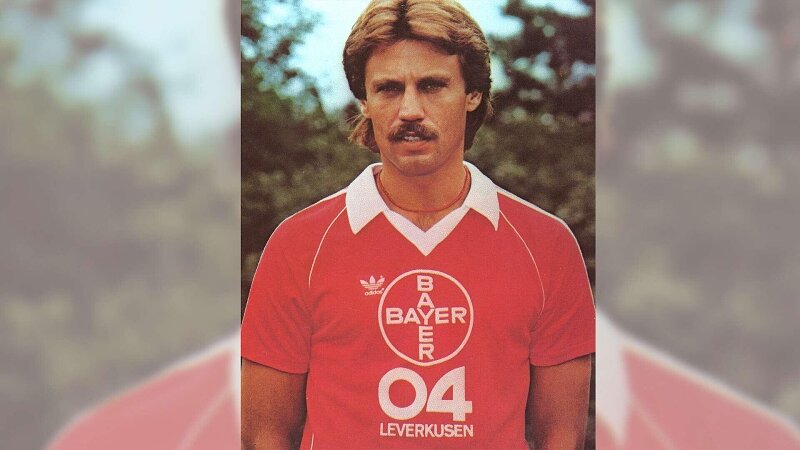
Harry Gniech was born on 14 October 1951 in Leverkusen-Schlebusch. At the age of six, he joined SV Bayer 04, initially in the athletics section. The boy actually wanted to play football, but was only allowed to switch to the football team when he turned nine. Harry quickly established himself as a playmaker in midfield. Despite his talent, the path from the youth team to the first-team squad was a long one back then. In the 1973–74 season, his former U19 coach, Friedhelm Renno – who was by then in charge of Bayer 04’s first team – selected him for his first match with the professional squad.
Show more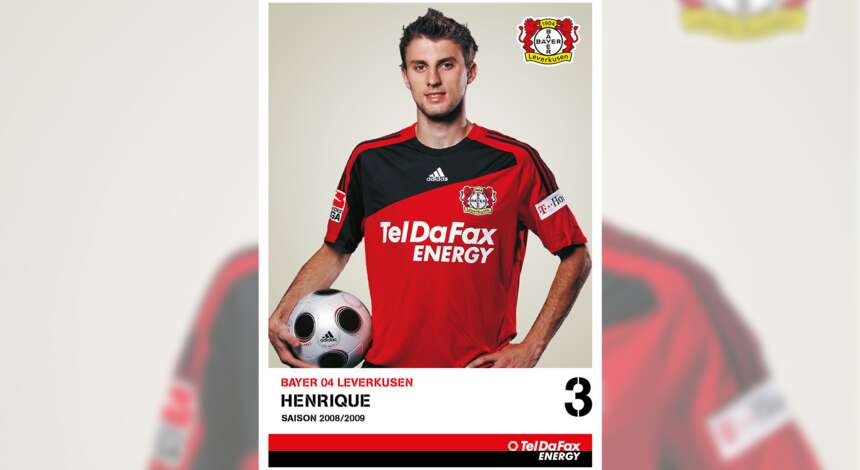
Henrique Adriano Buss, known as Henrique, was born on 14 October 1986 in Marechal Cândido Rondon, a town in the Brazilian state of Paraná. At the age of 13, he joined Coritiba FC and made the step up to the first team in 2006. Henrique helped the team gain promotion to the Brazilian top flight and then moved on to Palmeiras FC. After just five matches for his new club, the 1.85-metre-tall centre-back was signed by Barcelona in 2008 for ten million euros and loaned to Bayer 04 for one year for a fee of €400,000.
Show more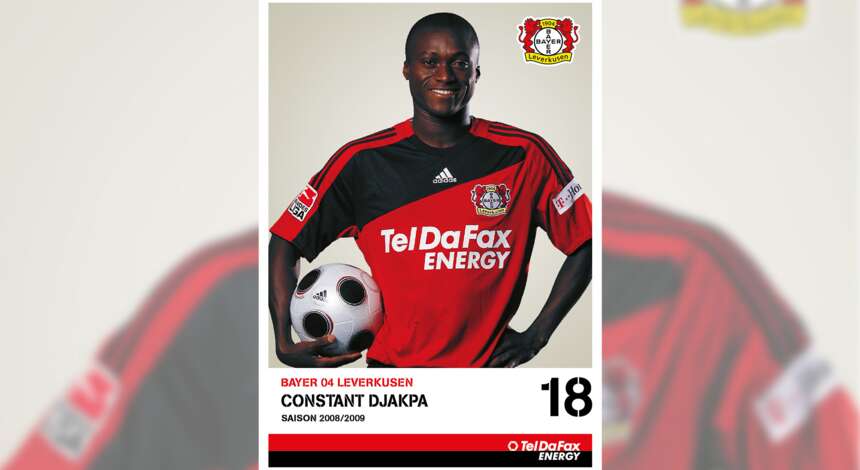
Constant Djakpa was born on 17 October 1986 in Abidjan, Ivory Coast. He started playing football at the age of five. He took his first steps in professional football at Stella Club d’Adjamé, before moving on to Sogndal IL in Norway. His path eventually led him to Germany via the Romanian club Pandurii Târgu Jiu.
Show more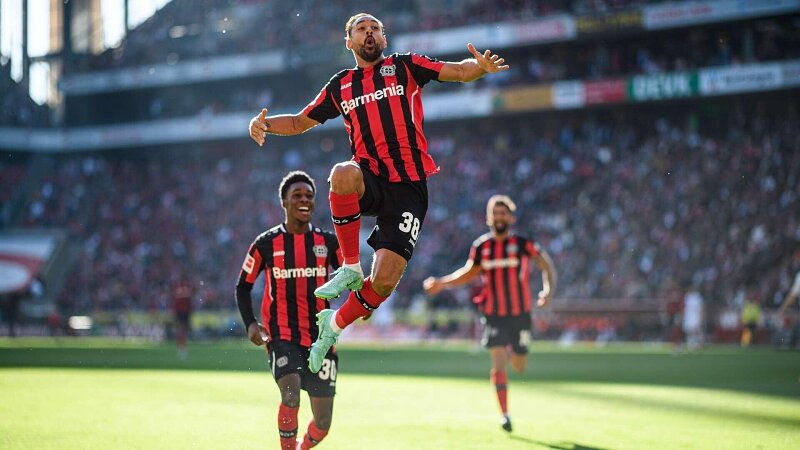
In this video you can see impressive and important goals in the history of Bayer 04 from the month of October. It's not always about the beauty of the goals, but also a reminder of special games and players.
Show more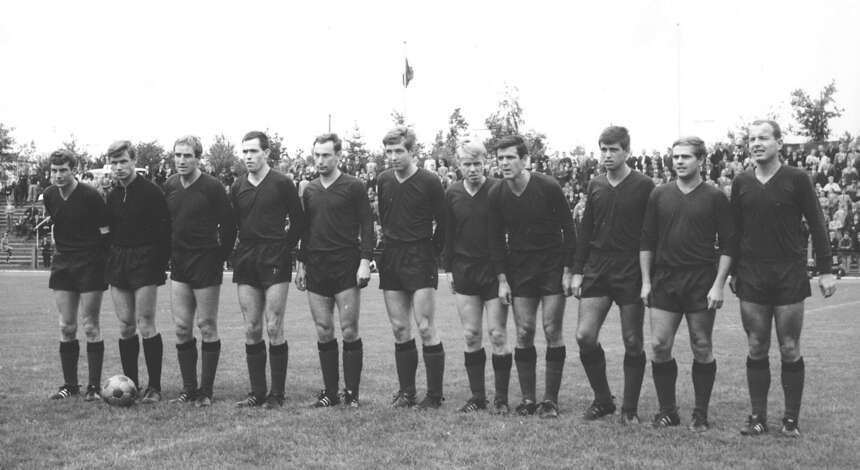
In the first week of October 1966, professional footballers decided to take an unusual step – they went on strike. They felt compelled to resort to this action, which was relatively uncommon until then, to give greater weight to their demands for fair pay. They reasoned that, with three draws, they were entitled to a bonus; at the very least, a points bonus of 75 Deutschmarks that was agreed before the start of the season.
Show more