Yes, I'd like to see videos dispalyed.
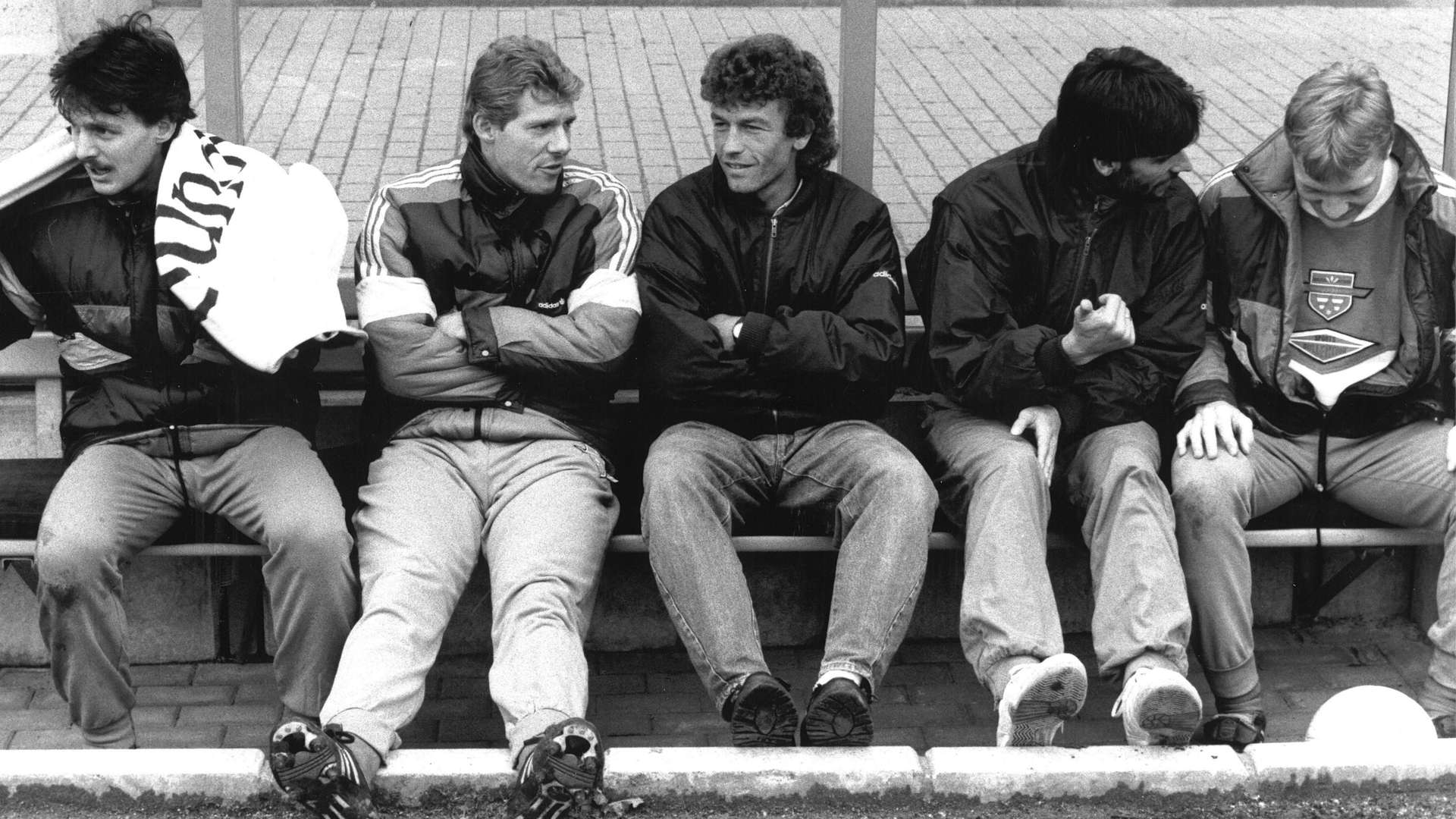
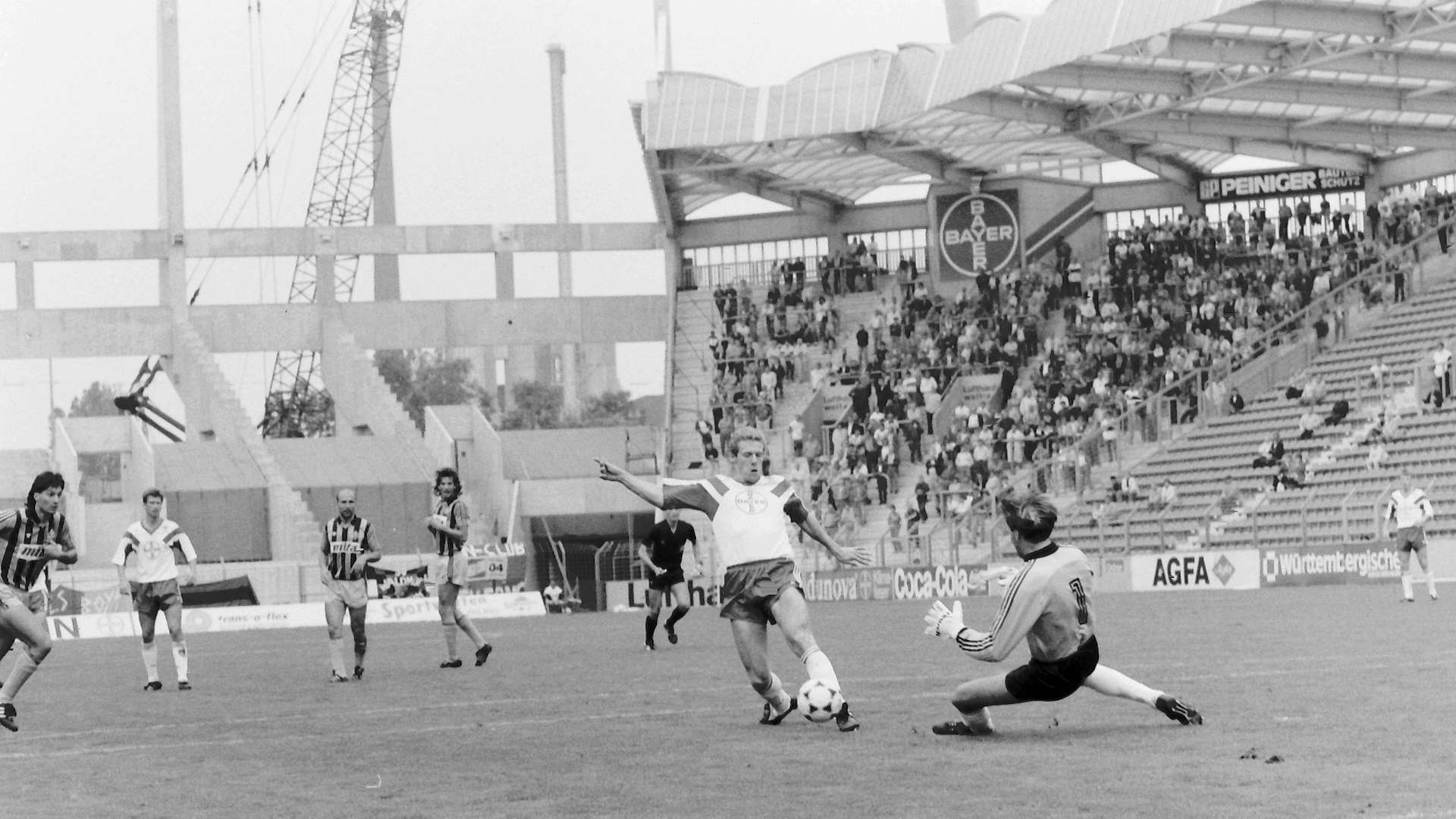
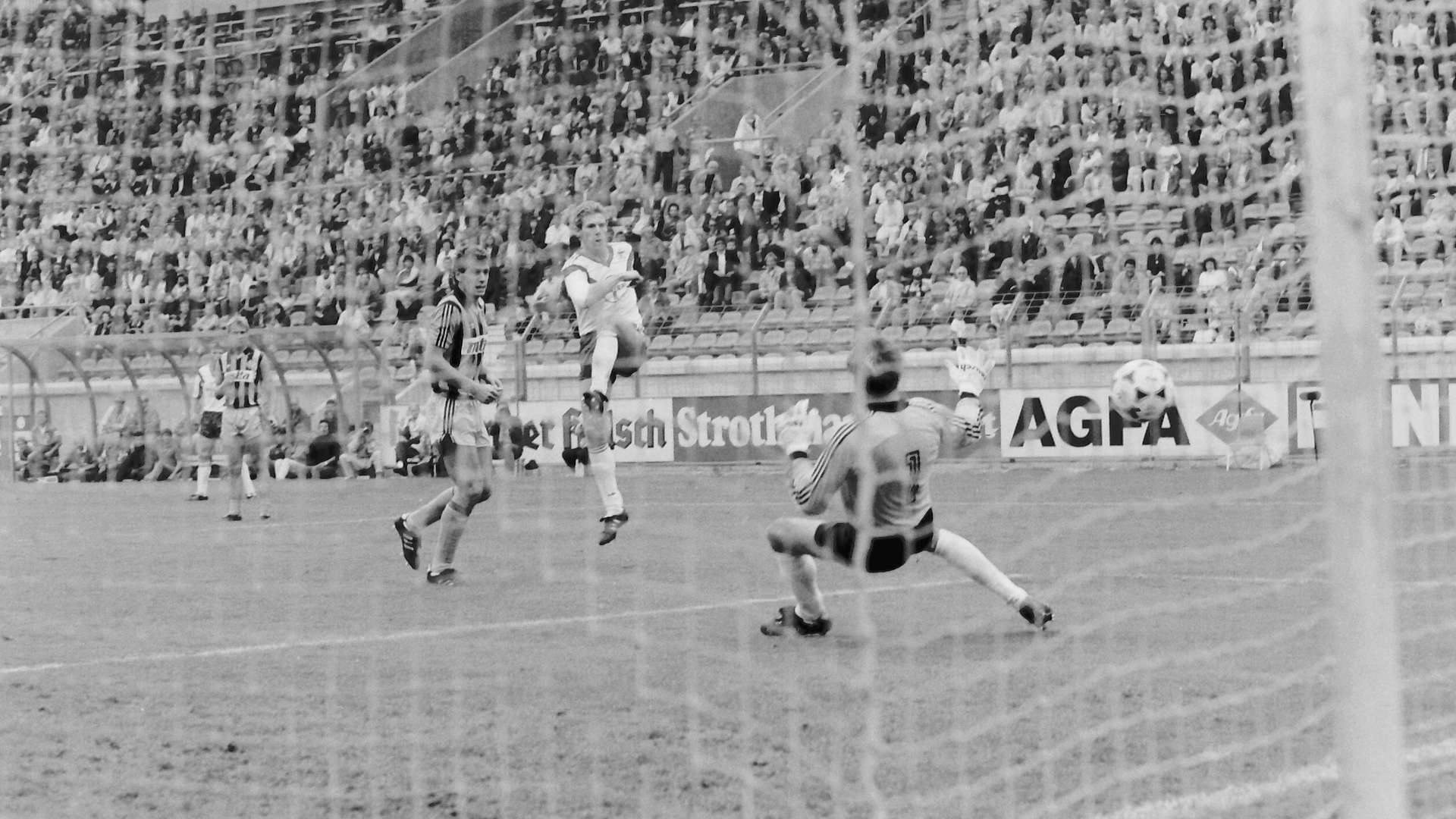
In the following 1986/87 season he is mainly a regular starter but Fortuna end the campaign in a relegation spot. The first year in Bundesliga 2 ends in a fifth-place finish but Fortuna Düsseldorf are promoted back to the Bundesliga in 1988/89 also thanks to 35 goals scored by Sven. The Bundesliga 2 goalscorer signs a contract with the Bayer 04 long before the end of the season and moves under the Bayer Cross in the summer of 1989.
He is a first choice in the first half of the season and forms a dangerous striking duo with Marek Lesniak. He is a regular in the Hinrunde but from January 1990 he is primarily on the bench as Andreas Thom moves to the Bundesliga as the first East Germany international. And he is a tad better than Sven with his pace and goal threat. When it became clear that another striker in the shape Ulf Kirsten is coming to Leverkusen in the summer, Sven decides to return to Düsseldorf. After two more years at Fortuna, he moves on to the capital to play for Hertha Berlin for two years.


He leaves Hertha Berlin to join Mainz 05 in 1994 where he achieves cult status over the next seven years. The Hessen fans love their striker because of his apparently clumsy and stumbling way of playing football. But above all because he scores lots of goals despite his supposed limited technical ability. The left footer is given the nickname of ‘Kühlschrank’ (fridge) because the 1.90 metre tall and very broad striker mostly scores his goals clinically and is rather reserved in his celebrations. He scored 55 goals for Mainz and is in second place behind Simon Terodde in the Bundesliga 2 goalscorers list with 121 goals.
Sven ended his professional playing career at the age of 36 and moved on to his birthplace as a player/assistant coach for a year at Viktoria Köln. In 2003, he takes over Union Solingen for three years and then moves on to the Rot-Weiß Essen U19 team where he gets his coaching badge and from 2008 he coaches the U19 and U 23 teams at Borussia Mönchengladbach. After six years as a coach of men's teams at SV Wehen Wiesbaden, Rot-Weiß Essen and Frechen 20 Sven starts his job as a full-time scout at Holstein Kiel on 1 July 2021. In April 2024 he again answers the call from the Lower Rhine. Today he works for Borussia Mönchengladbach in the academy on squad planning and scouting for the U19 and U 23 teams.
Dear Sven, I wish you many happy returns on your 60th. Stay fit and healthy and enjoy your birthday!
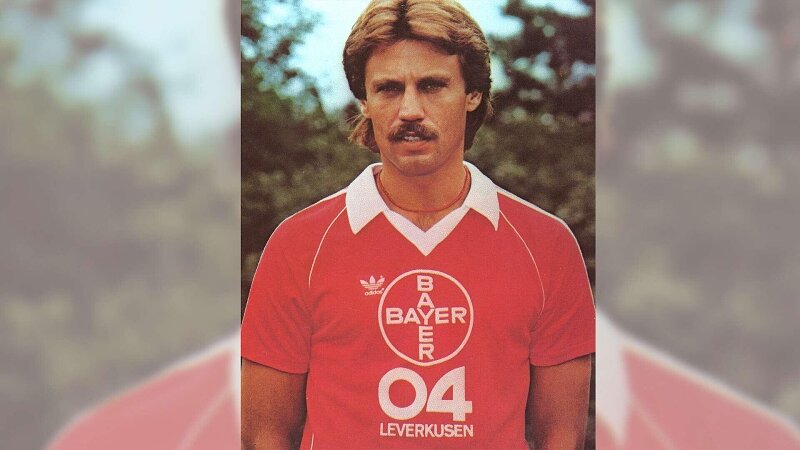
Harry Gniech was born on 14 October 1951 in Leverkusen-Schlebusch. At the age of six, he joined SV Bayer 04, initially in the athletics section. The boy actually wanted to play football, but was only allowed to switch to the football team when he turned nine. Harry quickly established himself as a playmaker in midfield. Despite his talent, the path from the youth team to the first-team squad was a long one back then. In the 1973–74 season, his former U19 coach, Friedhelm Renno – who was by then in charge of Bayer 04’s first team – selected him for his first match with the professional squad.
Show more
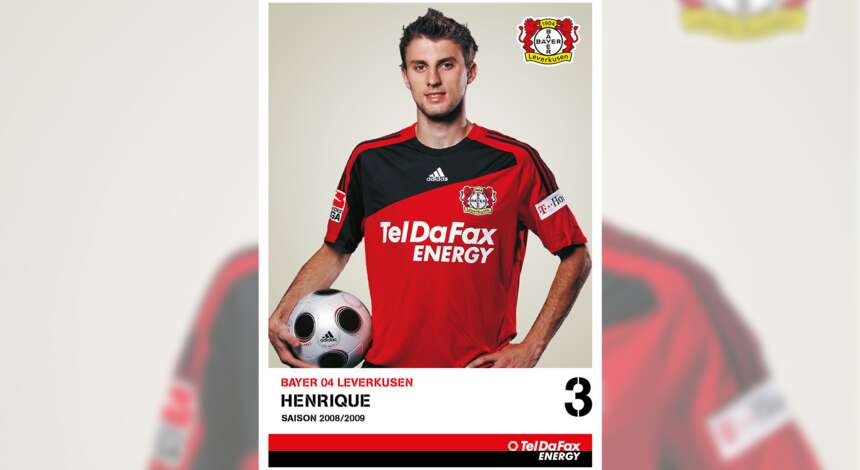
Henrique Adriano Buss, known as Henrique, was born on 14 October 1986 in Marechal Cândido Rondon, a town in the Brazilian state of Paraná. At the age of 13, he joined Coritiba FC and made the step up to the first team in 2006. Henrique helped the team gain promotion to the Brazilian top flight and then moved on to Palmeiras FC. After just five matches for his new club, the 1.85-metre-tall centre-back was signed by Barcelona in 2008 for ten million euros and loaned to Bayer 04 for one year for a fee of €400,000.
Show more
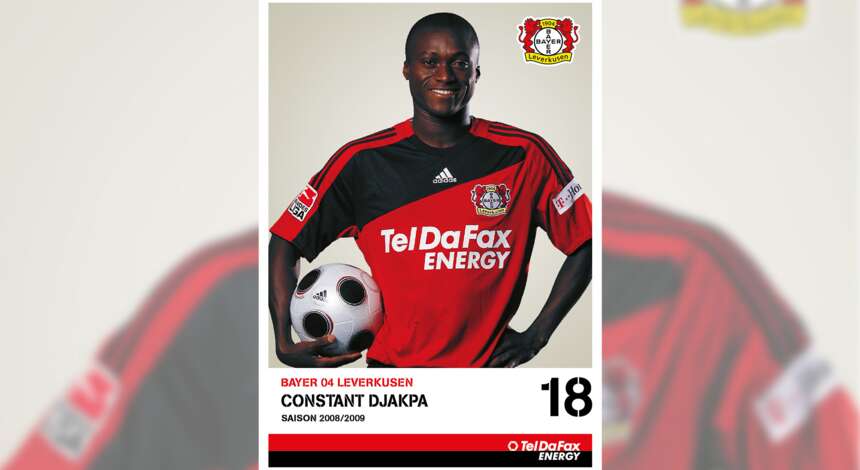
Constant Djakpa was born on 17 October 1986 in Abidjan, Ivory Coast. He started playing football at the age of five. He took his first steps in professional football at Stella Club d’Adjamé, before moving on to Sogndal IL in Norway. His path eventually led him to Germany via the Romanian club Pandurii Târgu Jiu.
Show more
In this video you can see impressive and important goals in the history of Bayer 04 from the month of October. It's not always about the beauty of the goals, but also a reminder of special games and players.
Show more
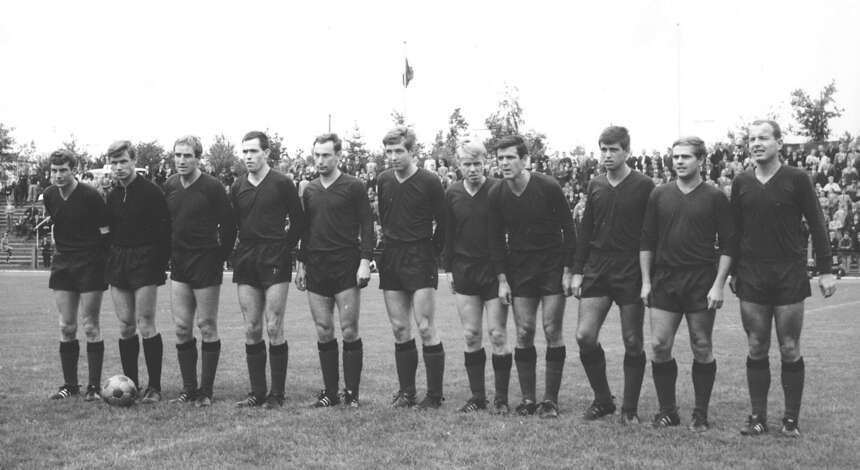
In the first week of October 1966, professional footballers decided to take an unusual step – they went on strike. They felt compelled to resort to this action, which was relatively uncommon until then, to give greater weight to their demands for fair pay. They reasoned that, with three draws, they were entitled to a bonus; at the very least, a points bonus of 75 Deutschmarks that was agreed before the start of the season.
Show more